
English for 2-Year-Olds Without Forced Repetition
When beginning English with a two-year-old, replace “How many words did we learn?” with a smaller goal: “Did we share one comfortable, understandable moment in English?” A child can participate by looking, pointing, moving, making a sound, listening quietly, or deciding to stop.
| Suggested age | Time | Materials | Aim |
|---|---|---|---|
| About 2–3 years | About 5 minutes | Familiar picture and short audio | Understand in context, without testing output |
Picture and Audio for Today
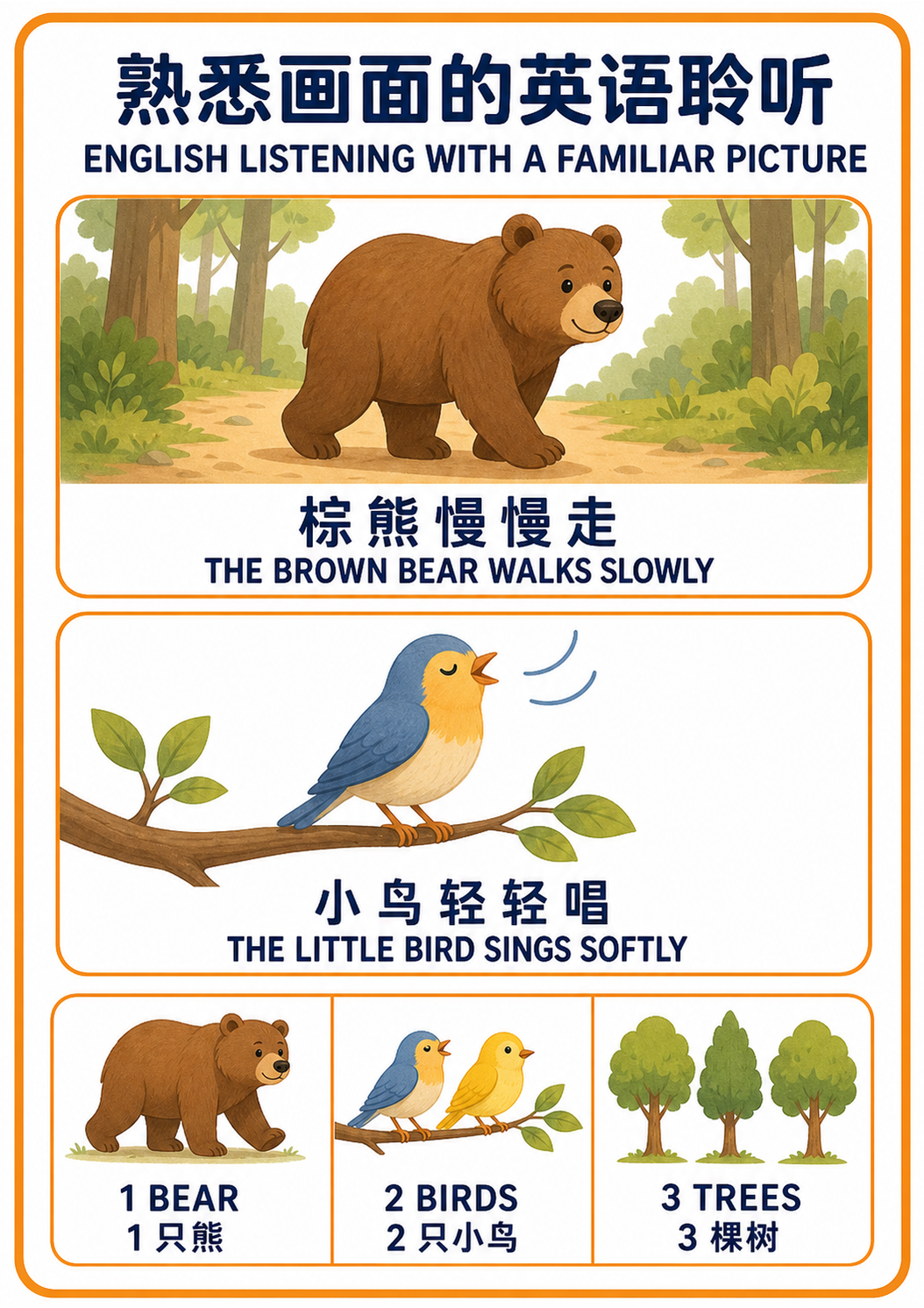
The two main sentences are:
The brown bear walks slowly.The little bird sings softly.
The picture, movement, and voice carry meaning together. A child does not need to translate or repeat the complete sentences.
The Five-Minute Routine
Minute 0–1: connect the picture with familiar language
Say “棕熊慢慢走” and “小鸟轻轻唱” once each, or use your family's most comfortable language. If the child is looking only at the bear, stay with the bear instead of explaining the whole page.
Minute 1–3: play the English once
Point gently to the matching picture as the audio plays. Do not pause for repetition and do not follow with “What is bear in English?”
Minute 3–5: finish with one movement
Walk two fingers slowly while saying Walk slowly, or make a small bird movement and say The bird sings. Join the child if they take part; finish if they do not.
What If the Child Says Only One Word?
If the child says “bear,” receive it first: “You saw the bear. The bear walks.” This is a natural expansion—adding a small amount of language to the message the child already offered.
There is no need to ask the child to repeat the expanded sentence. The back-and-forth response matters more than completing a speaking task.
Must the Two Languages Stay Strictly Separate?
A family does not have to sacrifice natural communication to create an “English-only” moment. Begin with the language that makes shared attention easiest, then add one English sentence closely connected to the picture. A small routine the family wants to repeat is more useful than a large amount delivered under pressure.
Signals That It Is Time to Stop
- Turning away or pushing the picture aside.
- Saying no or all done.
- Becoming uncomfortable after the audio begins.
- The adult starting to correct, quiz, or prompt repeatedly.
Say All done, put the picture away, and return to ordinary family life. Respecting a stop signal helps keep language interaction safe and predictable.
This guide is adapted from our English Listening with a Familiar Picture record.
A useful family note
Instead of counting remembered words, record the picture the child noticed, one sentence the adult used naturally, and how the child finished. Looking back across several weeks gives better planning information than a one-time quiz.
Safety and Development Boundary
Important note
This page offers a family activity idea, not a developmental test or individual professional advice. The adult should assess the child, materials, and environment, and finish when the child signals stop. Discuss persistent concerns with a qualified professional.
How This Guide Was Made
This page uses the linked original family diary and picture as its experience base, with factual checks against public sources. AI assisted with structure and bilingual editing. It is not medical, psychological, or therapeutic advice. Read the editorial and fact-checking policy.
Further Reading
- Center on the Developing Child at Harvard University: Serve and return interaction
- CDC: Language and communication milestones at age 2
If book time is also very short, read When Your Toddler Will Not Sit Still for a Book.