
Teach One, More, and None with Everyday Toddler Moments
Quick answer: One, more, and none are quantity ideas a toddler can meet during ordinary changes. The learning comes from seeing what happens while an adult adds accurate words, not from memorising number symbols.
| Suggested age | Activity time | What you need | Participation can include |
|---|---|---|---|
| About 2–3 years | 3–10 minutes | One picture or one real routine | Looking, listening, pointing, moving, communicating, or stopping |
Begin with a Real Family Activity Picture
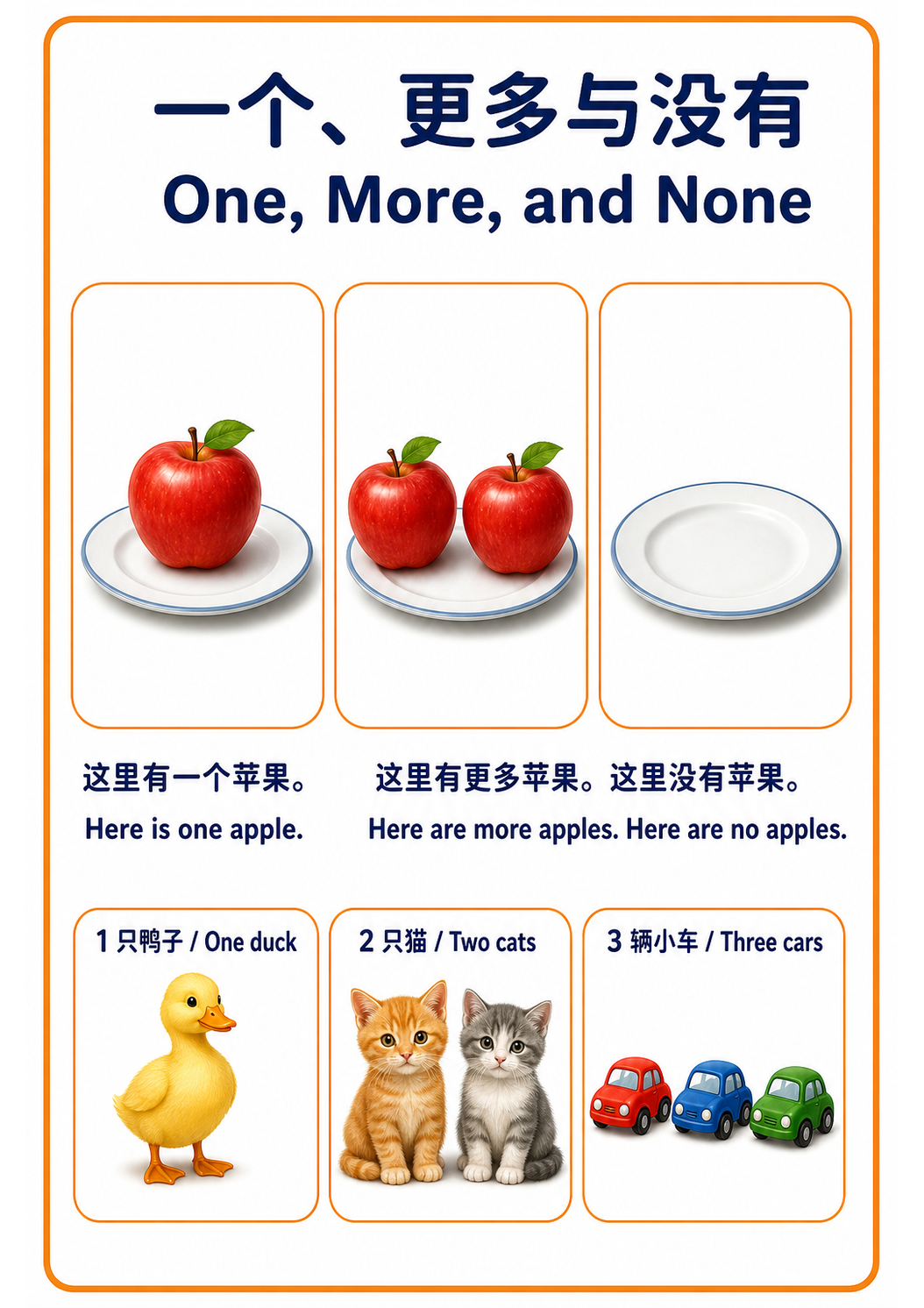
Open the high-resolution picture to download or print
This guide is adapted from our original family record, One, More, and None. The diary keeps the full plan and context from that day; this page is reorganised around one parent question and keeps the parts another family can use quickly.
What This Activity Actually Supports
Early maths grows through meaningful comparison, quantity, pattern, position, and change in everyday language. Keep the set small and the relationship visible so the child can notice before being asked to explain.
This is not a developmental test. A quick look, a point, one movement, a sound, a word, quiet observation, or a stop signal can all be valid participation.
Try It Today
1. Begin with one
Place or point to one clearly separated object and say ‘There is one cup’. Keep the rest out of view for the moment.
2. Let one more arrive
Add a second object slowly and describe the change: ‘One more cup came. Now there are more cups’.
3. Let the group become empty
Move both away and say ‘Now there are none here’. Do not quiz the child about where they went.
Ready-to-Use Parent Phrases
- One block is here.
- One more joined.
- Now there are more.
- They moved away; none are here.
Adapt It to the Child in Front of You
Use two objects at first so the change stays easy to see. Later, repeat the same language during snack setup, laundry, or putting books away.
Record One Real Observation
Look for anticipation when another object approaches, a gesture for more, or attention to the empty space after objects leave.
Avoid writing “can/cannot” or drawing a developmental conclusion from one activity. A more useful note records what the child noticed first, how the adult responded, and what helped the exchange continue or finish.
Safety and development boundary
Use objects too large to swallow and appropriate for the child's age. Food used at meals should remain seated eating, not become loose counting pieces.
How This Guide Was Made
This page uses the linked original family diary and picture as its experience base, with factual checks against the public sources below. AI assisted with structure and bilingual editing. It is not medical, psychological, or therapeutic advice. Read the editorial and fact-checking policy.
Sources
- NAEYC: Supporting early maths through everyday maths talk
- CDC: Milestones and family activities for 2-year-olds