
74 Bilingual Parenting Problem and Toddler Activity Guides
REAL-PARENT RECORDS · PRACTICAL ANSWERS
Start with a real ages 2–3 family problem. Each answer is built from an original family record, checked against public child-development sources, and paired with a Chinese version.
06
Daily cooperation & transitions
Leaving, stopping, tidying, shopping, and public-place cooperation without making protest a failure.
How to Leave the Playground Without a Power Struggle
Use a truthful first-then sequence, one final action, and a calm physical boundary when a 2-year-old does not want playground time to end.
Open guide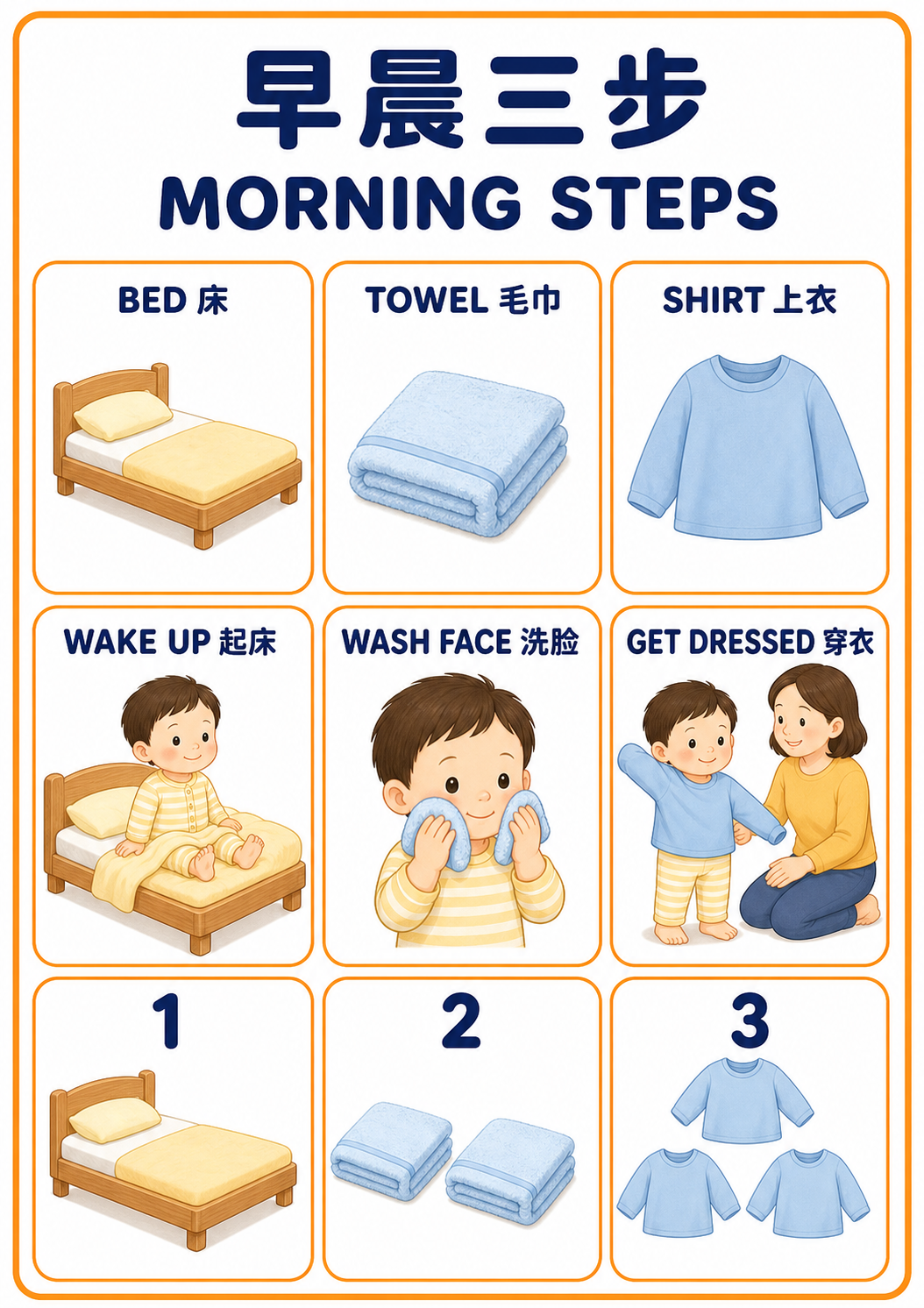
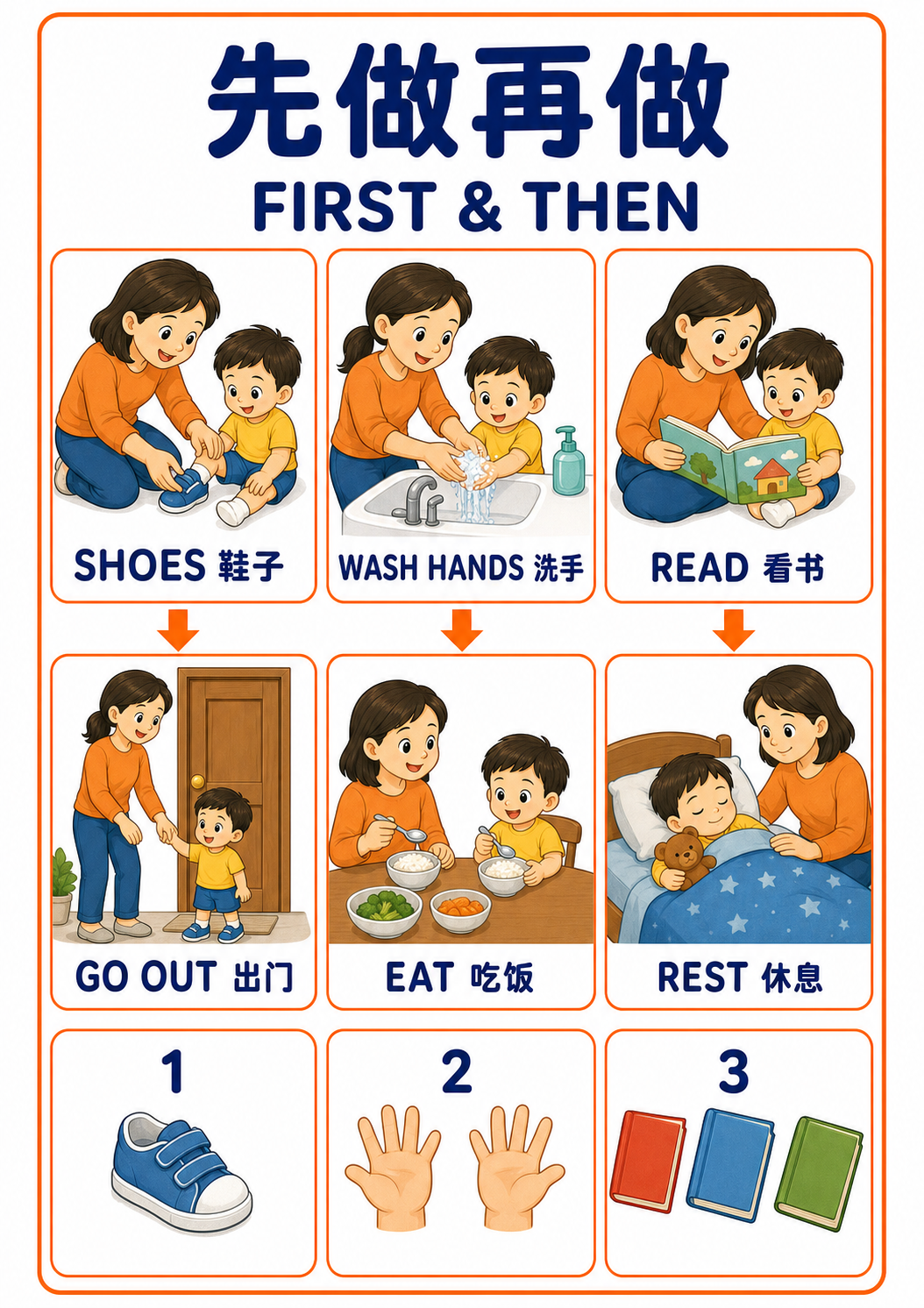
How to Help a Toddler Get Ready to Leave Home
Turn shoes, bag, and door into three visible steps instead of repeating ‘hurry up’ while a 2-year-old becomes less organised.
Open guide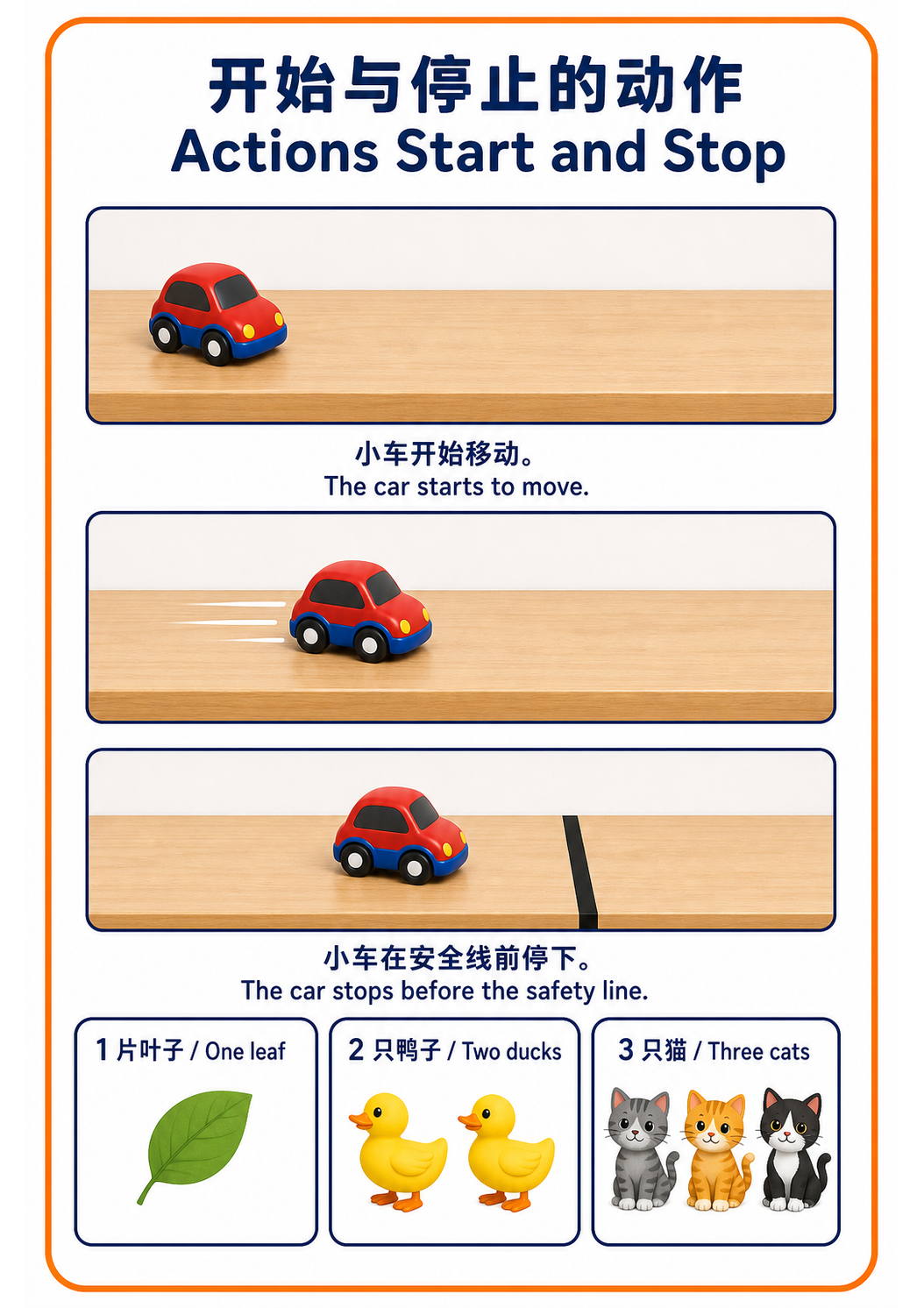
How to End Toddler Screen Time with a Clear Transition
Use one reliable stopping cue, name the next real activity, and avoid bargaining through repeated extra videos.
Open guide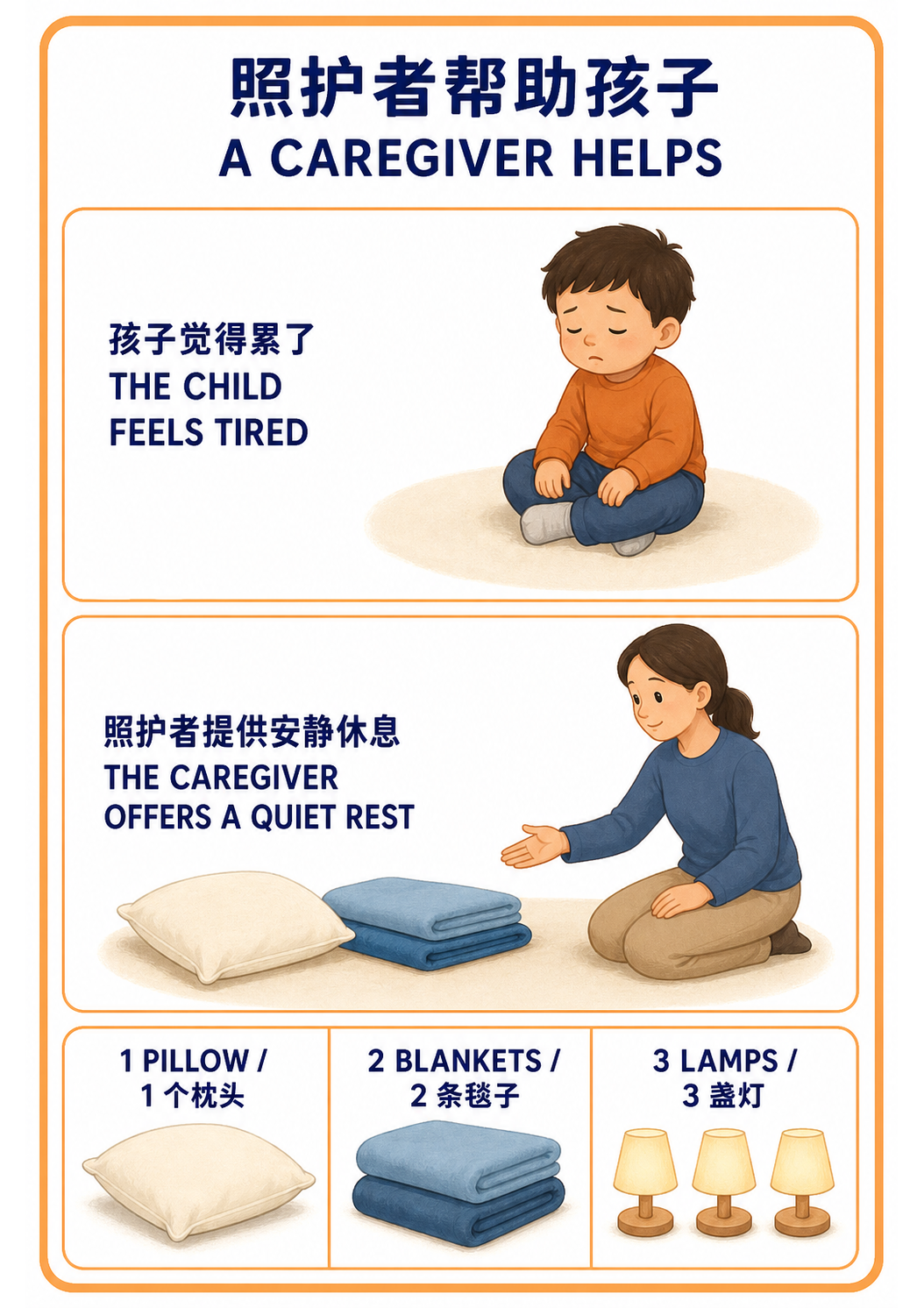
How to Help a Toddler Put Away One Toy
Make cleanup a tiny shared transition with one object, one visible destination, and adult help instead of demanding a whole-room tidy.
Open guide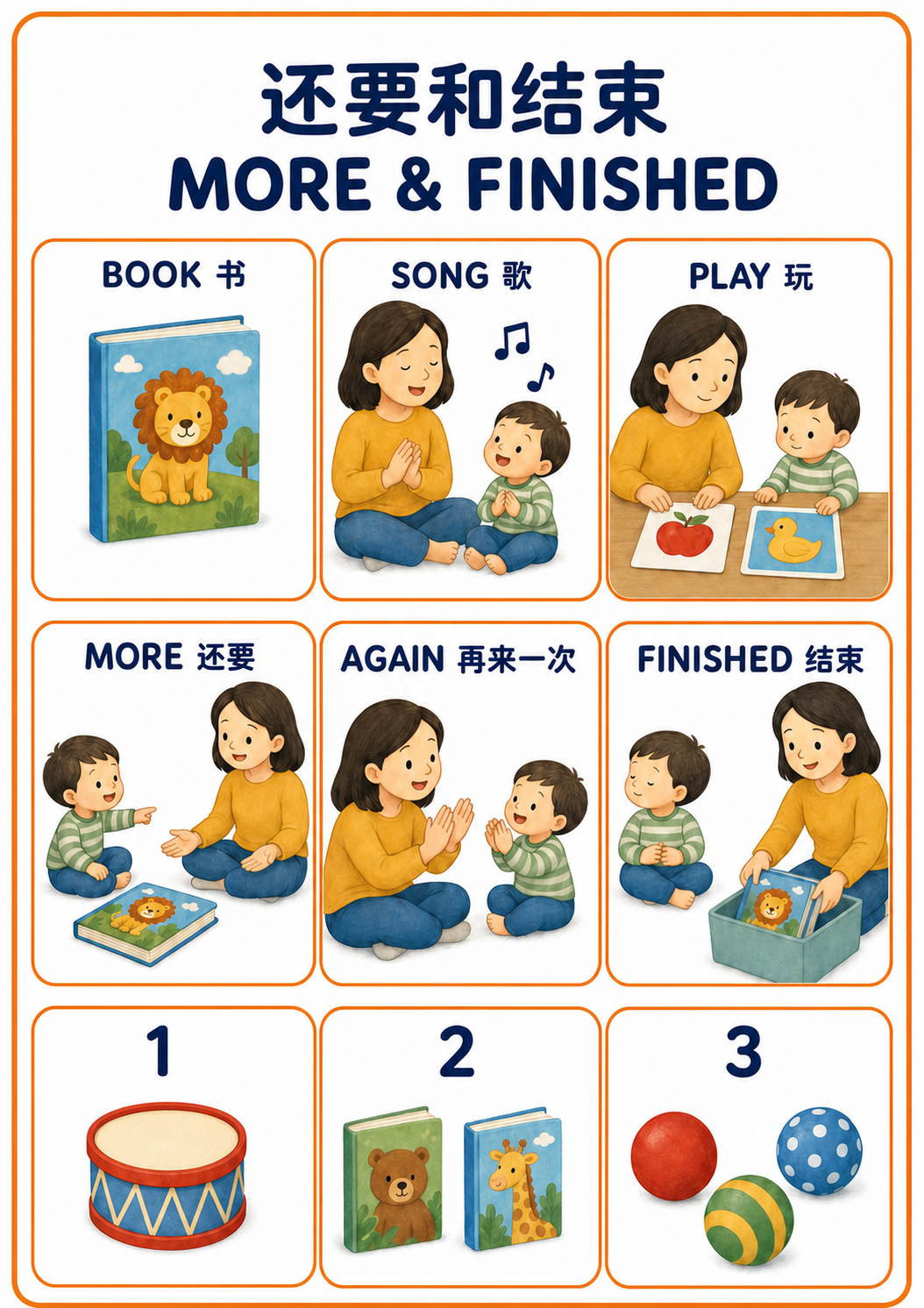
How to Handle a Toddler's Store Meltdown Without Buying the Item
Say no once, acknowledge wanting more, and move through the shop safely without using a purchase to end the protest.
Open guide
How to Keep a Toddler Close in Busy Public Places
Teach one simple public-place rule while adults use hands, carriers, strollers, and positioning to carry the real safety responsibility.
Open guide06
Bilingual family questions
Real questions about Chinese and English use, language mixing, books, daycare, and observation.
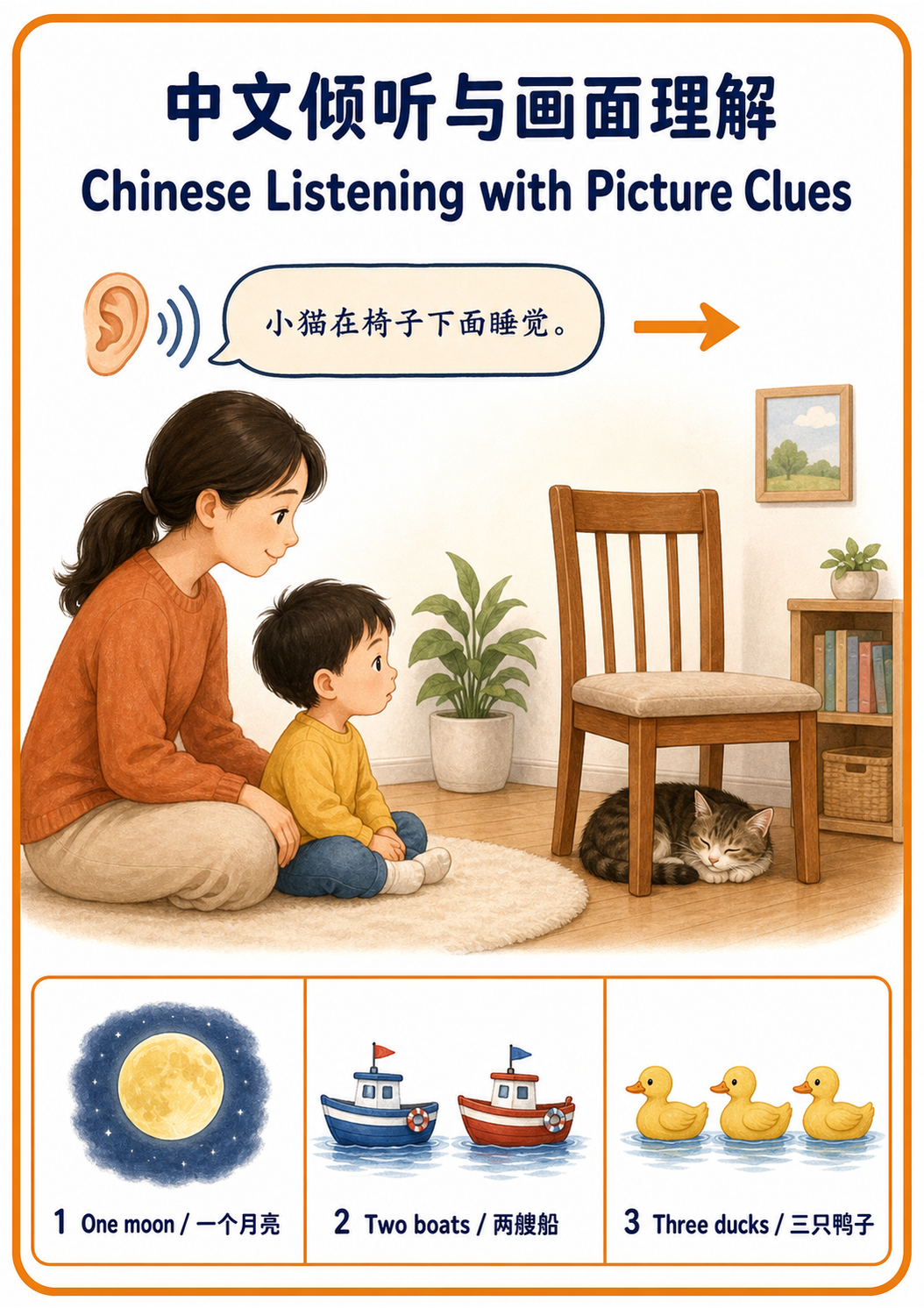
When a Toddler Understands Chinese but Answers in English
Keep the Chinese conversation meaningful, accept the child's message, and model useful words without withholding connection until they switch languages.
Open guide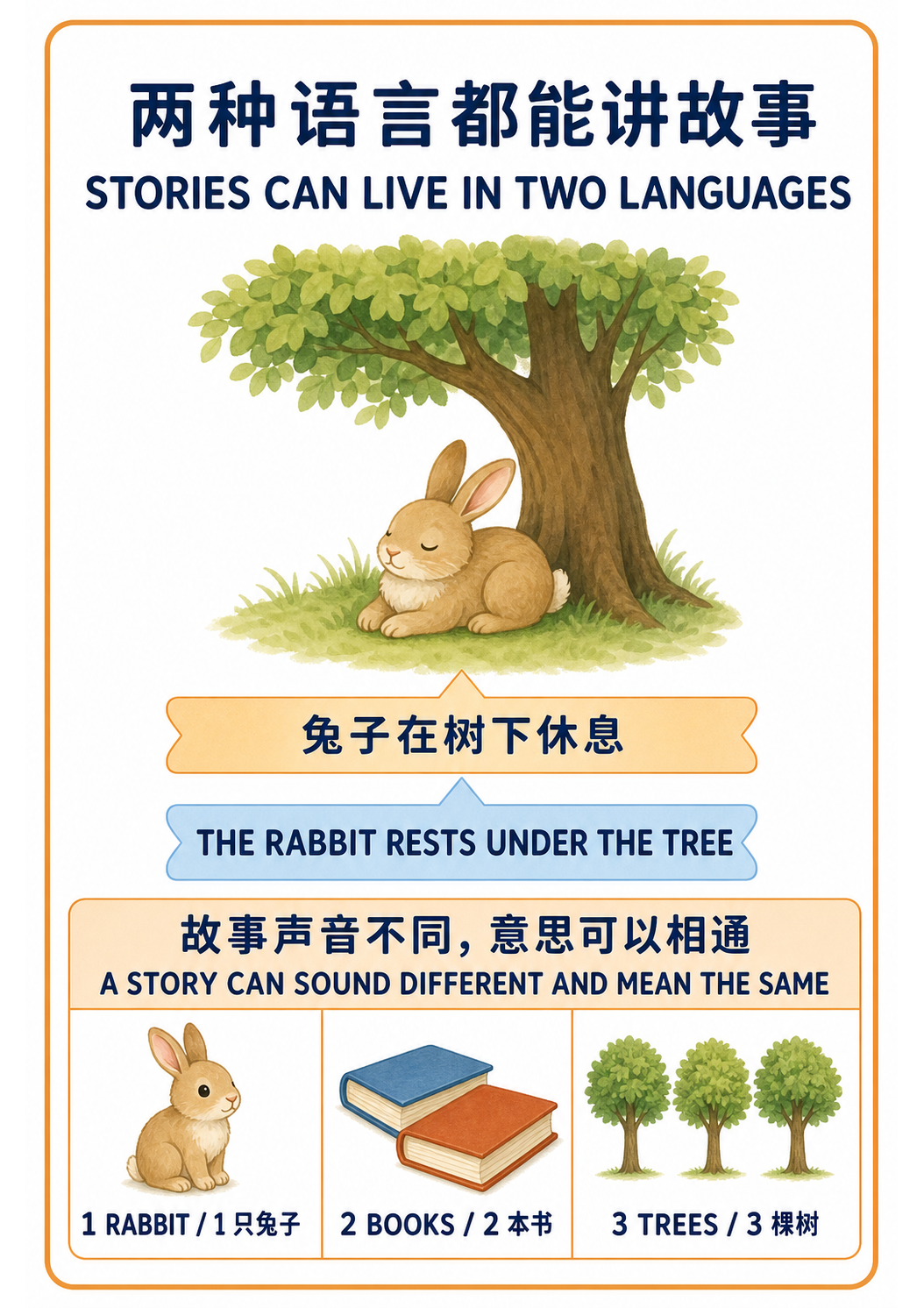
Should Parents Correct a Toddler's Mixed-Language Sentences?
Understand code-mixed toddler speech as communication, model a natural version, and avoid turning every bilingual sentence into a correction exercise.
Open guideHow to Keep Chinese After a Toddler Starts English Daycare
Protect a few warm, repeatable Chinese routines at home without turning the less-used language into evening homework.
Open guide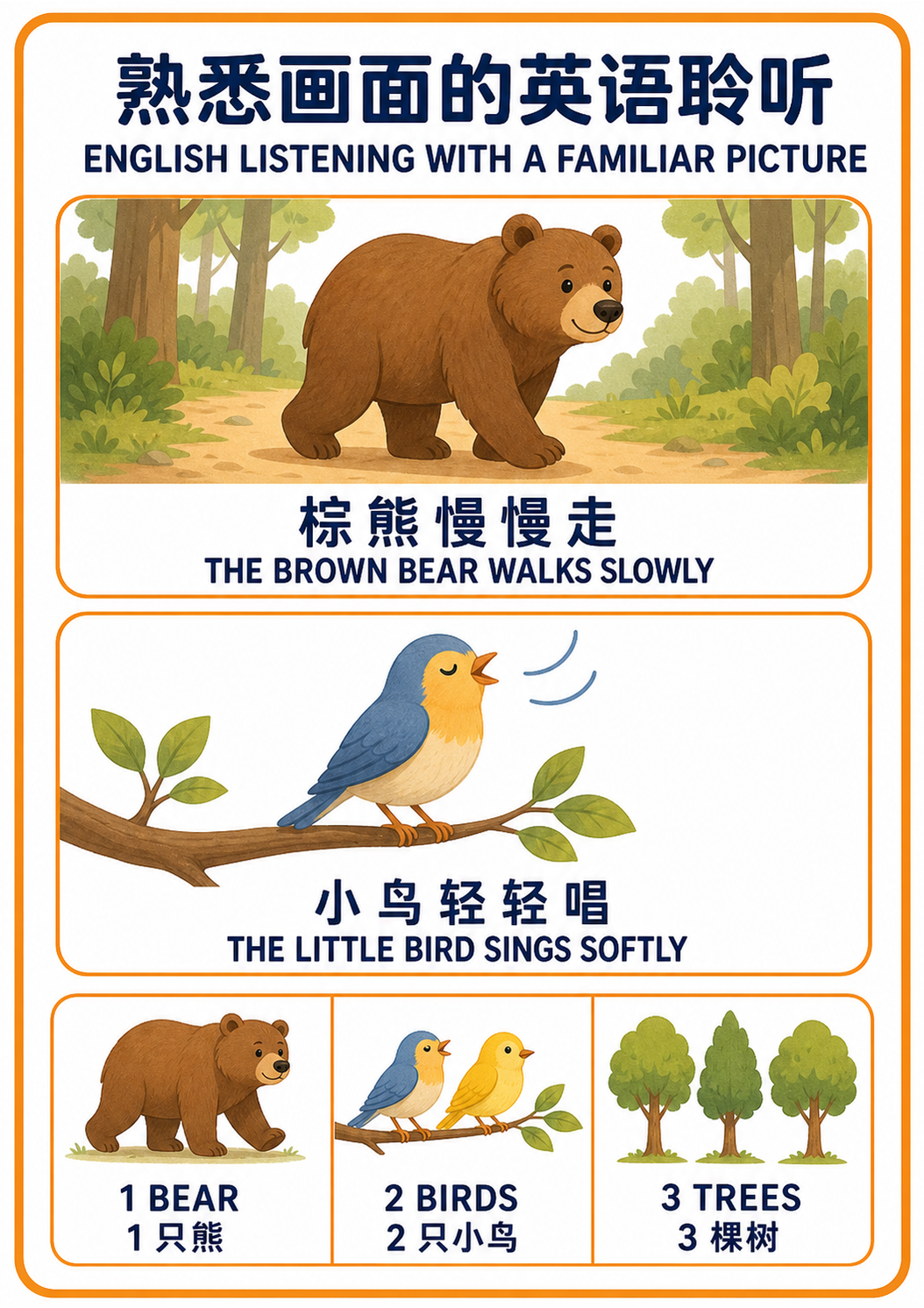
Can a Non-Native English-Speaking Parent Use English with a Toddler?
Use comfortable English in short meaningful routines while protecting the parent's strongest language and avoiding perfection pressure.
Open guideWhen a Toddler Refuses a Chinese Picture Book
Protect shared reading by shortening the book, following the pictures, and removing pressure to listen or answer in Chinese.
Open guideHow to Track Bilingual Toddler Words Without Testing
Record spontaneous messages across both languages, people, and settings without repeatedly asking a toddler to name flashcards.
Open guide06
Body care & daily cooperation
Toothbrushing, handwashing, dressing, diapers, grooming, and weather-safe clothing with dignity.
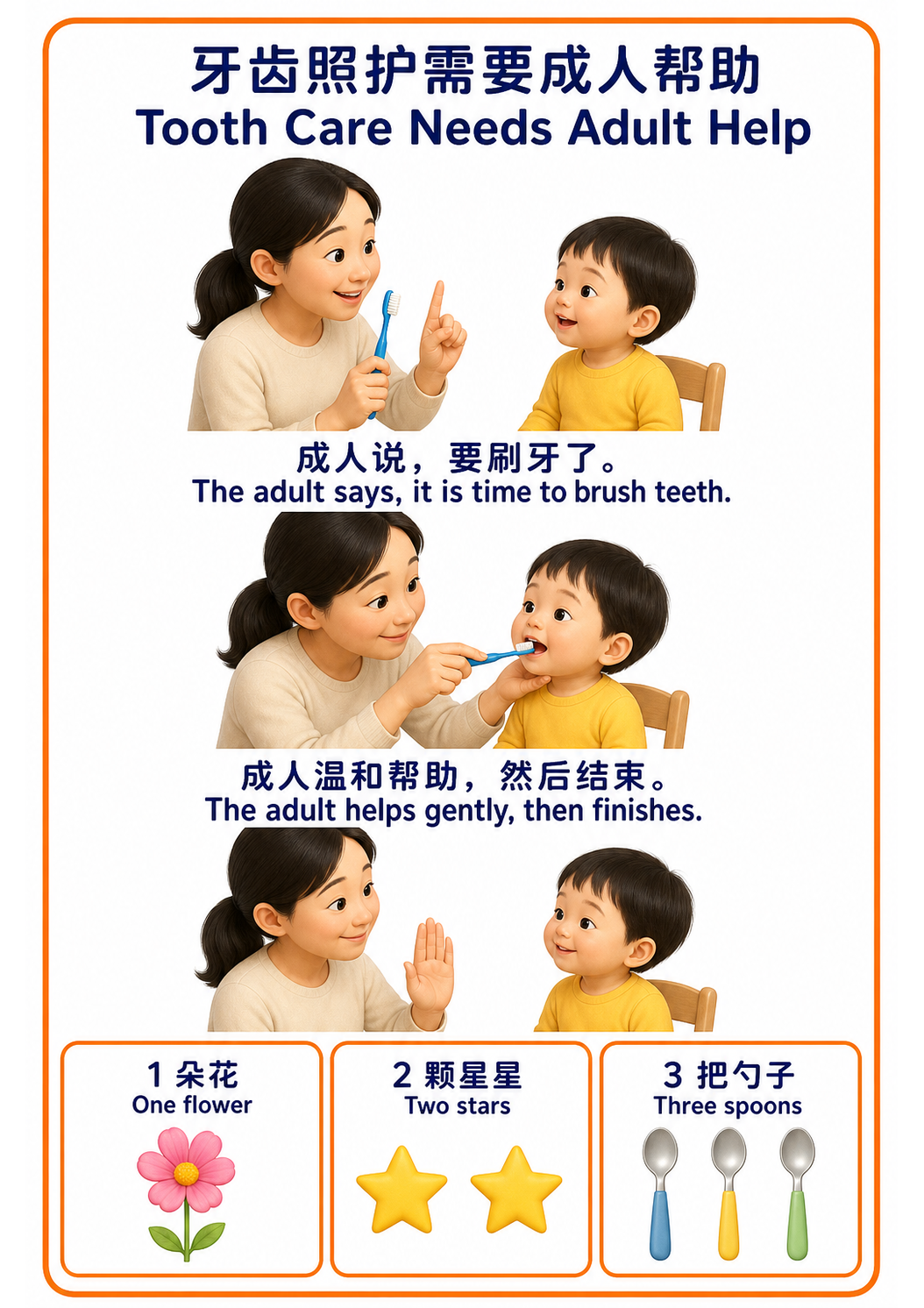
How to Brush a Toddler's Teeth When They Refuse
Keep tooth care predictable, offer small choices, and provide calm adult help without pretending brushing is optional.
Open guide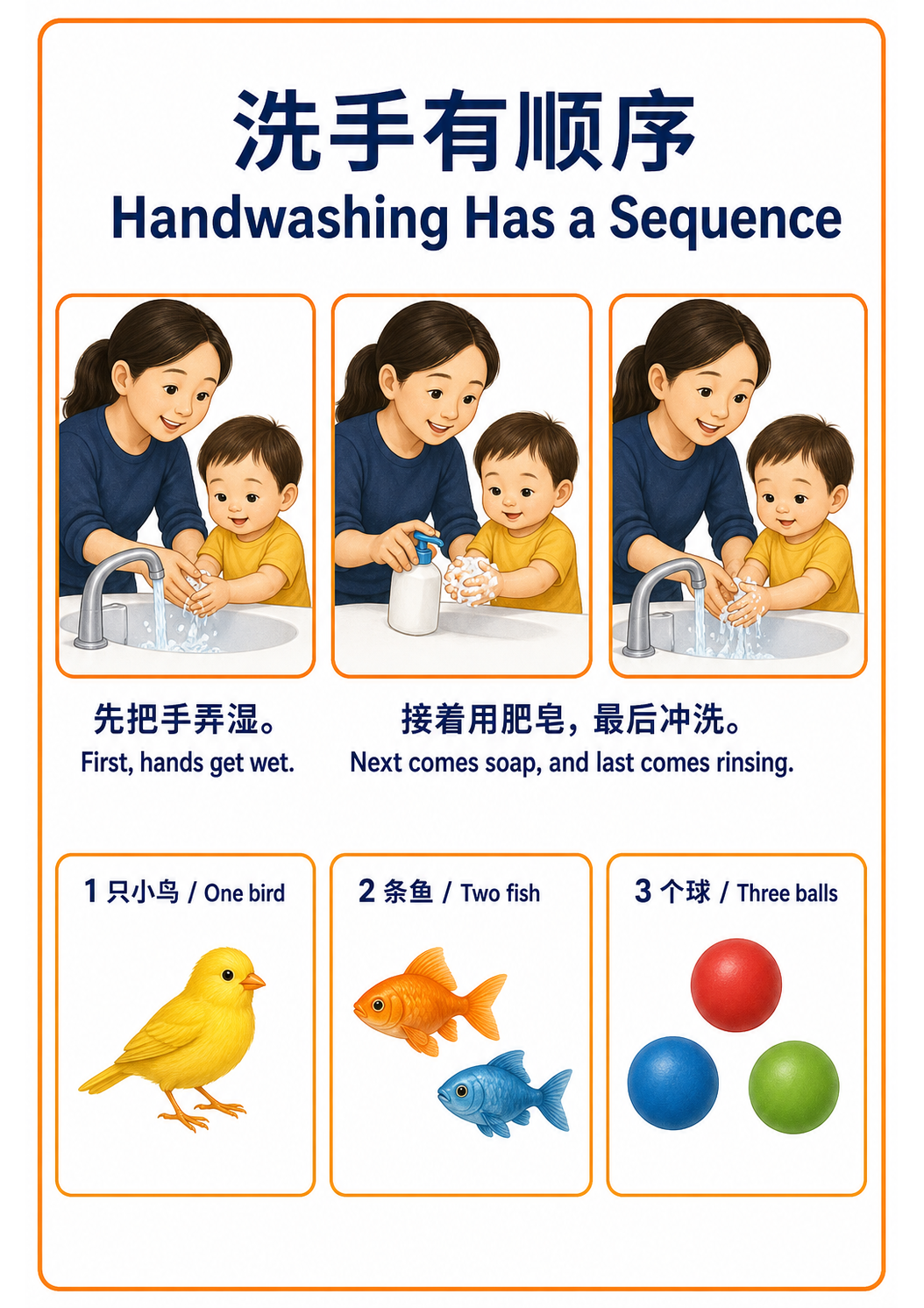
How to Help a Toddler Wash Hands Without a Battle
Make the handwashing sequence visible, reduce sensory surprises, and let the child do one part while the adult manages hygiene and water safety.
Open guide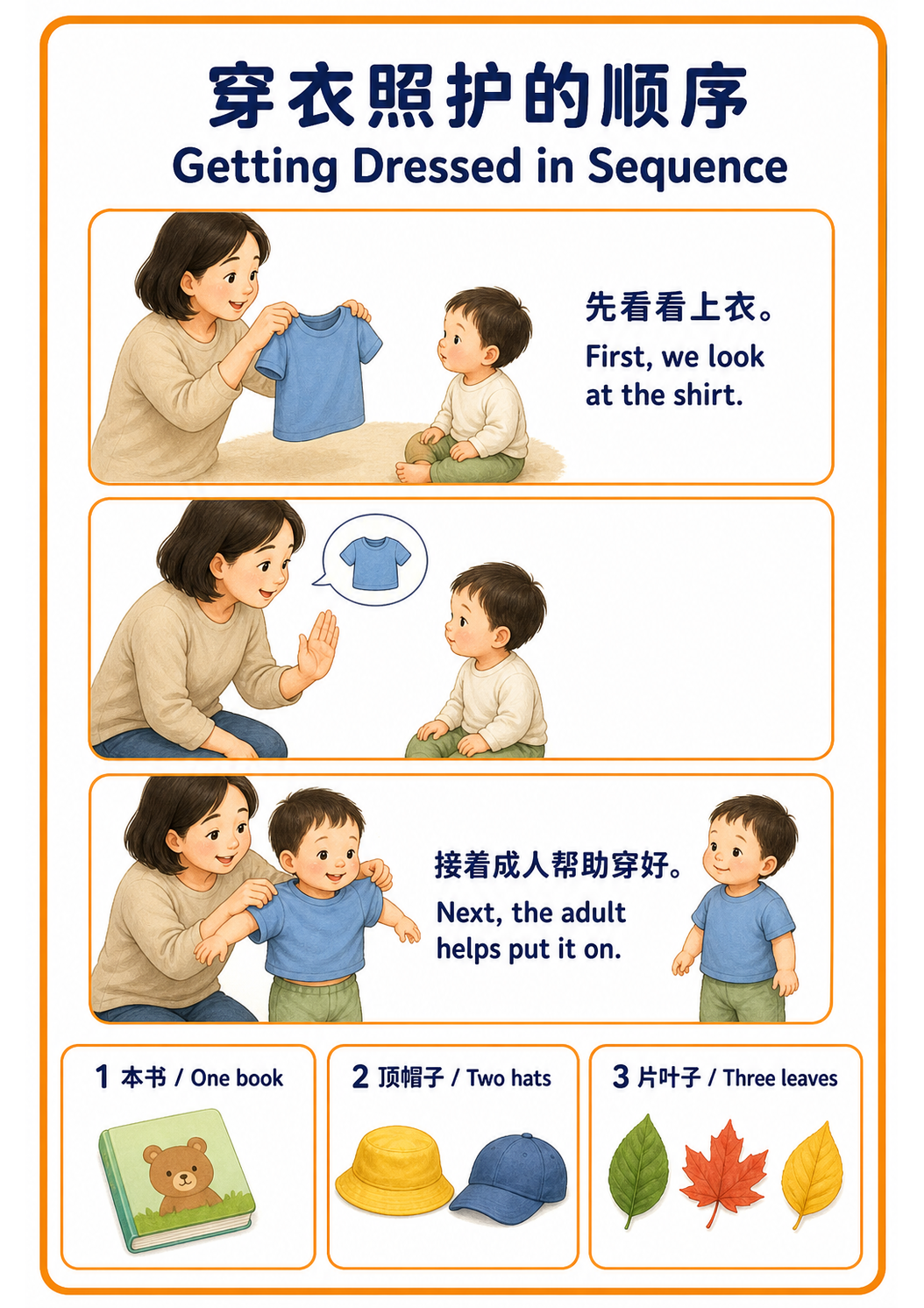
How to Help a Toddler Get Dressed Without Taking Over
Give a 2-year-old one reachable clothing step, pause for effort, and add adult help before frustration or lateness takes over.
Open guide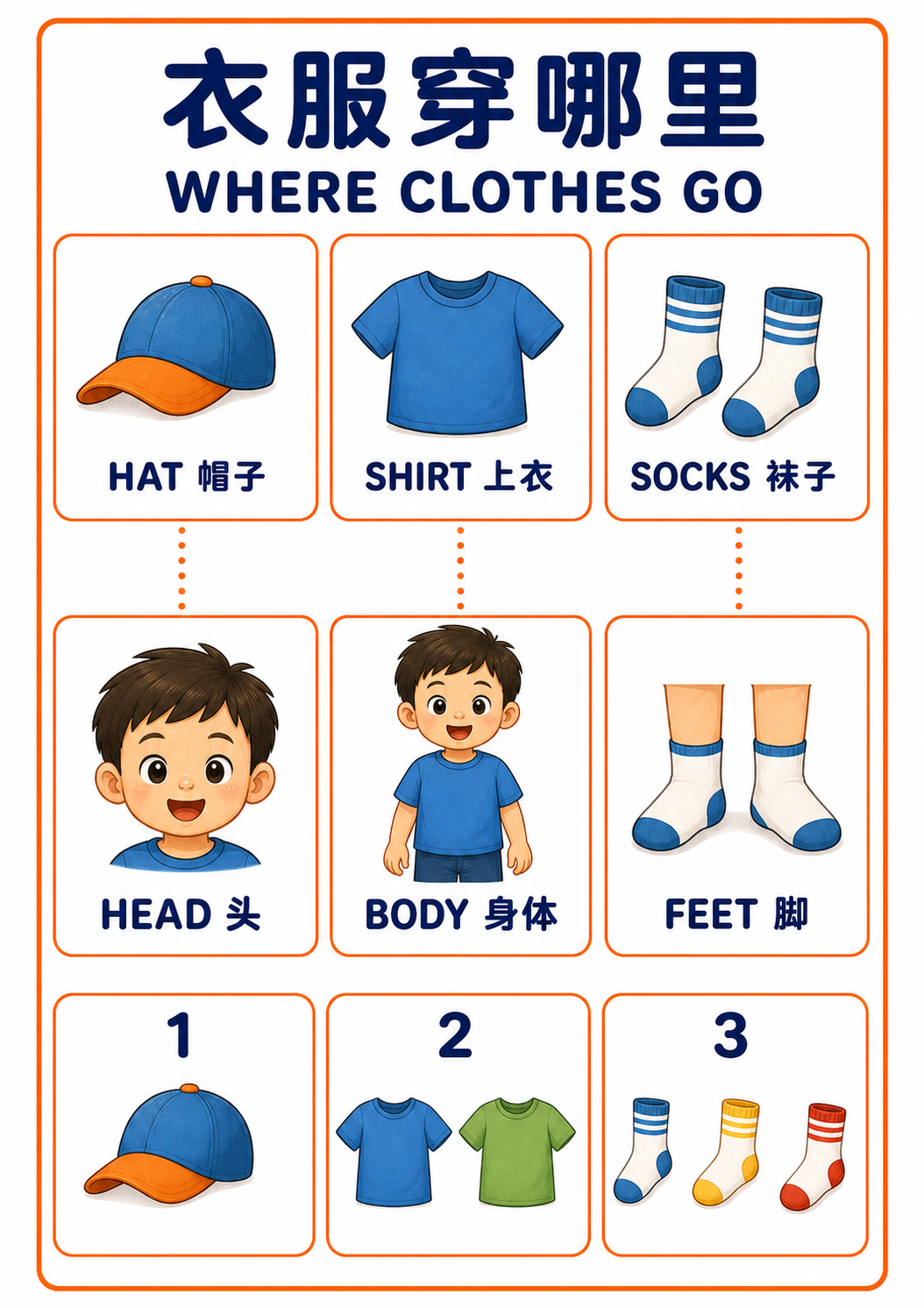
When a Toddler Refuses Weather-Safe Clothes
Keep the weather boundary with two acceptable clothing options, sensory adjustments, and a clear decision about whether going outside is safe.
Open guide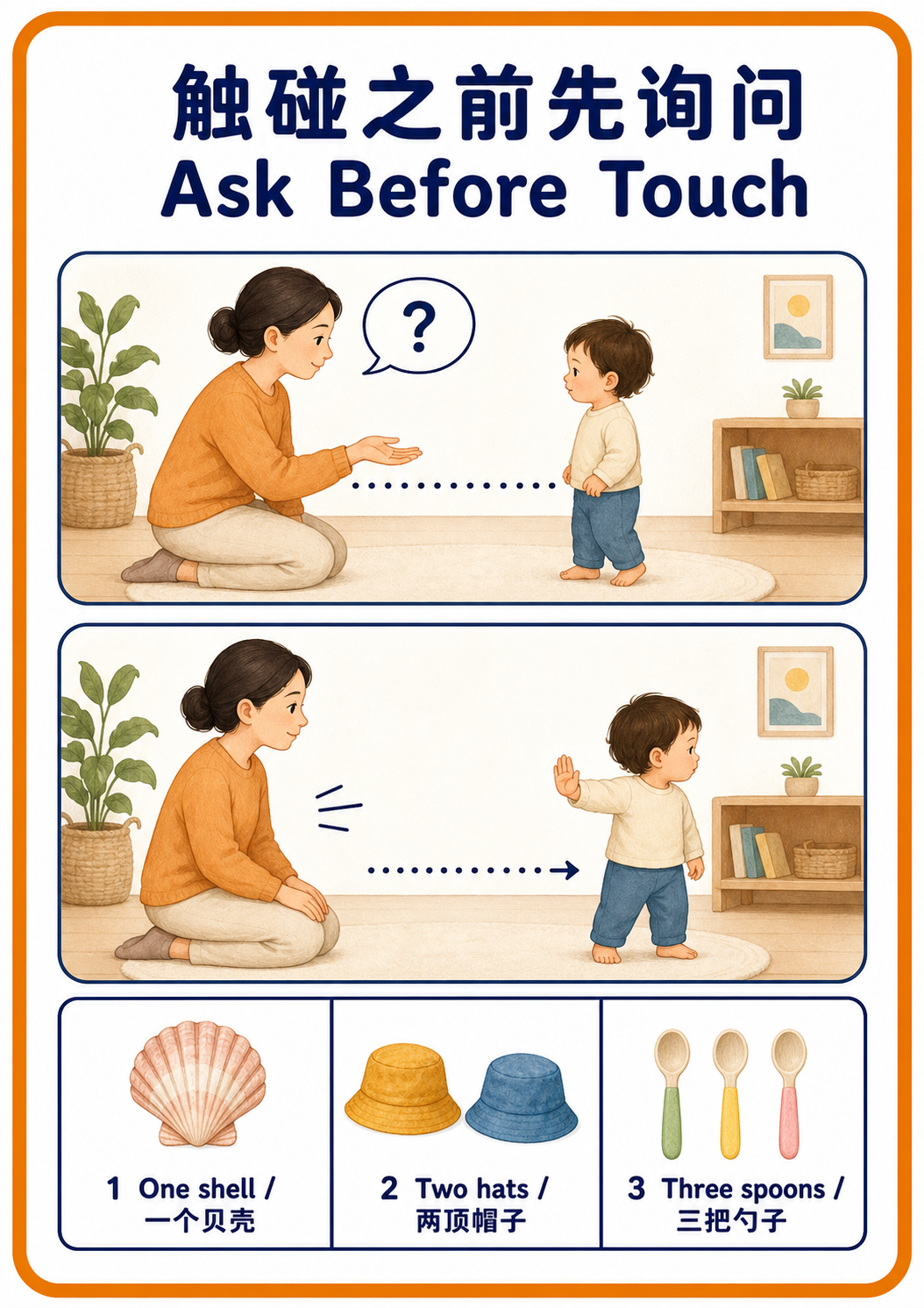
How to Change a Diaper When a Toddler Keeps Moving
Prepare everything first, narrate necessary touch, and offer a standing or lying choice when safe while the adult protects hygiene and fall safety.
Open guideHow to Prepare a Toddler for Haircuts and Nail Trimming
Preview tools and touch, practise a stop signal, and separate optional grooming from care that must be completed for health or safety.
Open guide11
Language & communication
Responsive talk, gestures, bilingual routines, sound play, and meaningful choices.
English Without Forced Repetition
A calm five-minute listening routine for a toddler beginning English.
Open guide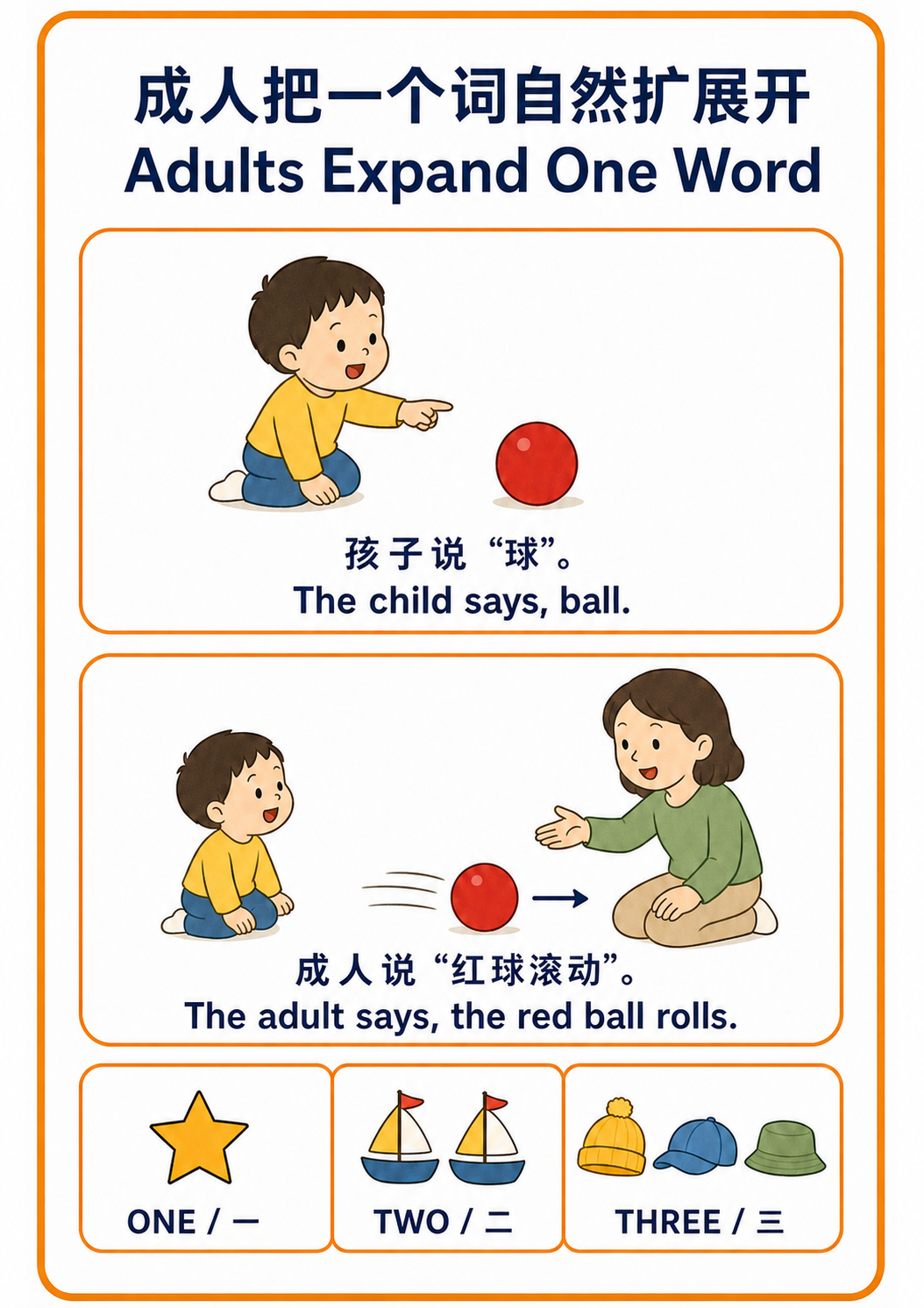
How to Expand a Toddler's One Word into a Short Phrase
Turn a toddler's single word into useful language without asking for repetition or correcting pronunciation.
Open guide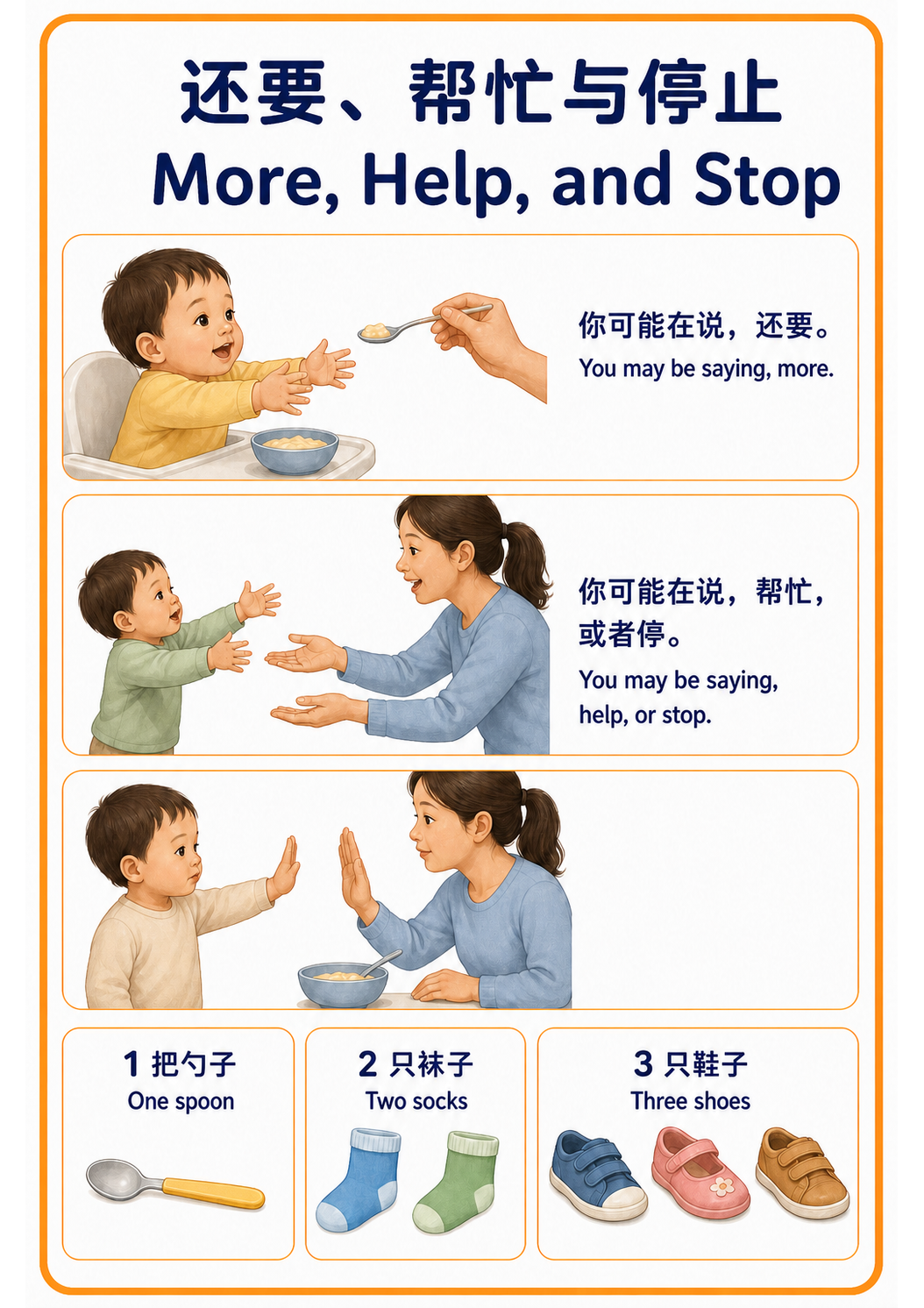
Teach More, Help, and Stop with Toddler Gestures
Use three practical gestures to give a toddler clearer ways to request, ask for support, and finish.
Open guide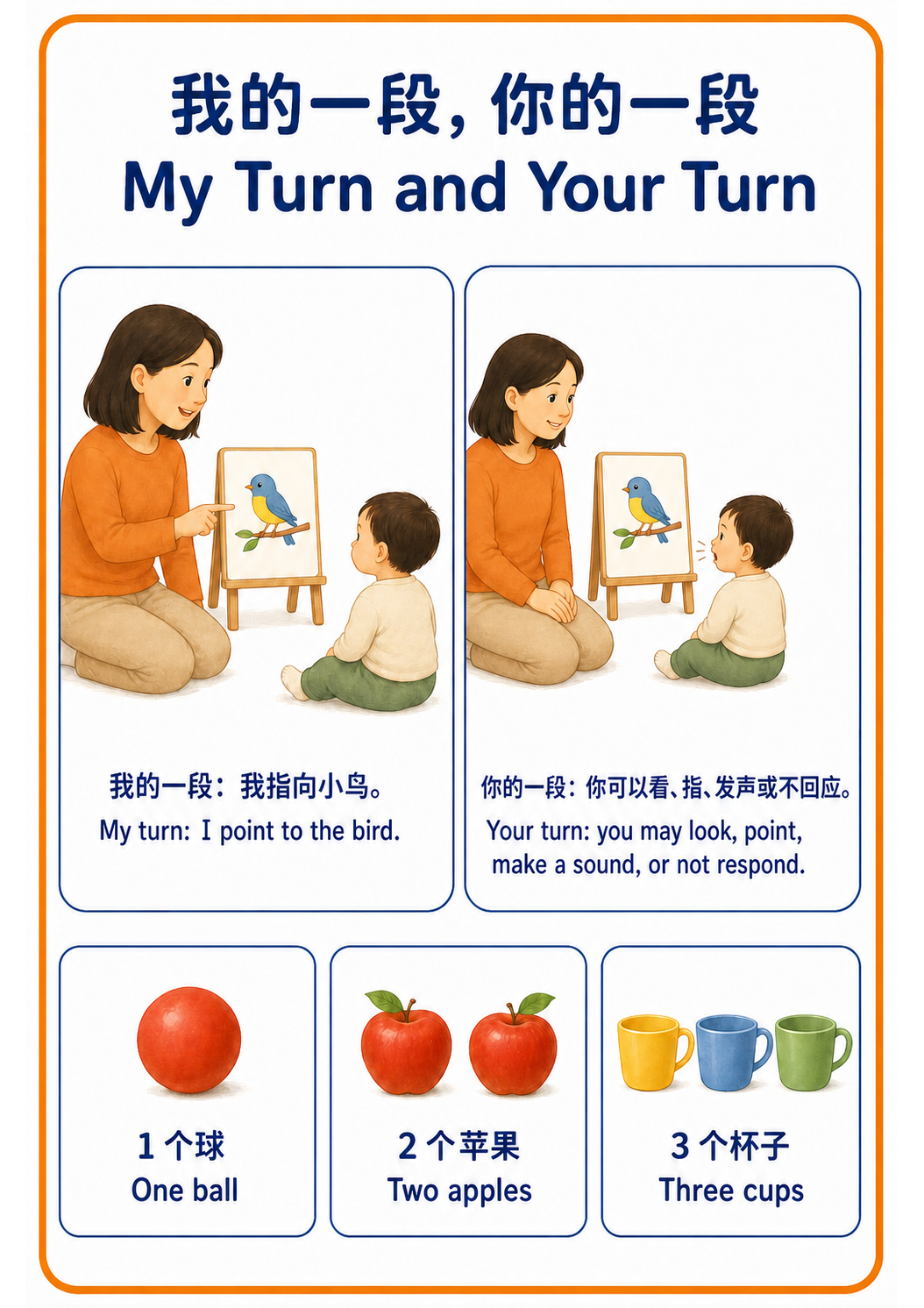
Why Wait Time Helps Toddler Conversations
Use a short, comfortable pause after speaking so a toddler has room to look, gesture, sound, or answer.
Open guide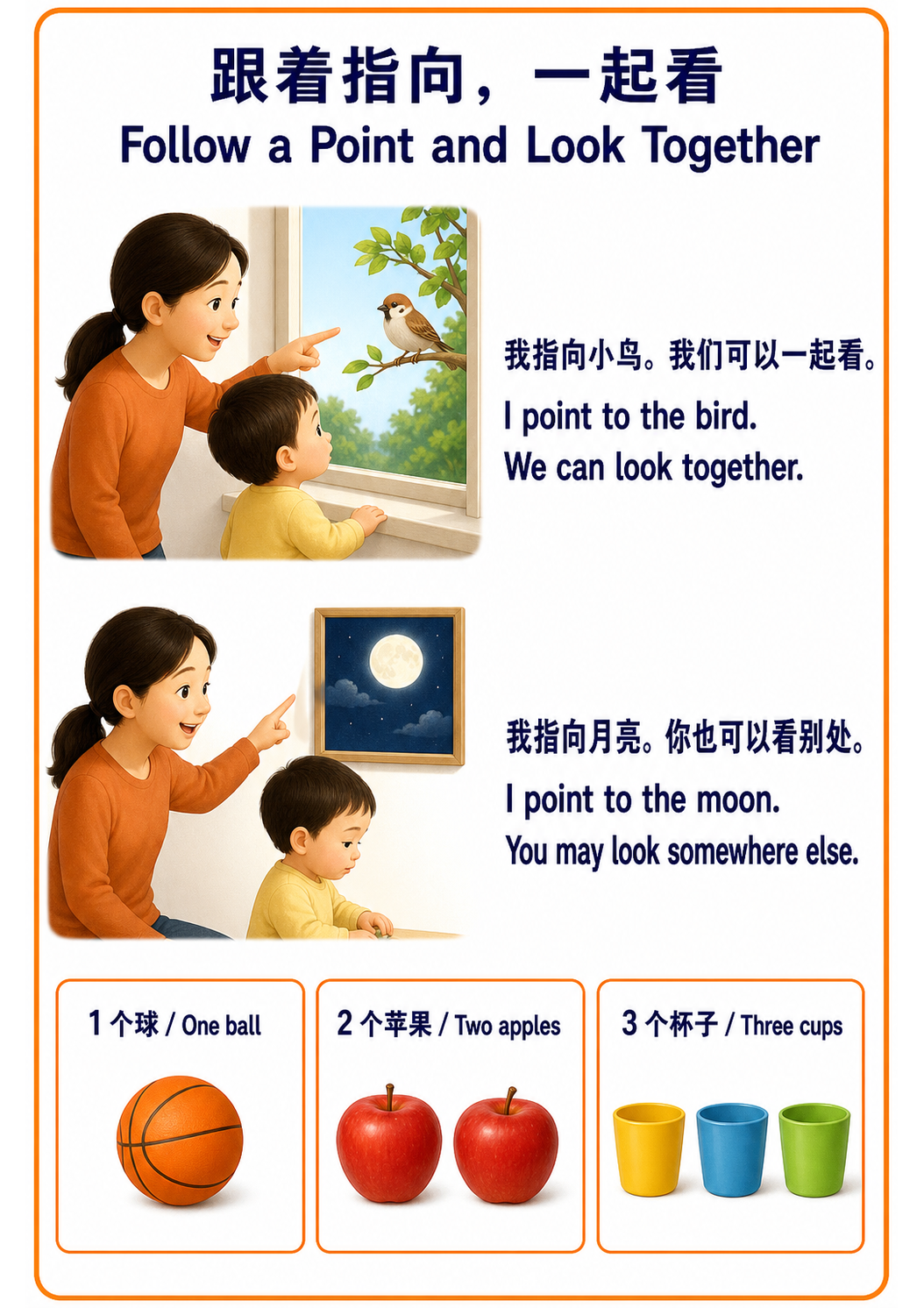
Follow a Toddler's Point to Build Shared Attention
Turn a point, reach, or look into a brief shared moment without redirecting the child's interest.
Open guide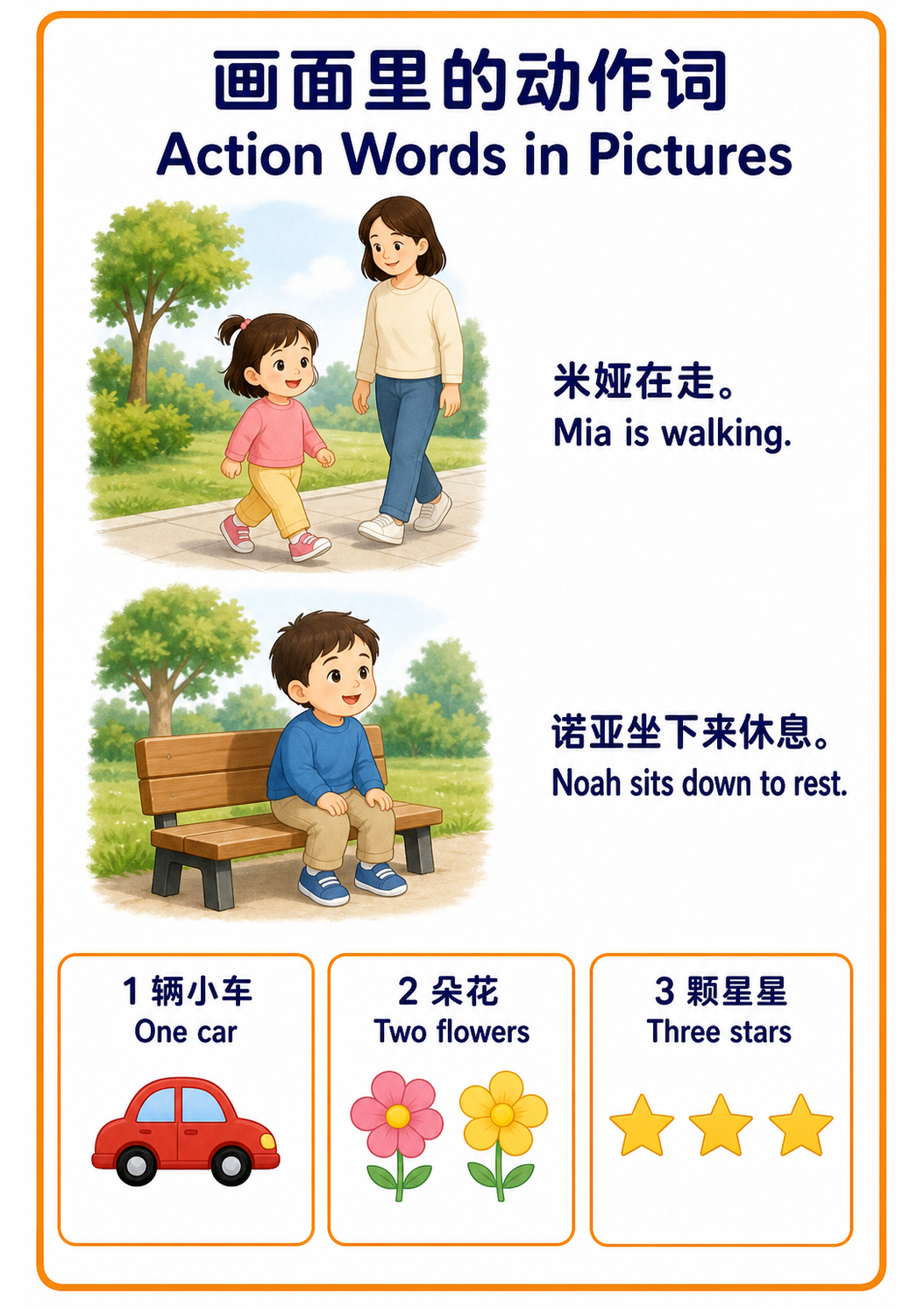
Teach Toddler Action Words Through Everyday Pictures
Use familiar pictures and tiny movements to make verbs such as wash, carry, sit, and open meaningful.
Open guideBilingual Storytelling at Home Without Translating Every Line
Keep a shared story coherent in two languages without turning every sentence into a translation exercise.
Open guide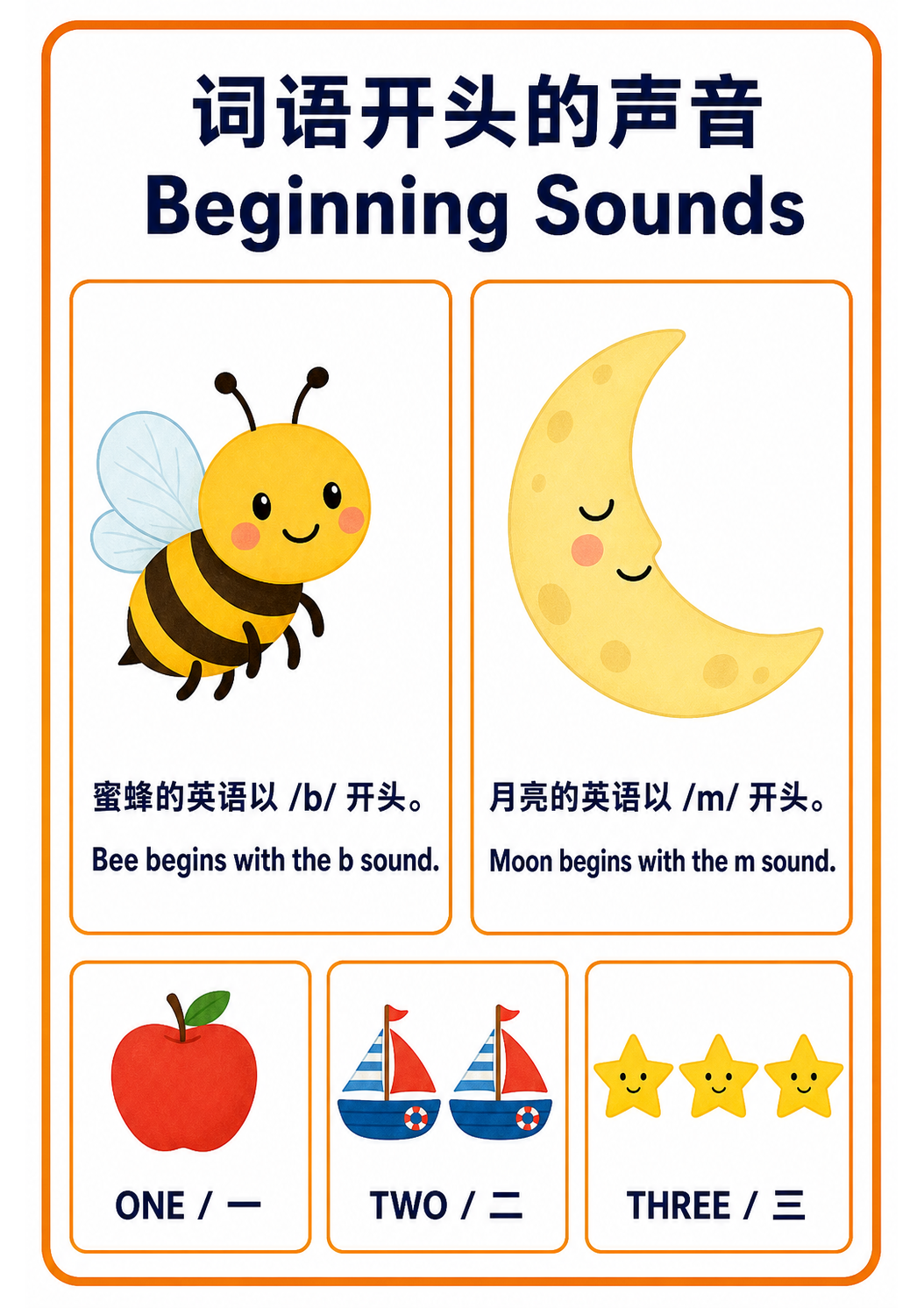
Beginning-Sound Play for Toddlers Without Letter Drills
Listen to the first sound in familiar words through playful emphasis, pictures, and pauses—not flashcards.
Open guide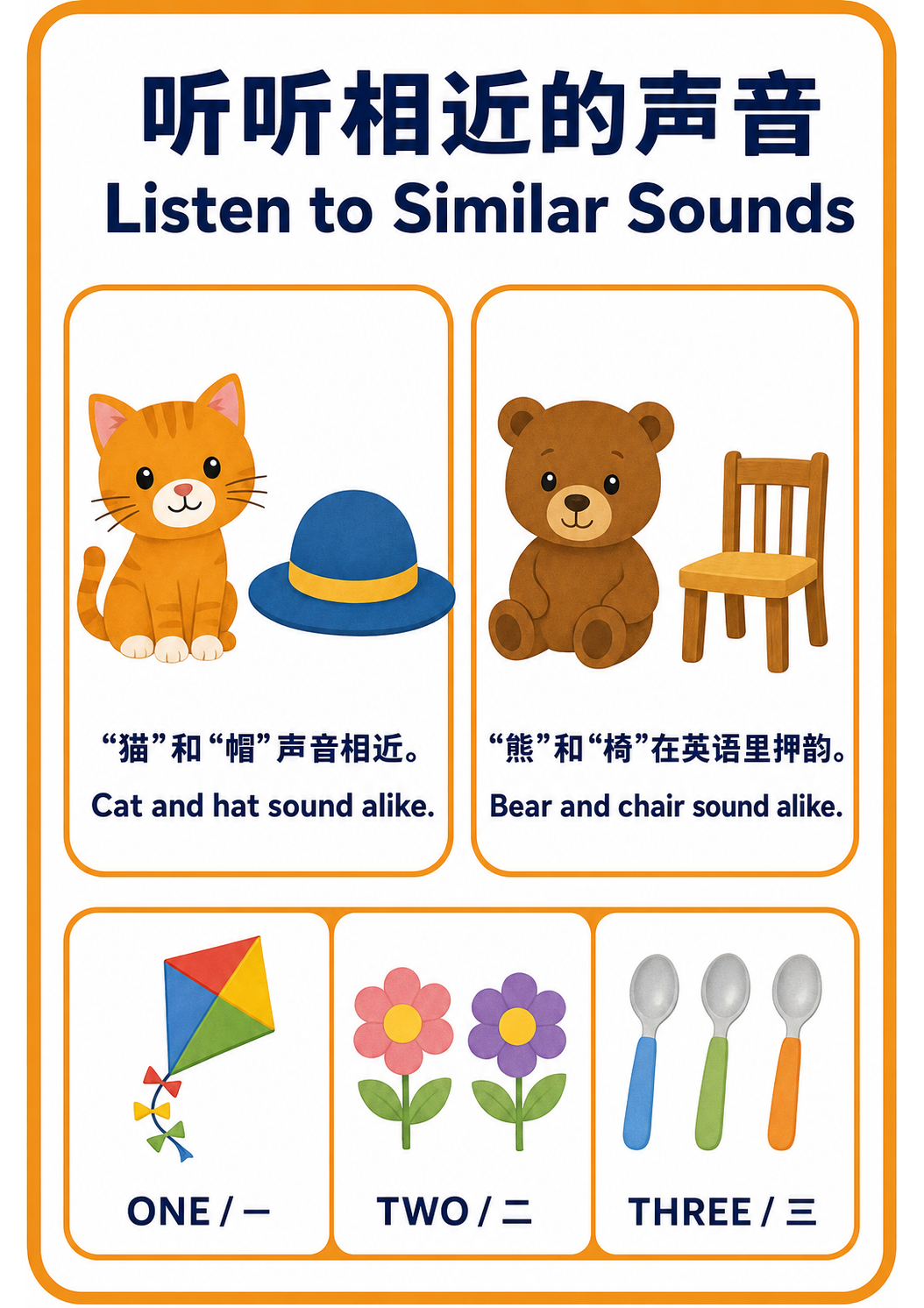
Simple Rhyme Play for Toddlers Without Memorising
Enjoy similar word endings through a tiny chant, movement, and repetition without asking for a correct answer.
Open guide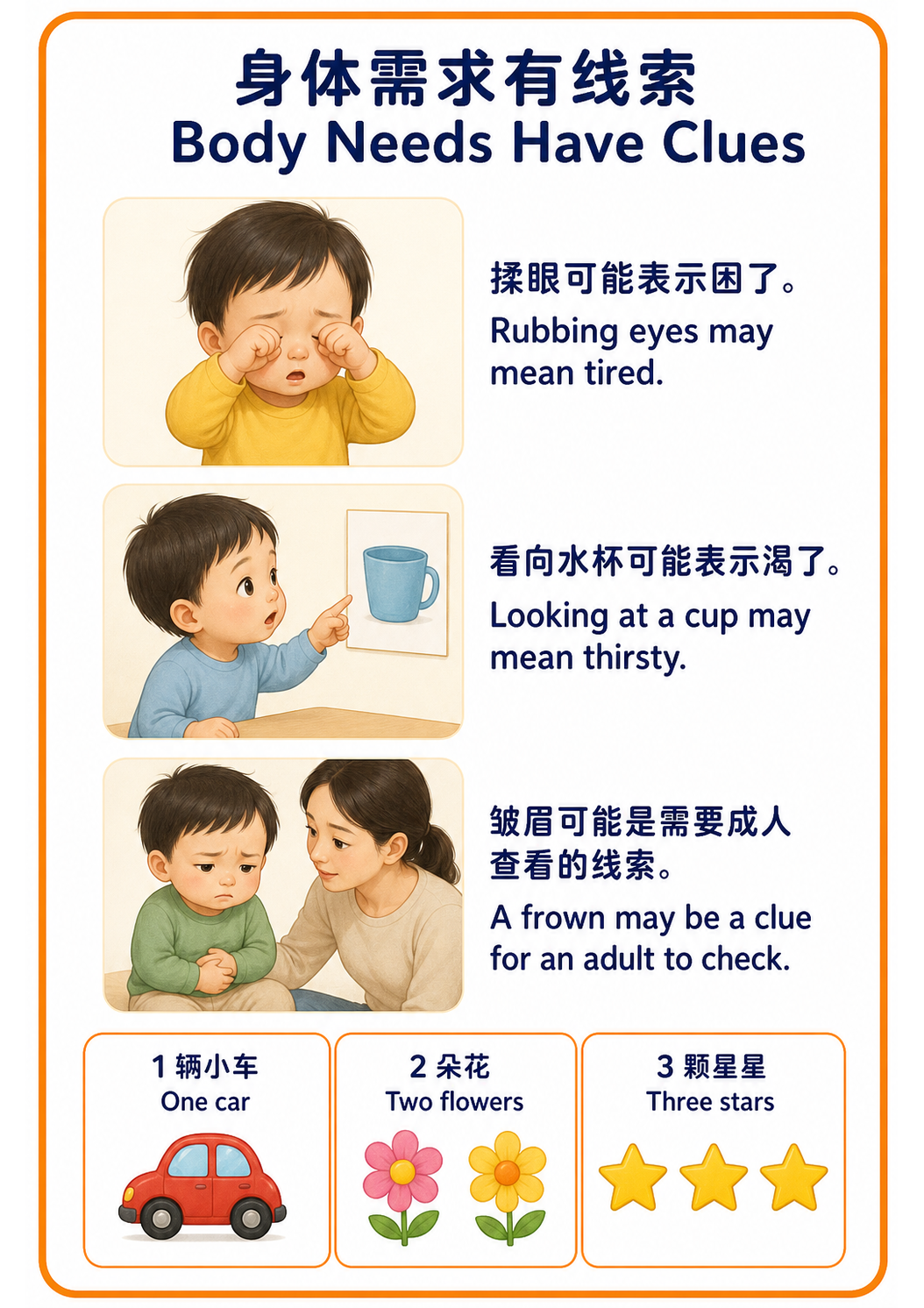
Help a Toddler Name Body Needs: Tired, Thirsty, and Rest
Put simple words beside body clues without guessing feelings, withholding care, or turning needs into a quiz.
Open guide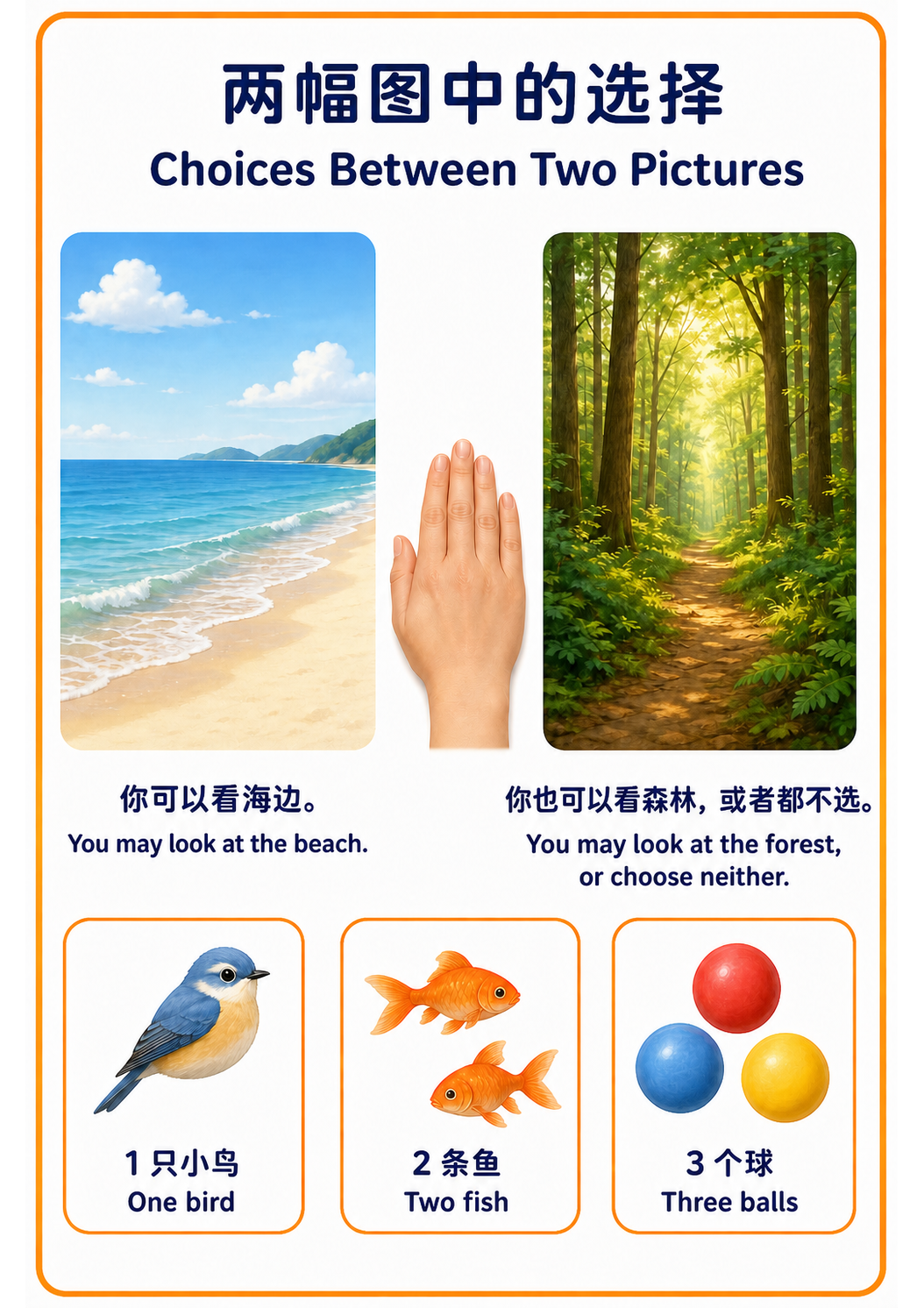
How to Offer Two Choices to a Toddler
Use two real, acceptable options to support communication and autonomy without disguising a command as a choice.
Open guide09
Shared reading & stories
Picture walks, repeated lines, story order, book handling, and child-led reading.
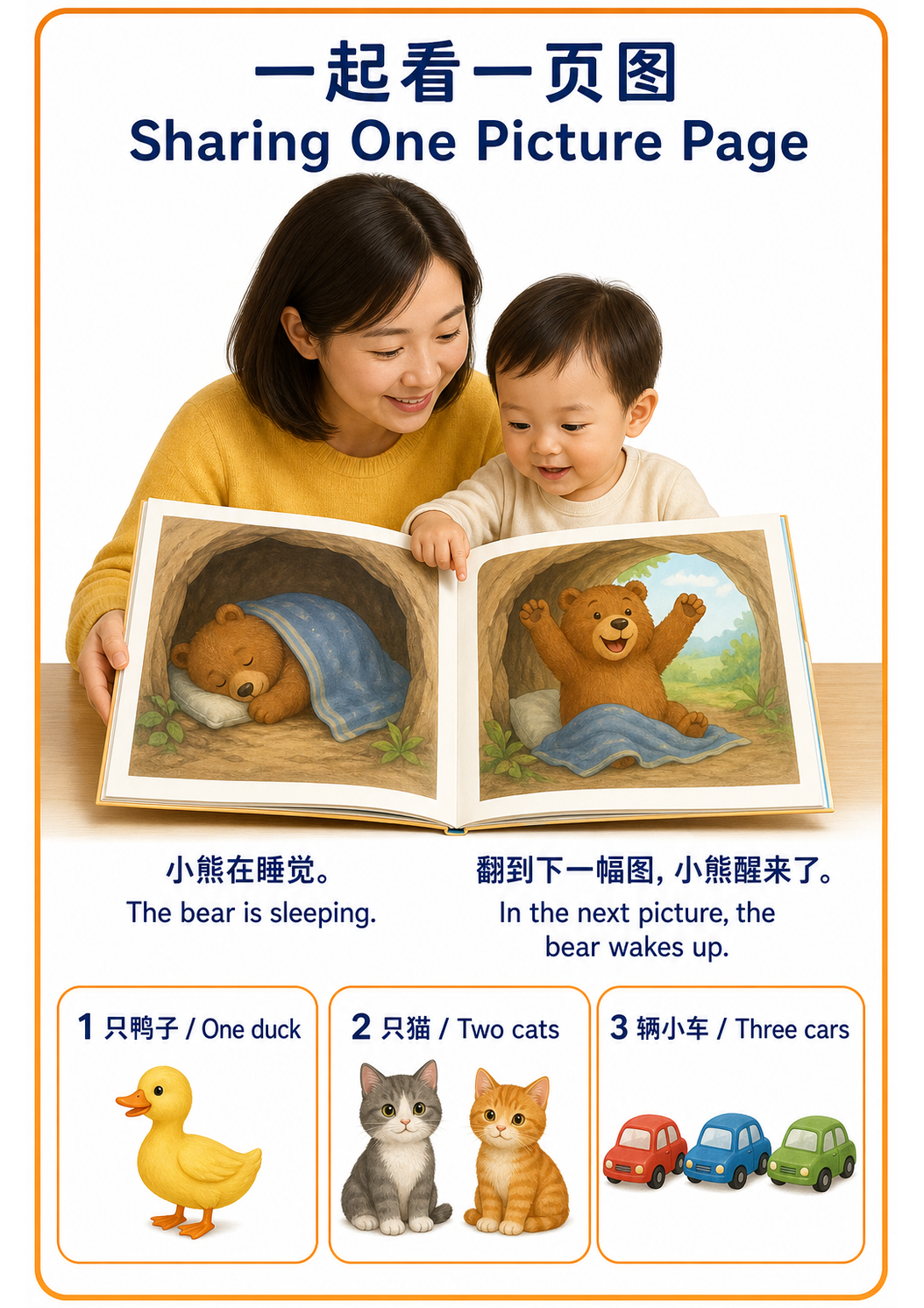
When a Toddler Will Not Sit Still for a Book
Make room for standing, pointing, one sentence, and an early finish.
Open guide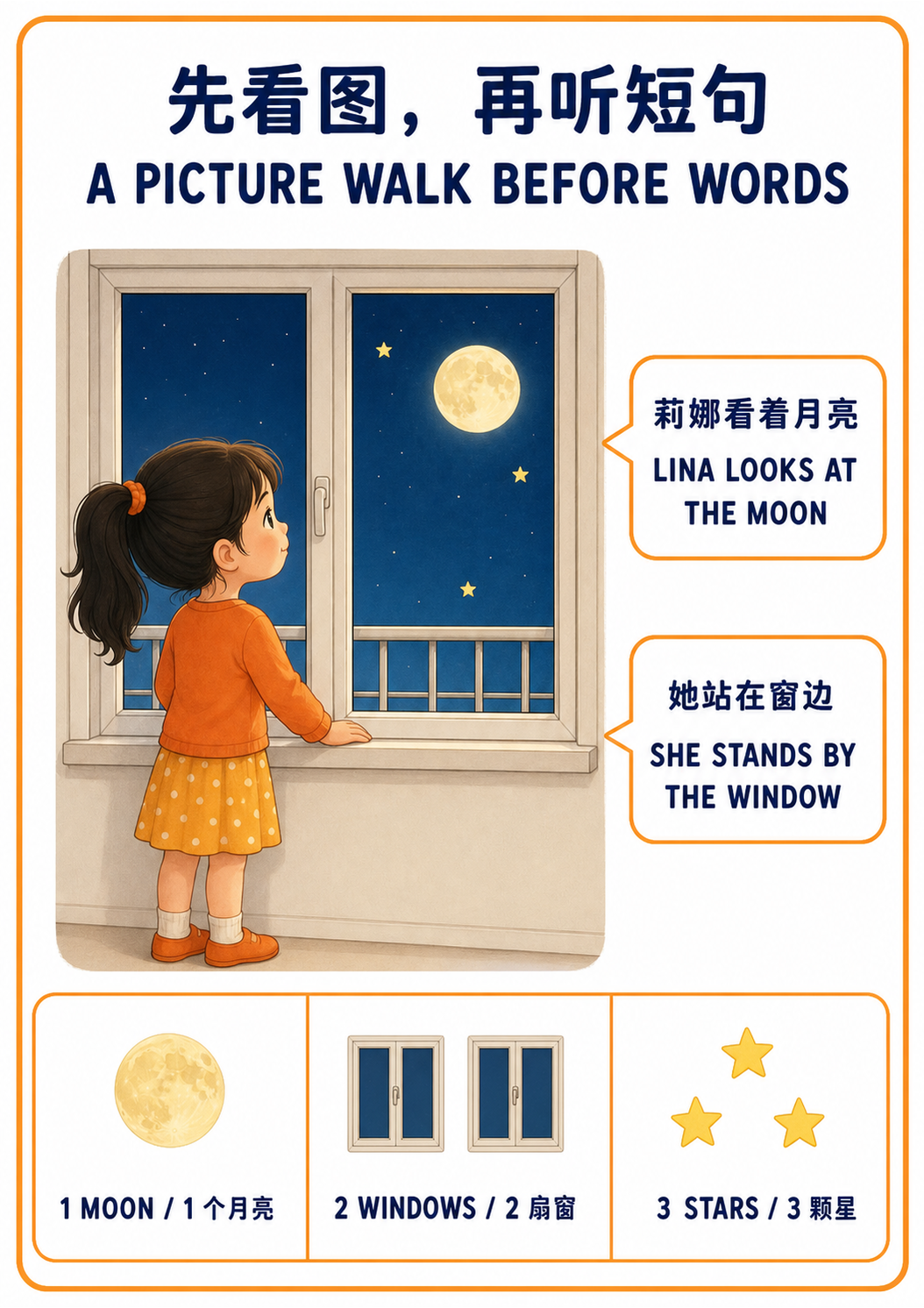
Try a Picture Walk Before Reading a Toddler Book
Look through the pictures first, follow one visual clue, and make the story easier to enter before reading the text.
Open guide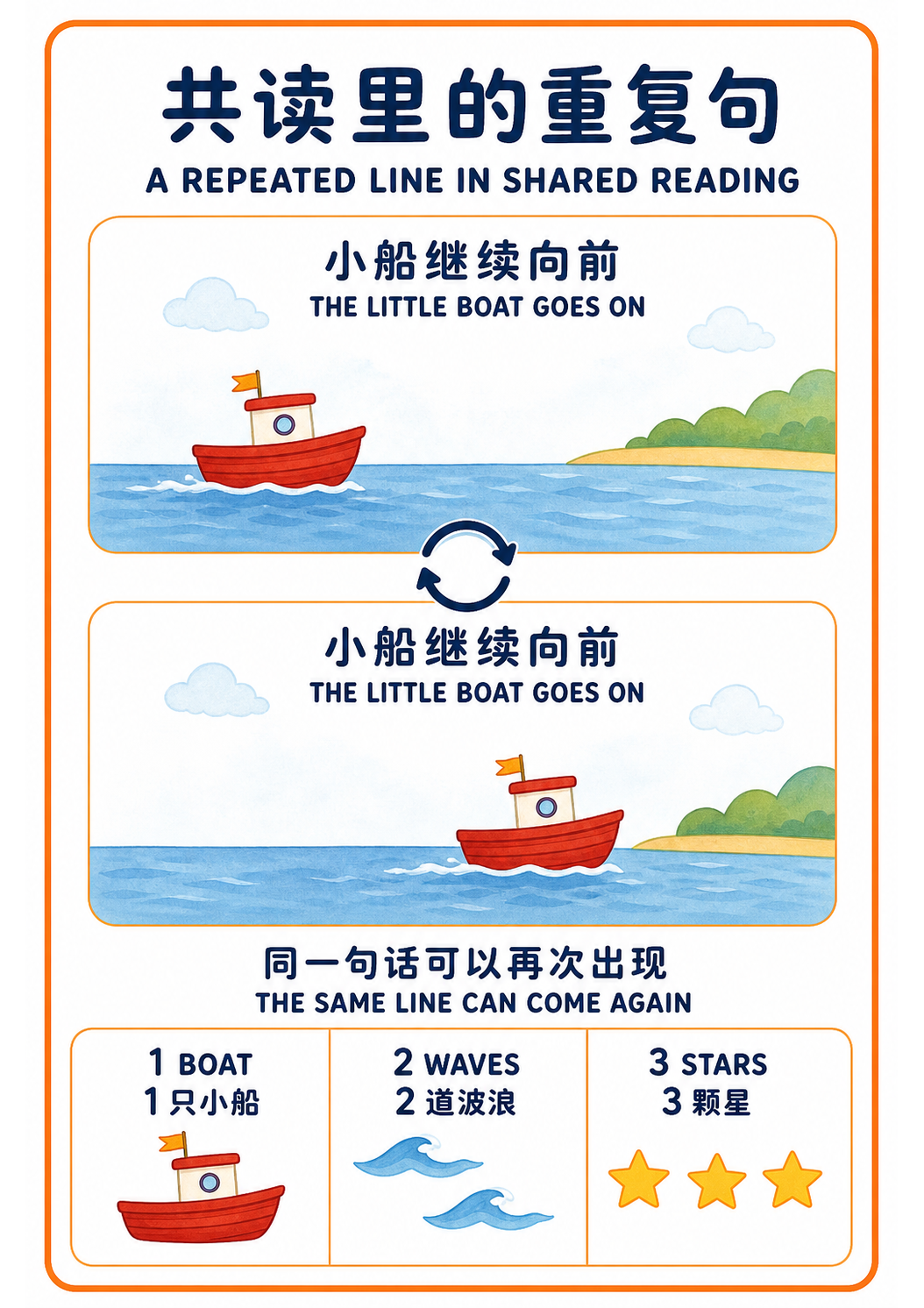
Use Repeated Lines to Make Toddler Reading Interactive
Choose one recurring sentence, add a predictable pause, and let a toddler join in by looking, moving, sounding, or speaking.
Open guide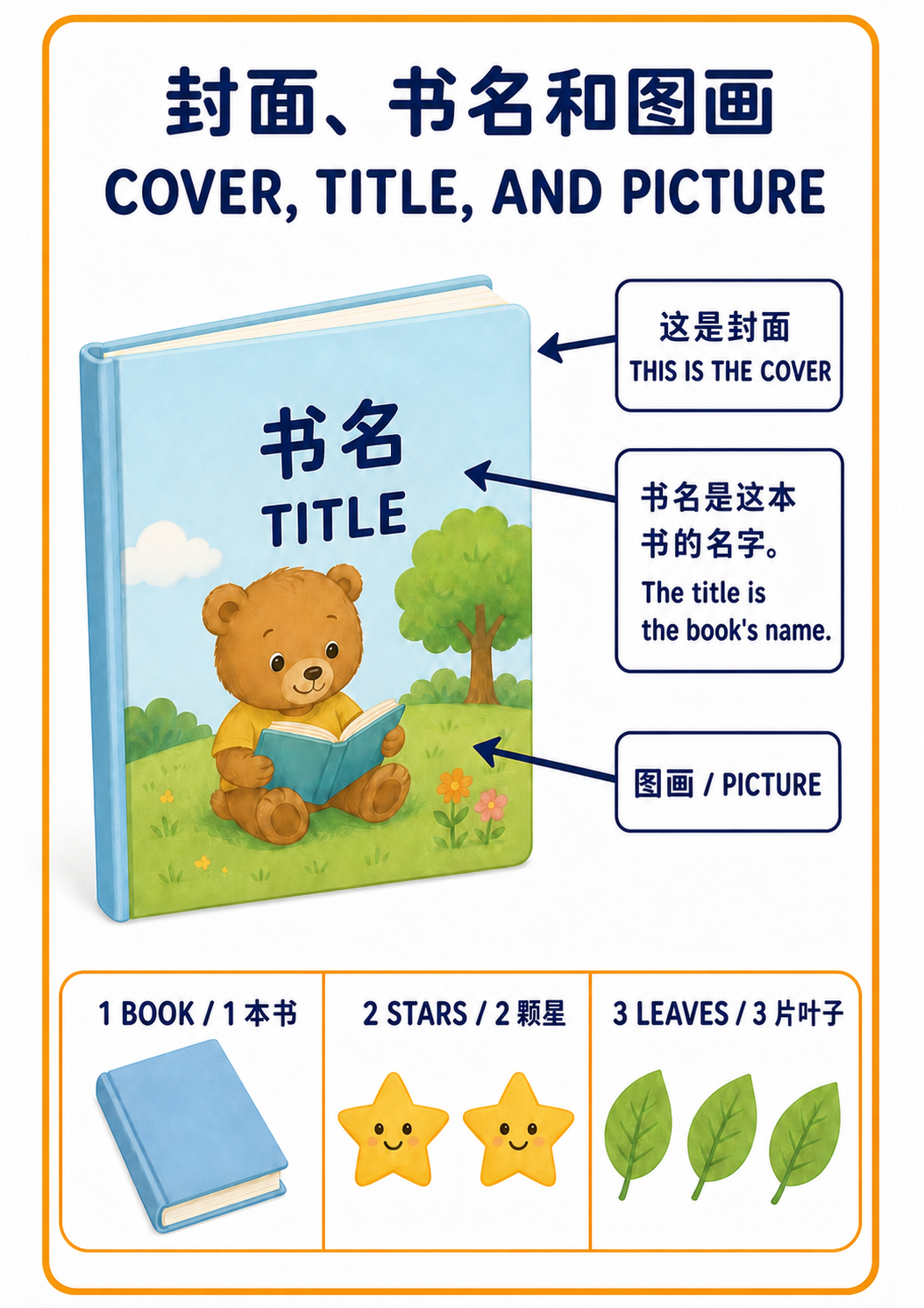
Show Toddlers the Book Cover, Title, and Picture
Build gentle book awareness by naming three visible parts without testing print knowledge.
Open guide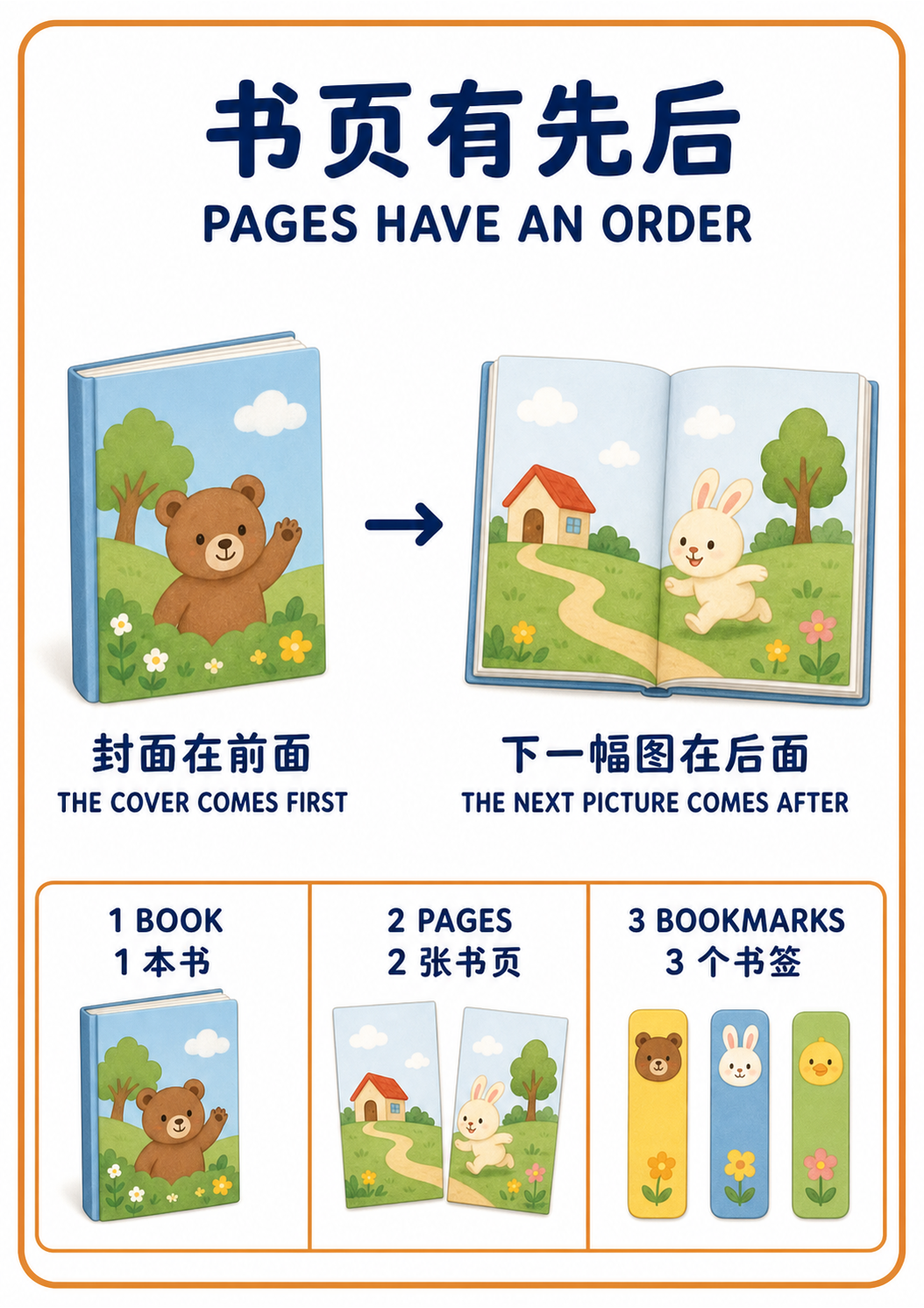
Help a Toddler Learn Page Order Without Correcting Every Turn
Model front-to-back page order while leaving room for skipping, returning, and independent book handling.
Open guide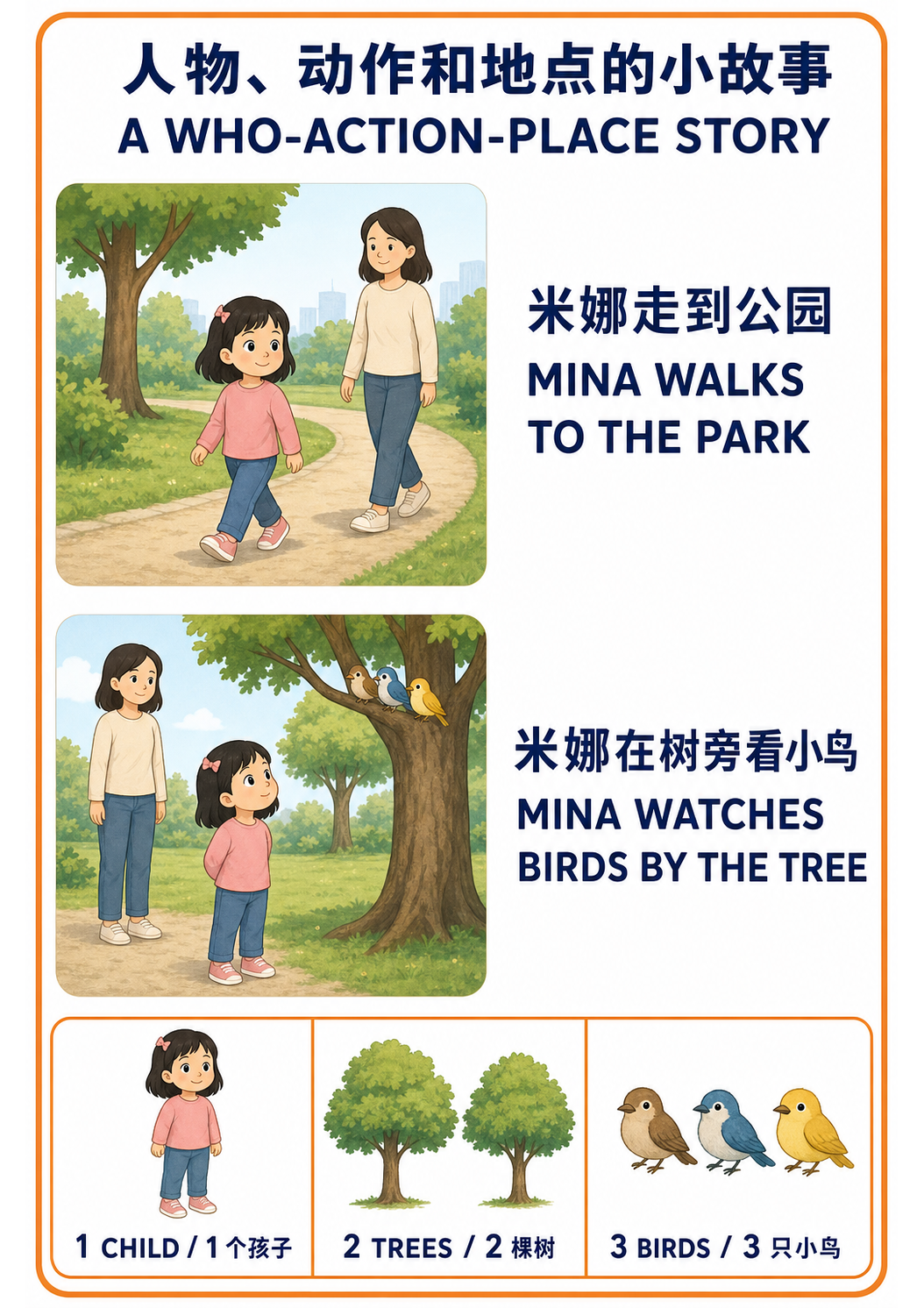
Tell a Toddler Story with a Wordless Picture Book
Build a tiny story from who, what happened, and where—without needing to invent a perfect plot.
Open guide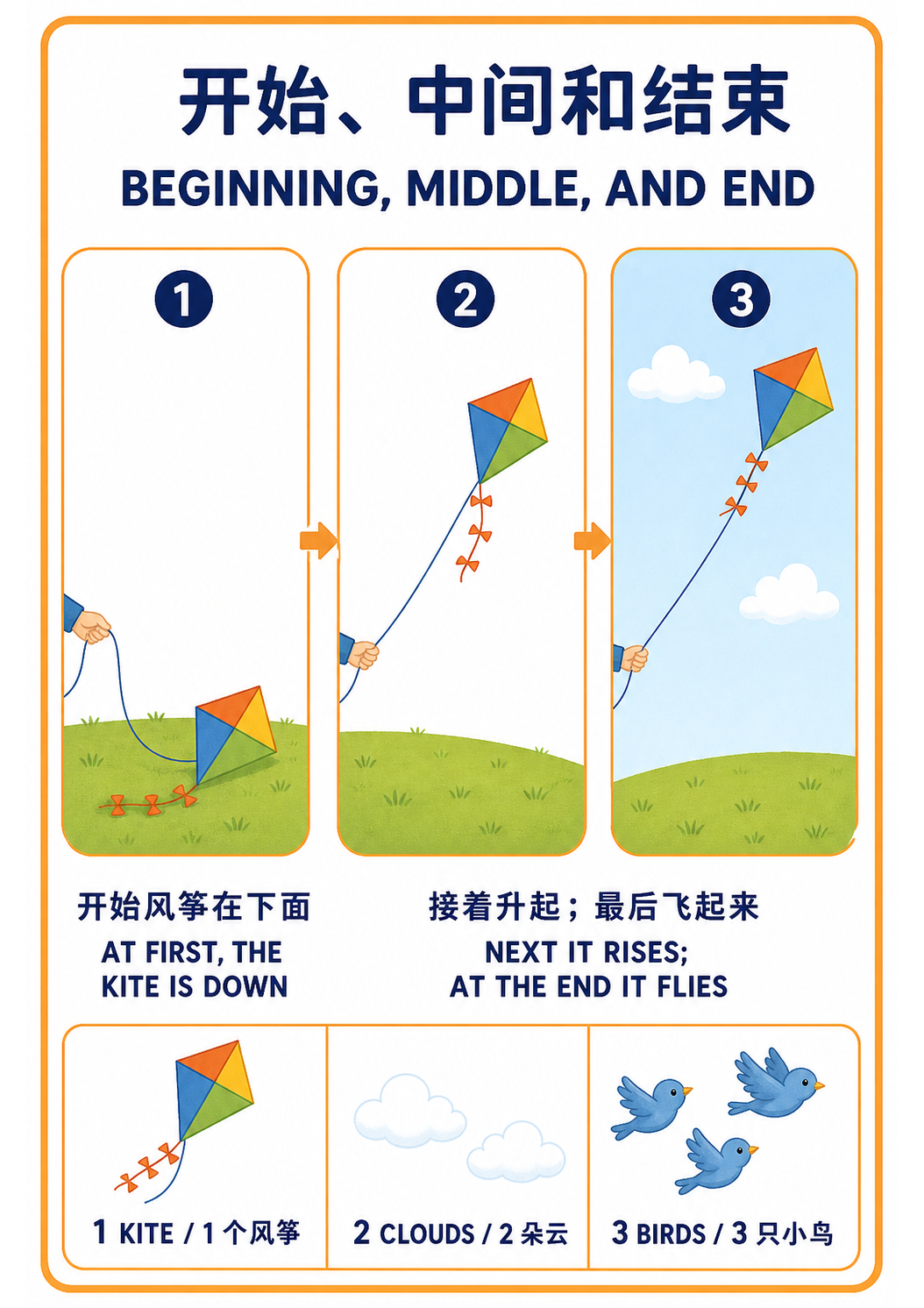
Introduce Beginning, Middle, and End to a Toddler
Use three clear pictures and one connected event to make story order visible without a sequencing test.
Open guide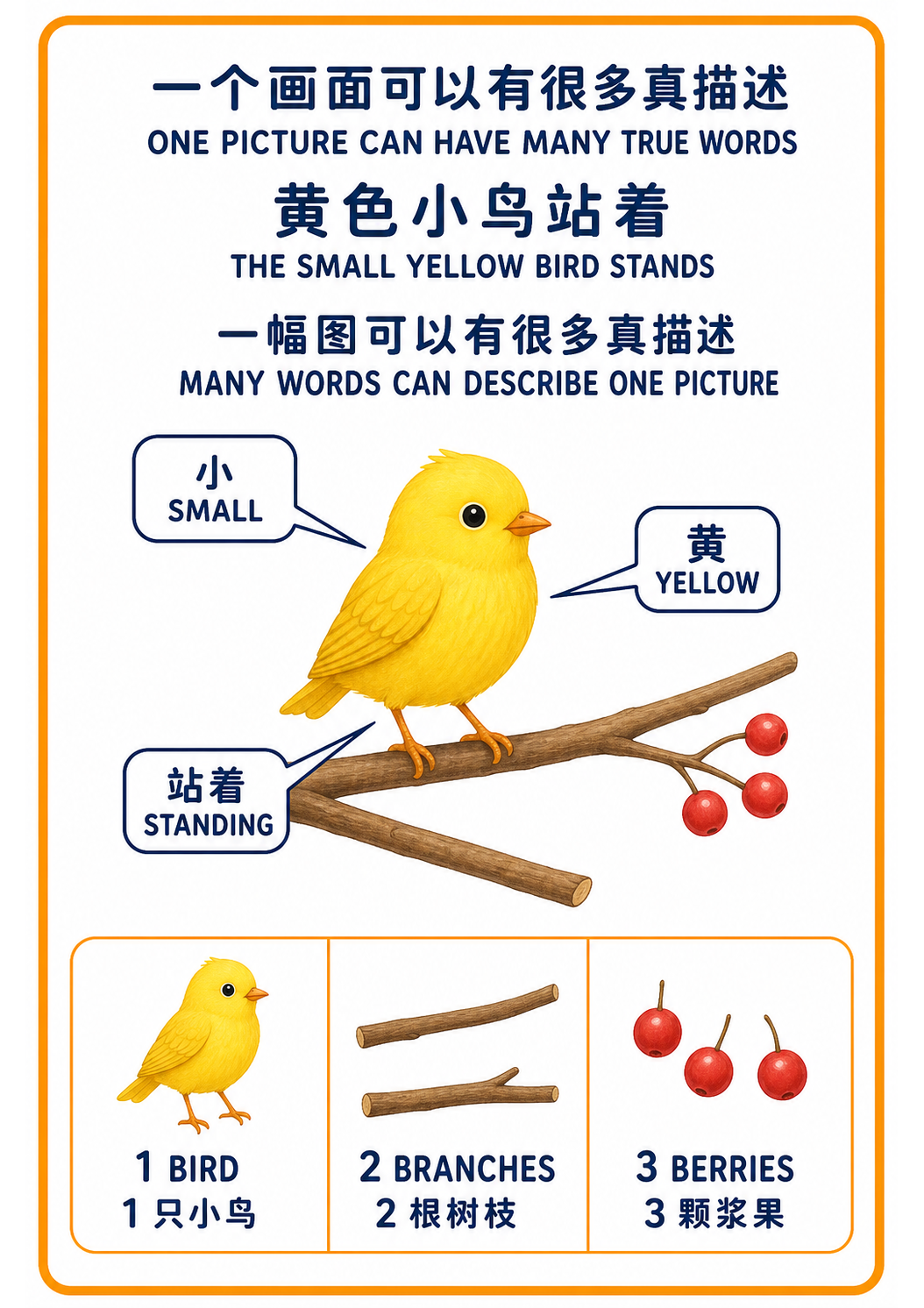
One Picture Can Have Many True Toddler Descriptions
Follow different details in the same illustration and show that shared reading is not a one-answer quiz.
Open guide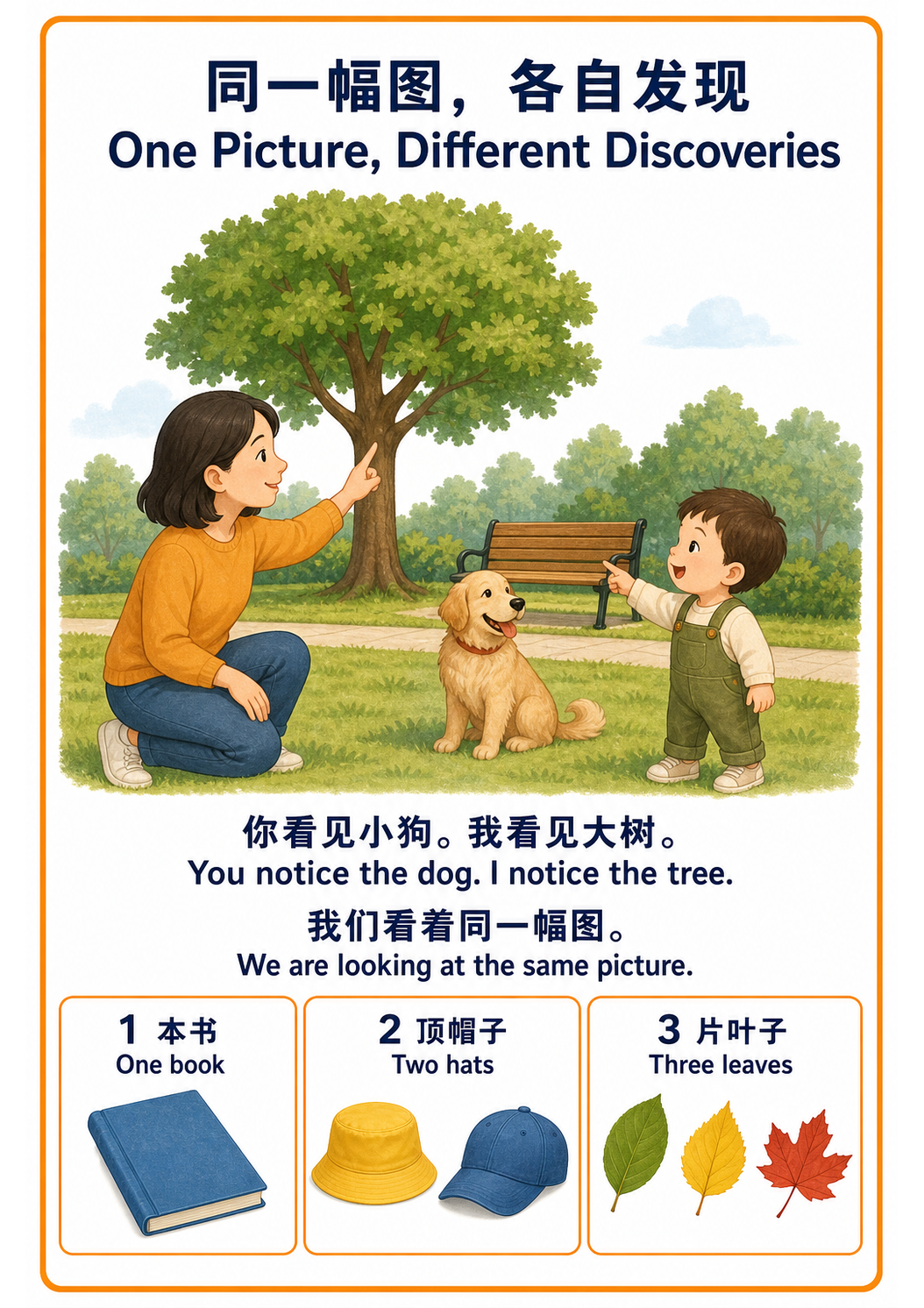
Follow a Toddler's Lead During Shared Reading
Use the child's gaze, point, page choice, and stop signal to shape a reading that stays genuinely shared.
Open guide12
Early maths & thinking
Small quantities, comparison, matching, sorting, patterns, and spatial language.
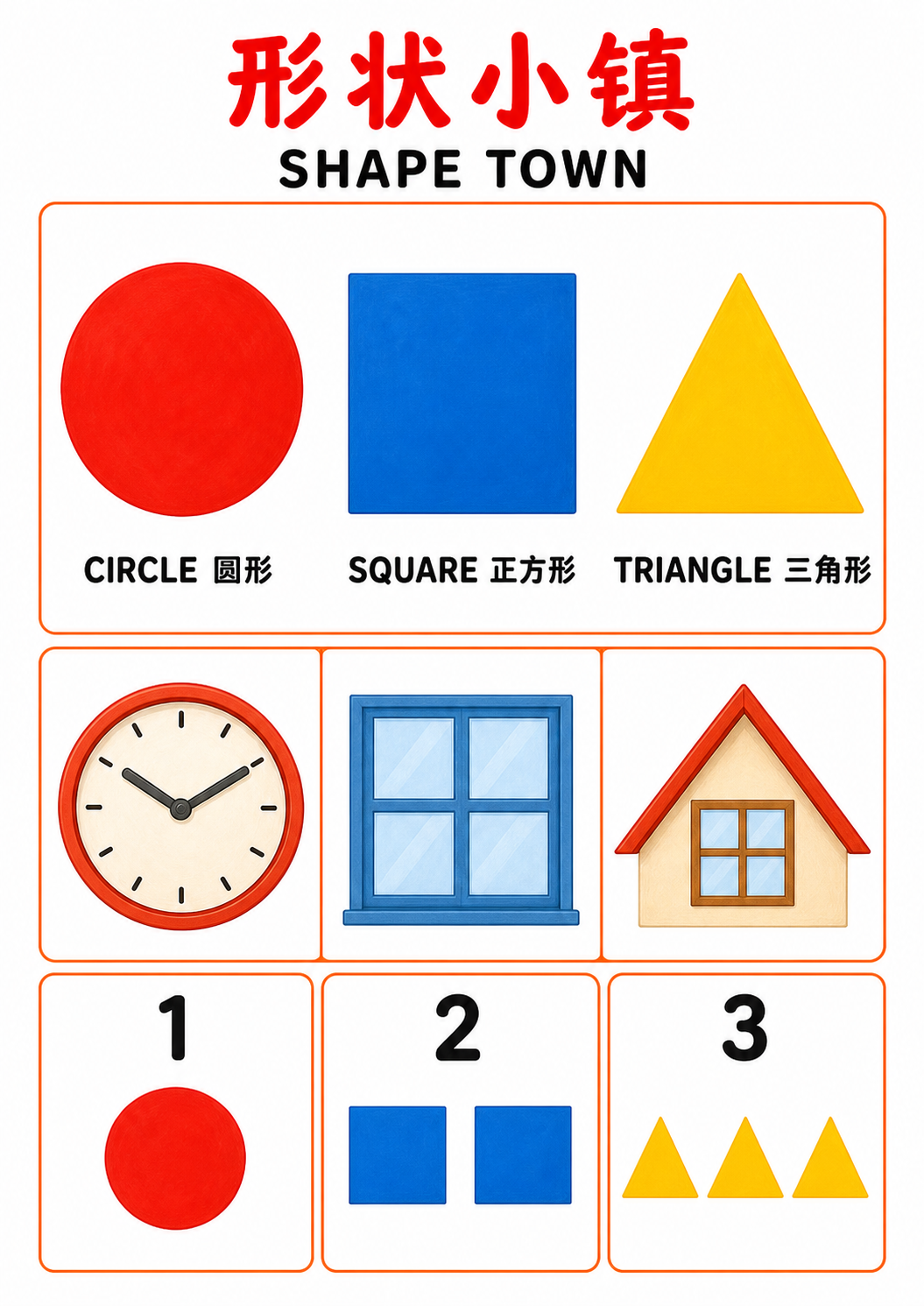
Shape Learning for 2-Year-Olds
Notice circles, squares, and triangles through pointing, tracing, and movement.
Open guide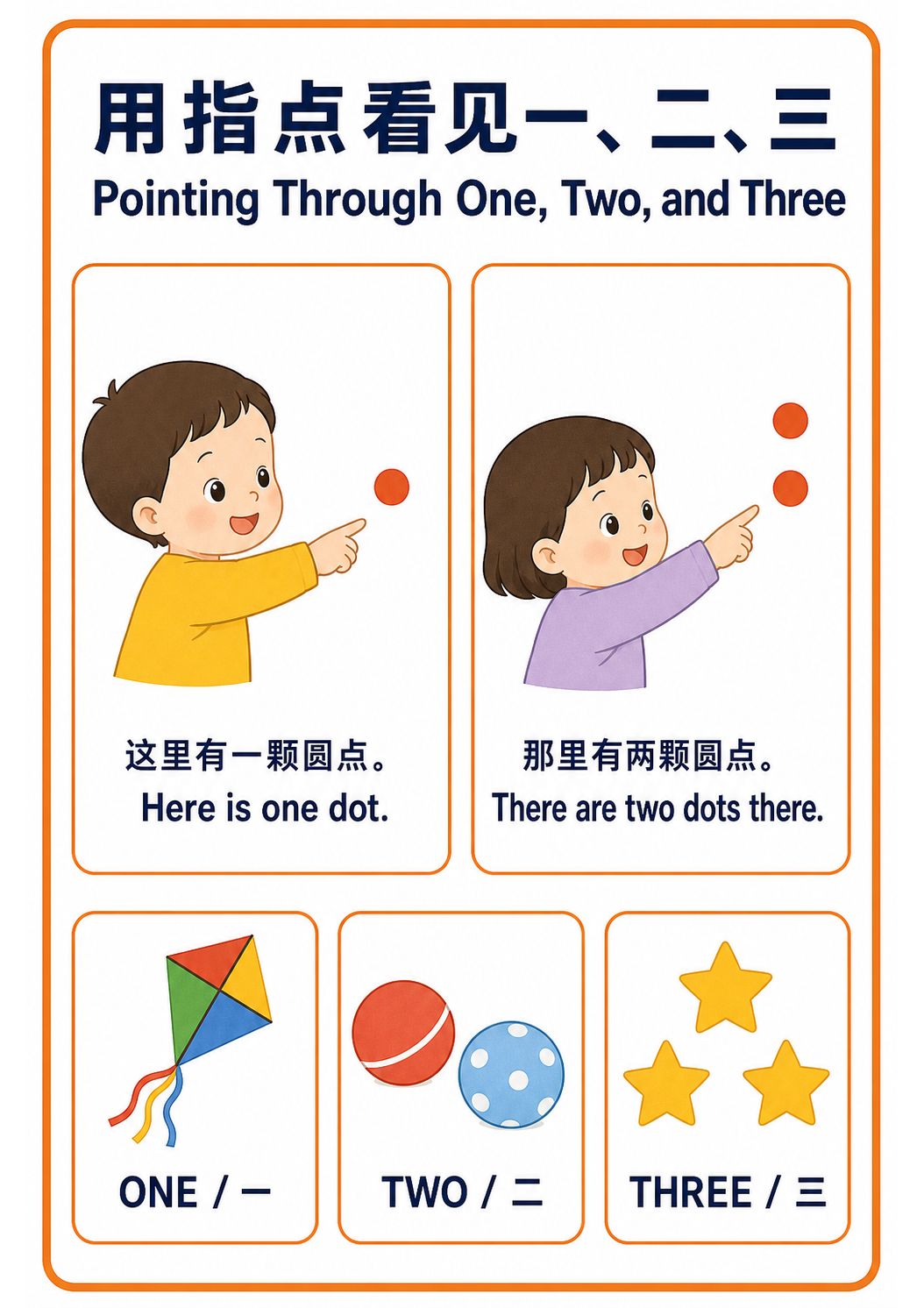
Toddler Maths Without Special Toys
Build early quantity language with small groups and one-to-one pointing.
Open guide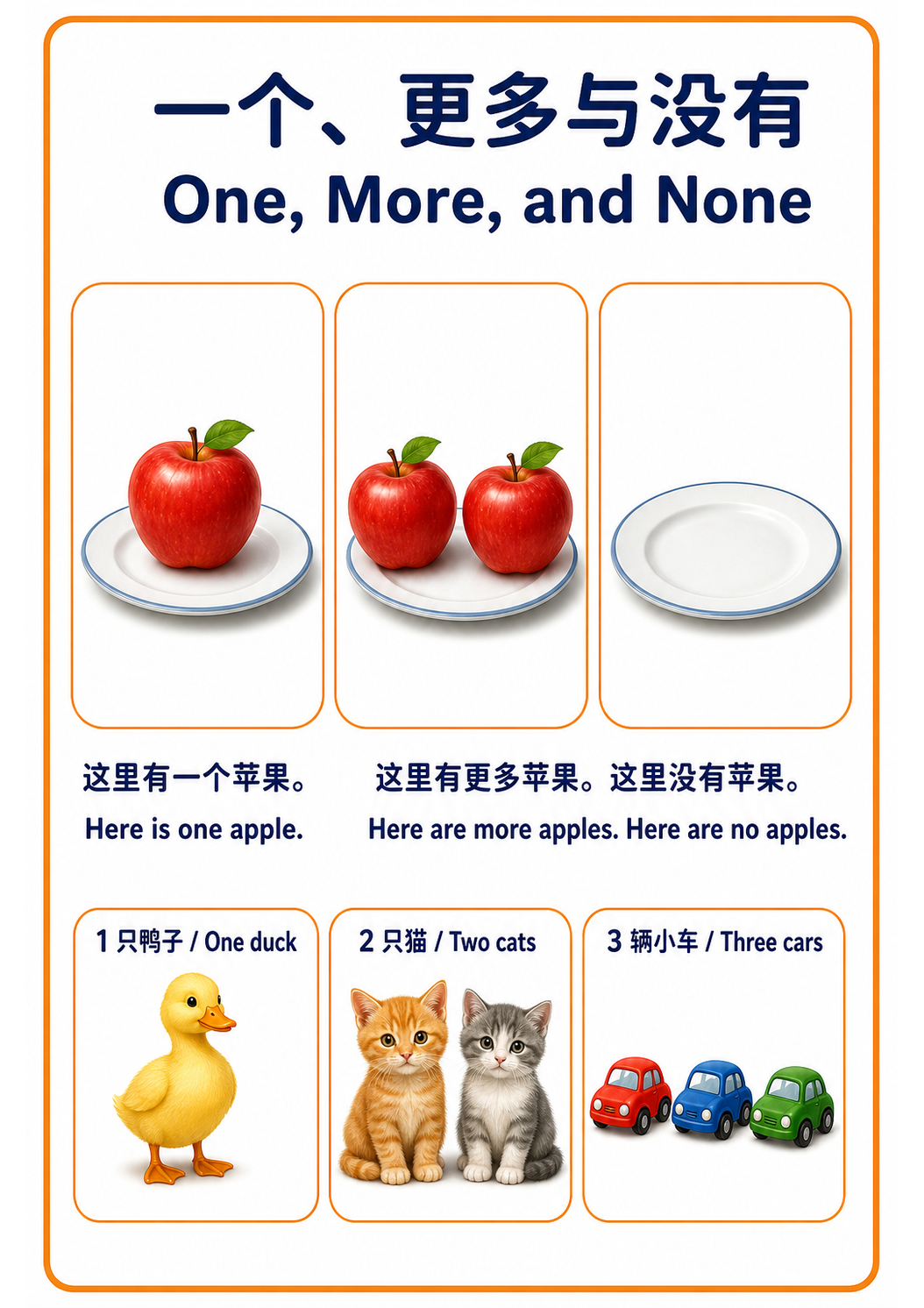
Teach One, More, and None with Everyday Toddler Moments
Make three early quantity ideas visible as objects arrive, stay, and leave—without asking a toddler to calculate.
Open guide
Teach Big and Small by Comparing Two Toddler-Friendly Objects
Put two related objects side by side so size words have a clear reference instead of becoming fixed labels.
Open guide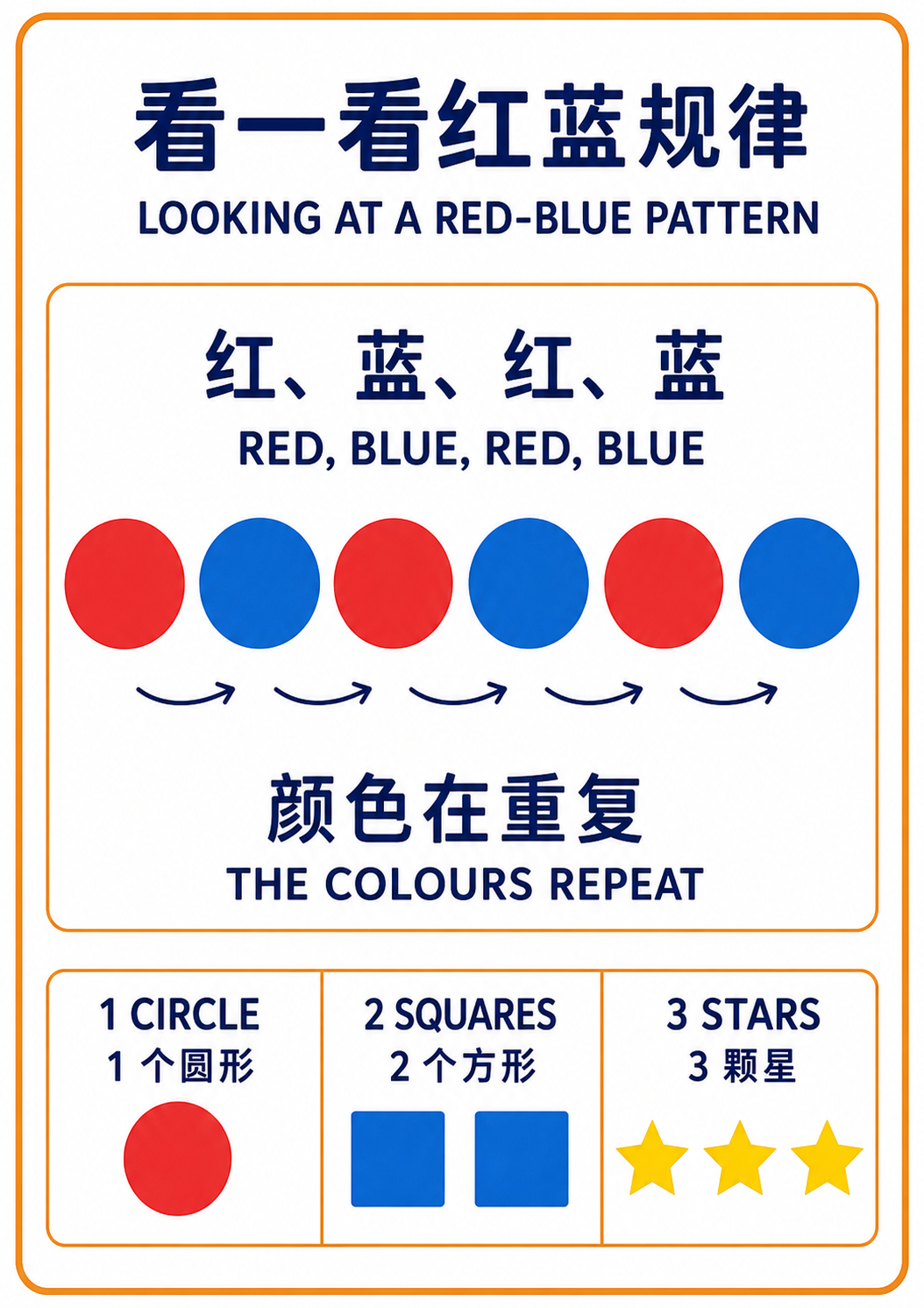
Simple AB Pattern Play for Toddlers
Notice a two-part repeat such as red-blue-red-blue through pointing, rhythm, and one optional continuation.
Open guide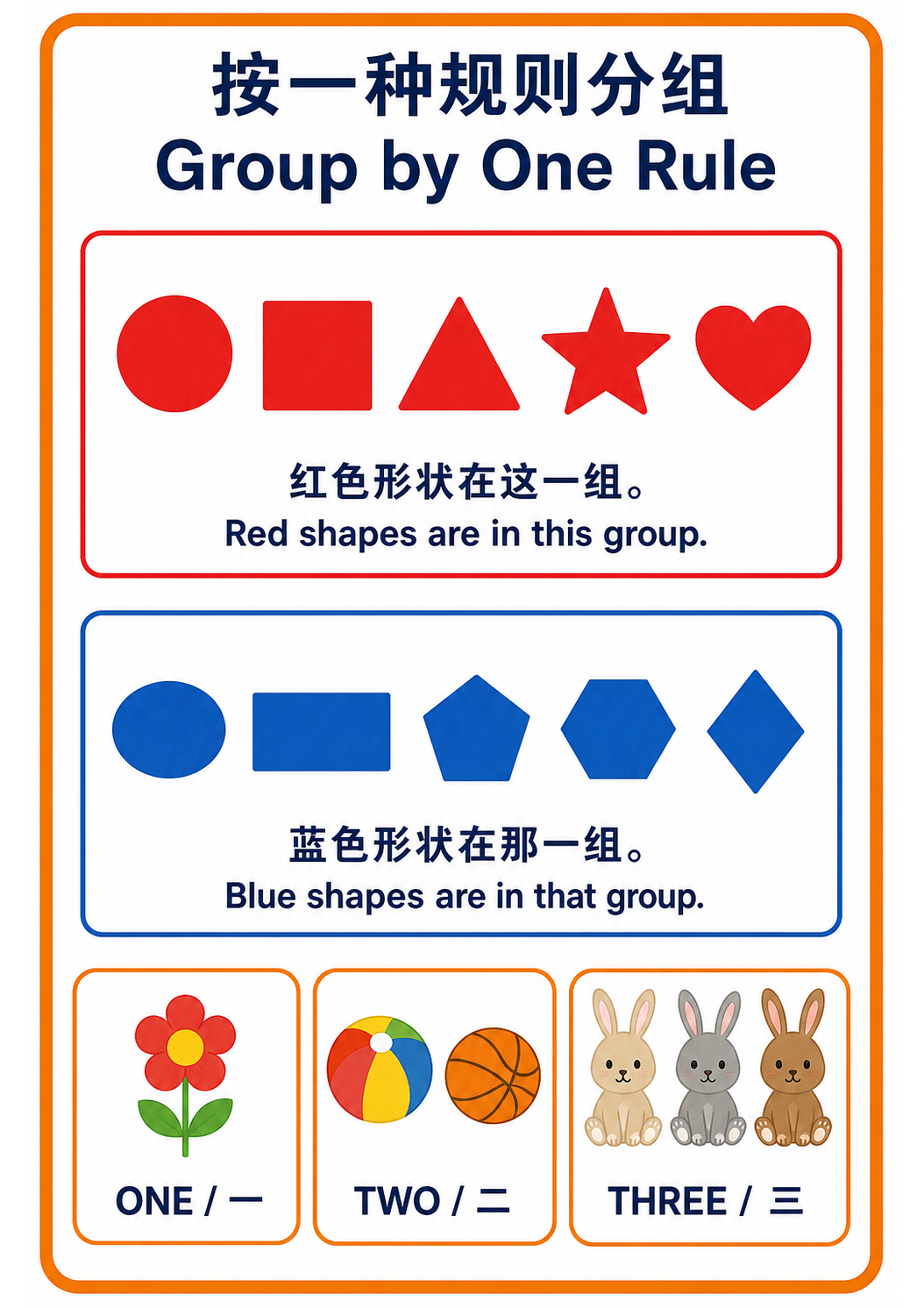
Help a Toddler Sort by One Clear Rule
Use one visible property, model two examples, and keep sorting exploratory rather than correcting every placement.
Open guide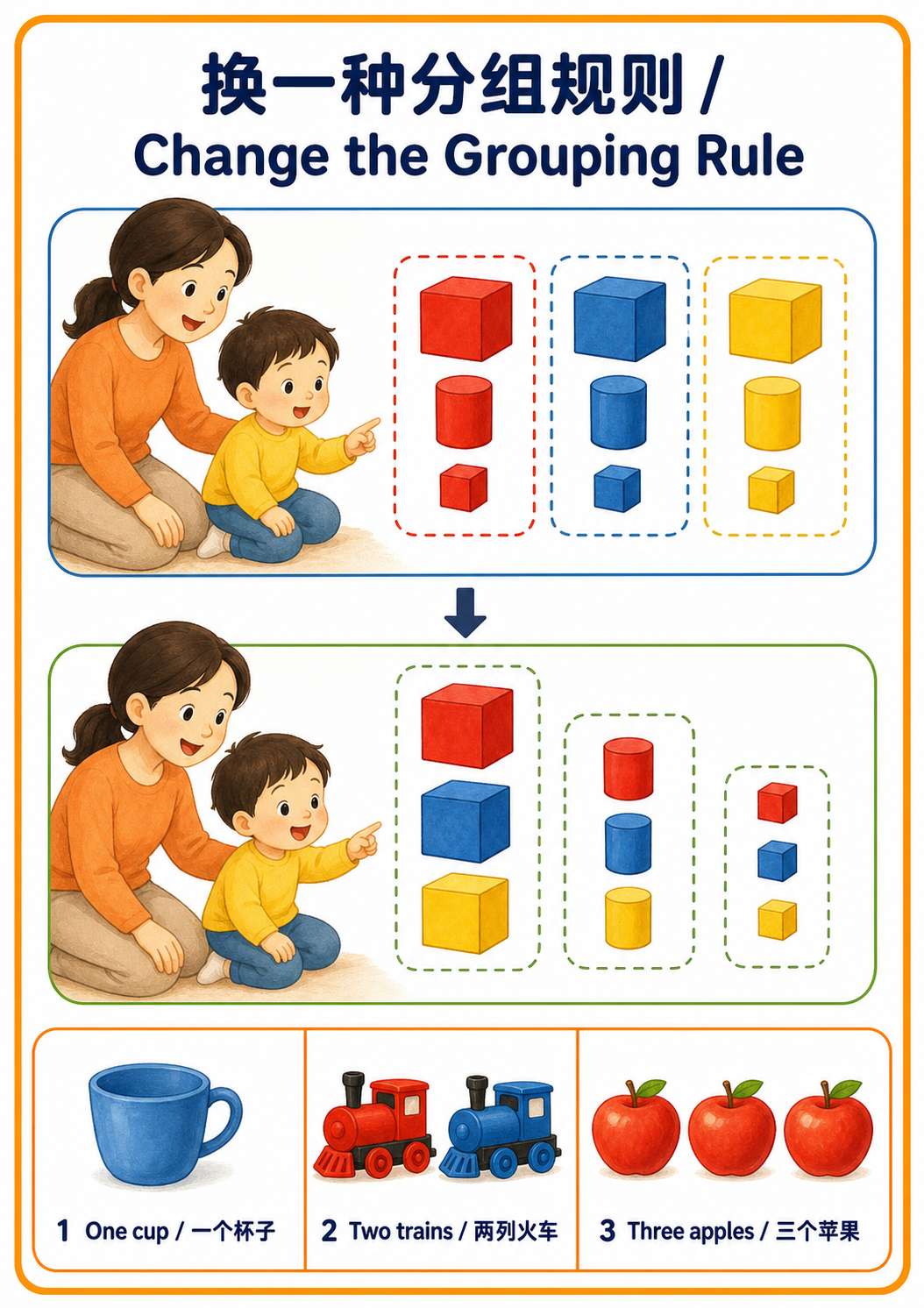
Show a Toddler That the Same Pictures Can Be Sorted Two Ways
Compare two valid grouping rules without expecting a toddler to switch rules on command.
Open guide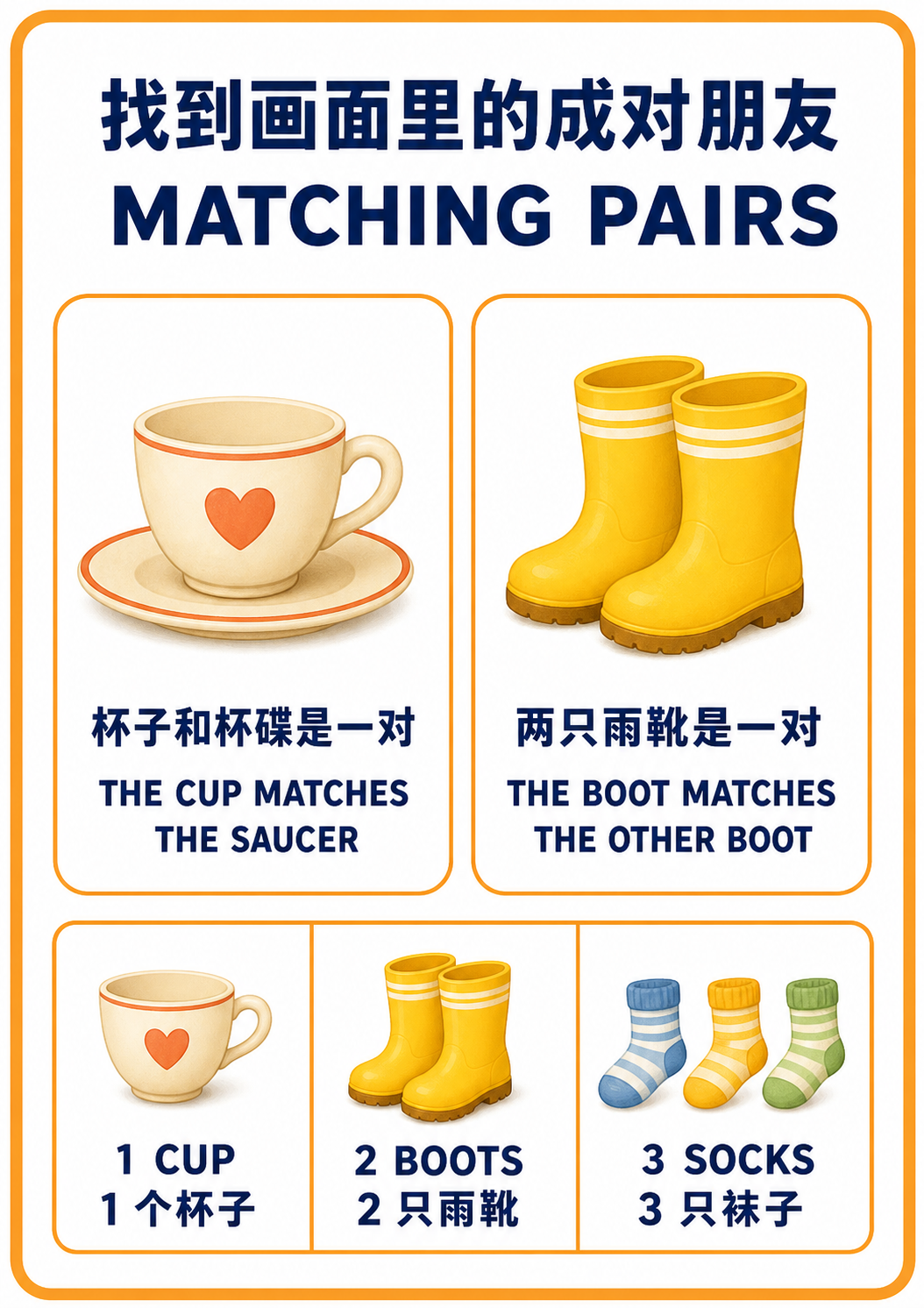
A Simple Matching-Pairs Activity for Toddlers
Match two clear pictures by one meaningful feature without hiding cards or testing memory.
Open guide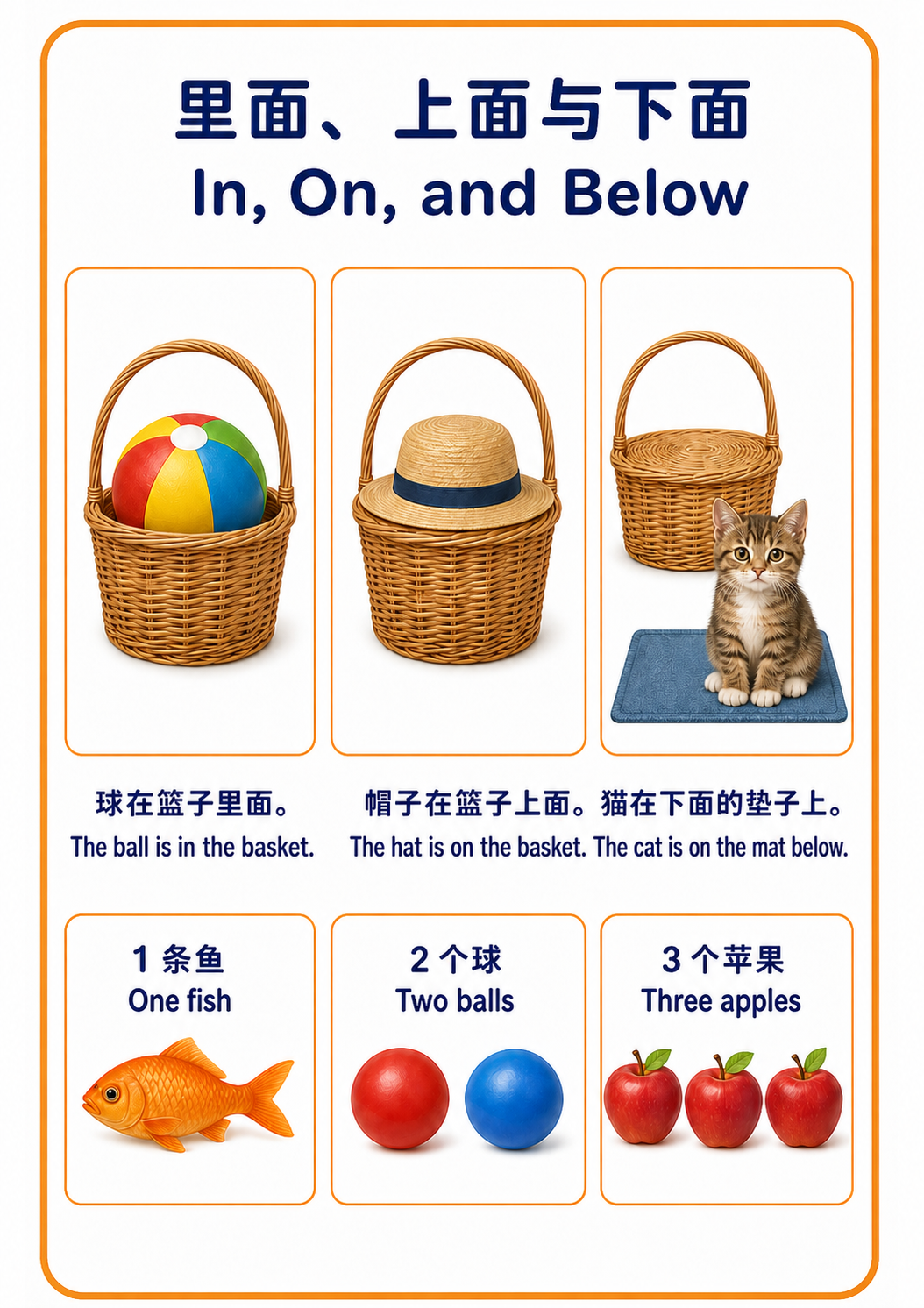
Teach In, On, and Under with Complete Toddler Sentences
Name the object and its reference together so early spatial words describe a real relationship.
Open guide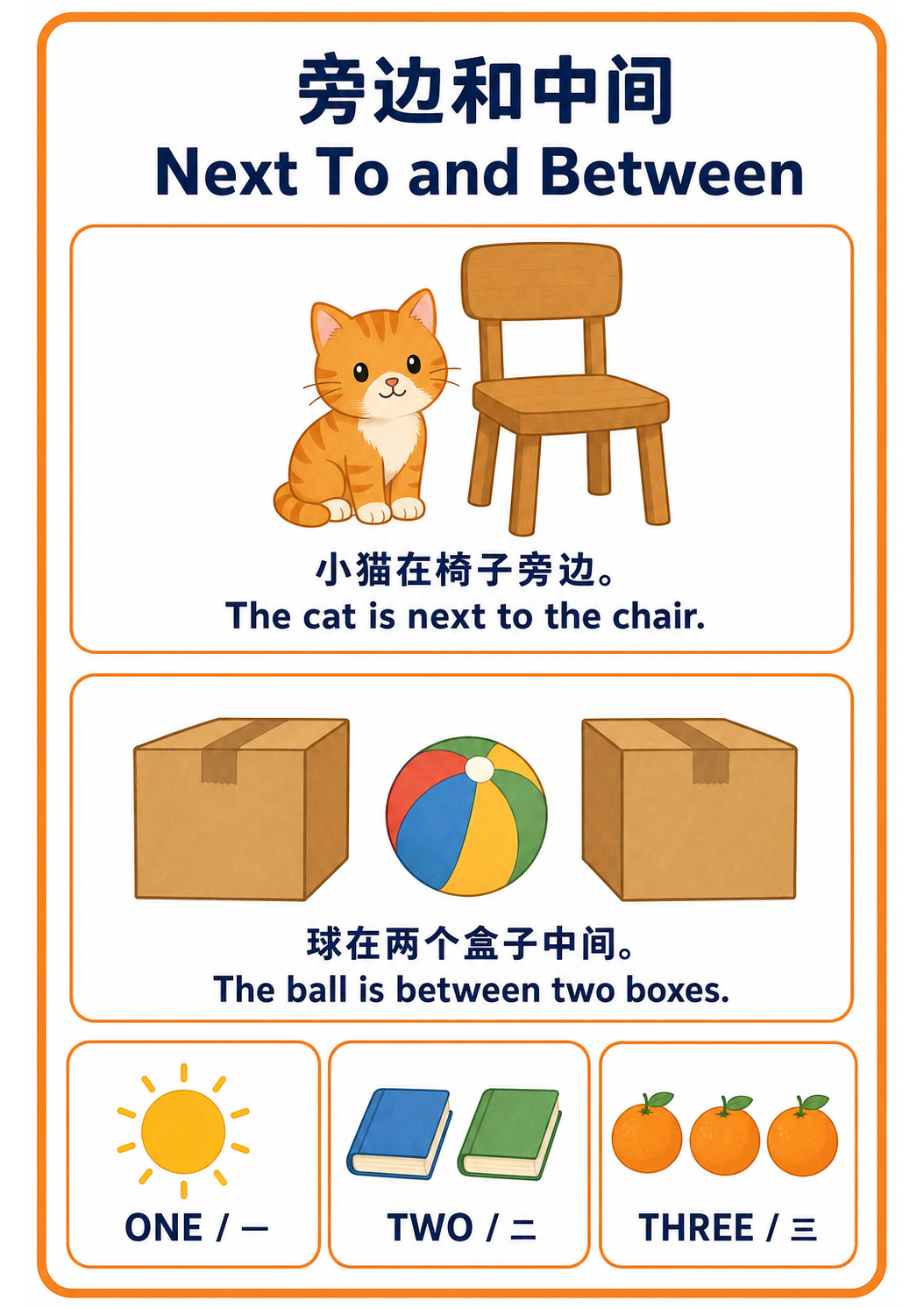
Teach Beside and Between with Clear Picture Relationships
Use complete descriptions and visible reference objects to make two less-obvious spatial words understandable.
Open guide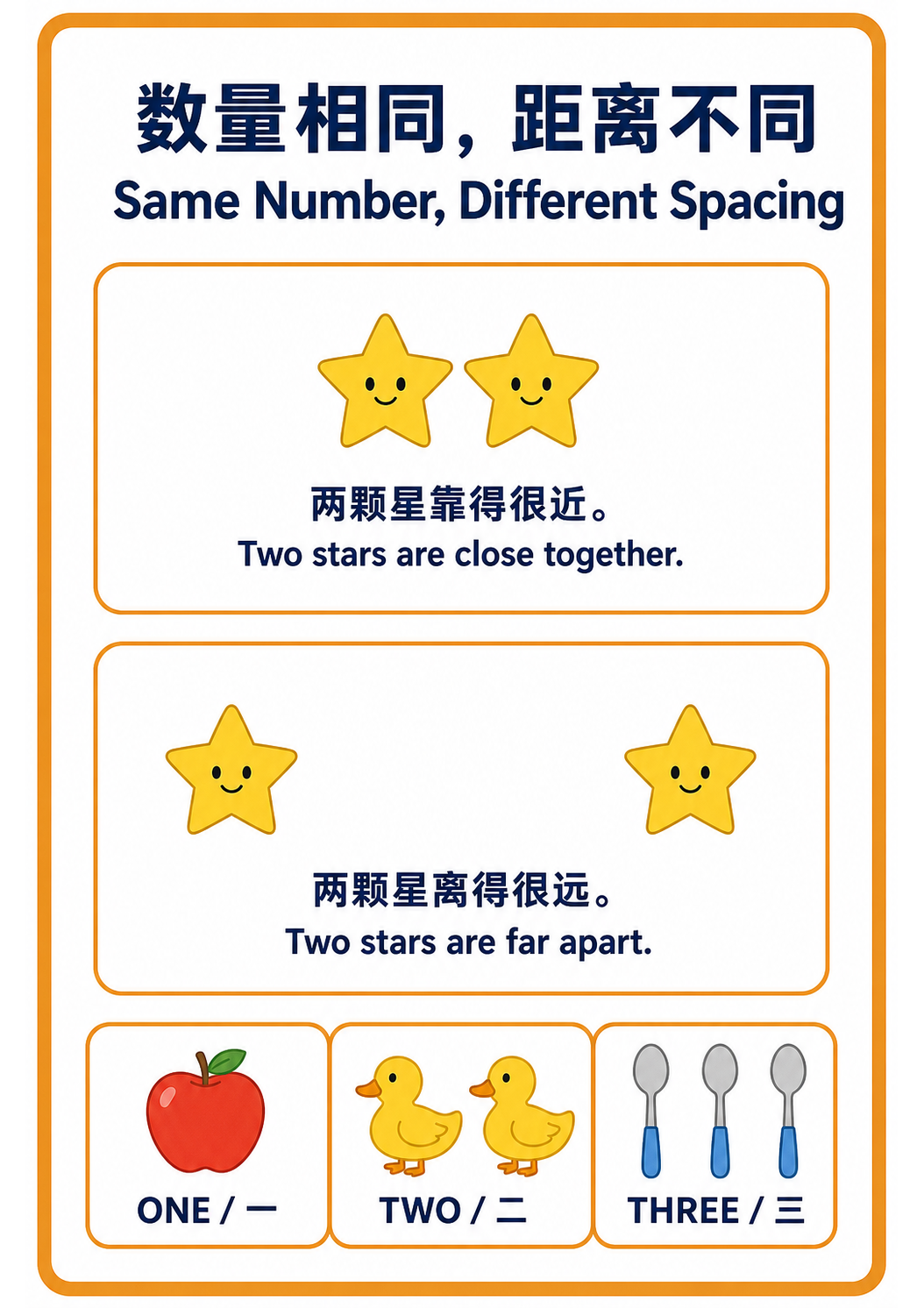
Show That Spreading Objects Out Does Not Change How Many
Compare two small groups with the same quantity but different spacing, using one-to-one pointing instead of appearance alone.
Open guide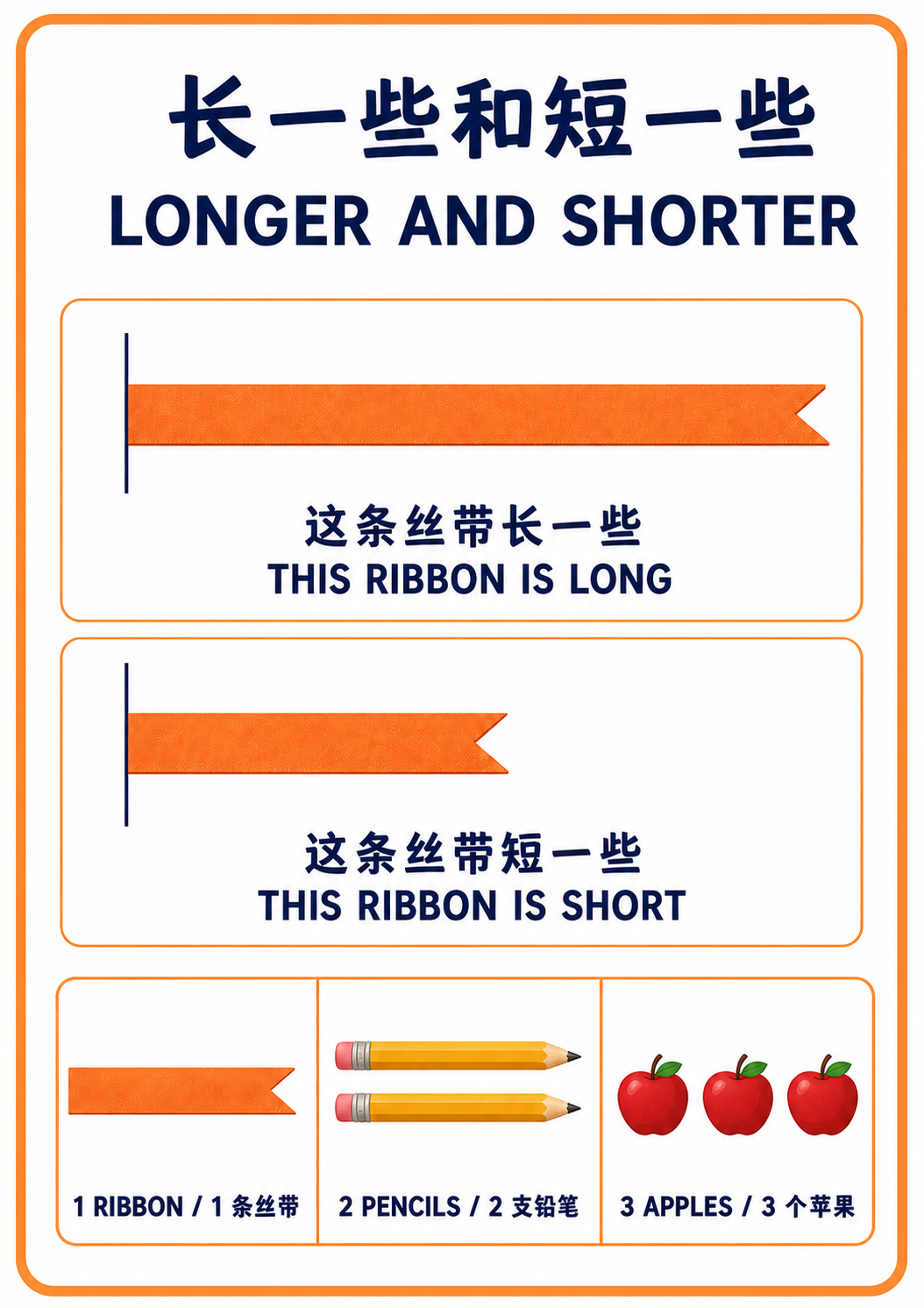
Teach Long and Short with Aligned Picture Comparisons
Line up two same-kind objects at one end so length words describe a clear, fair comparison.
Open guide08
Play & discovery
Low-preparation ways to notice movement, change, nature, light, water, and living things.
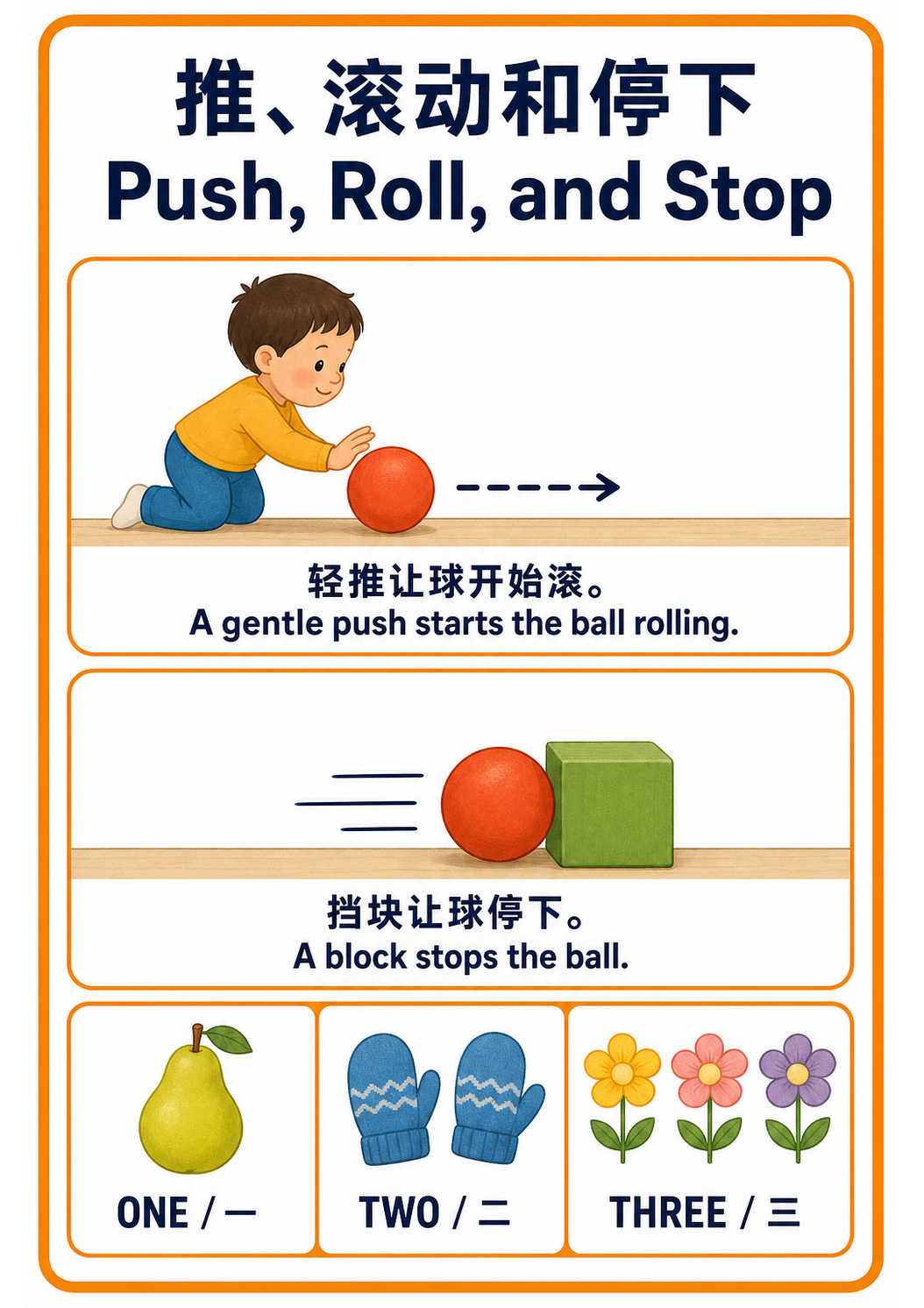
Push, Roll, and Stop: A Simple Toddler Cause-and-Effect Activity
Use a large ball and three action words to notice how one movement changes what happens next.
Open guide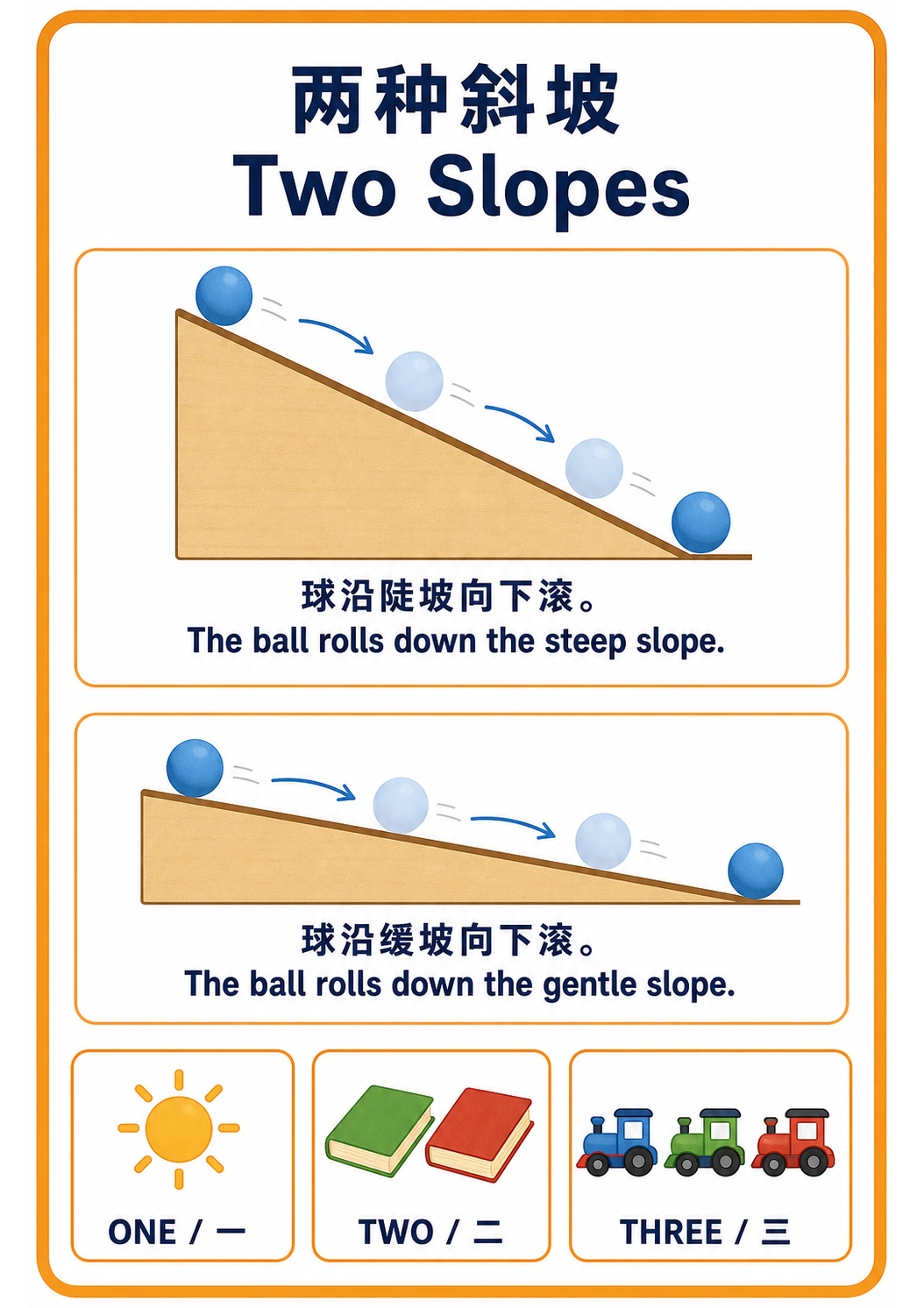
Safe Ramp Play for Toddlers: Compare Two Gentle Slopes
Watch a large soft ball travel down two low slopes while adults describe faster, slower, start, and stop.
Open guide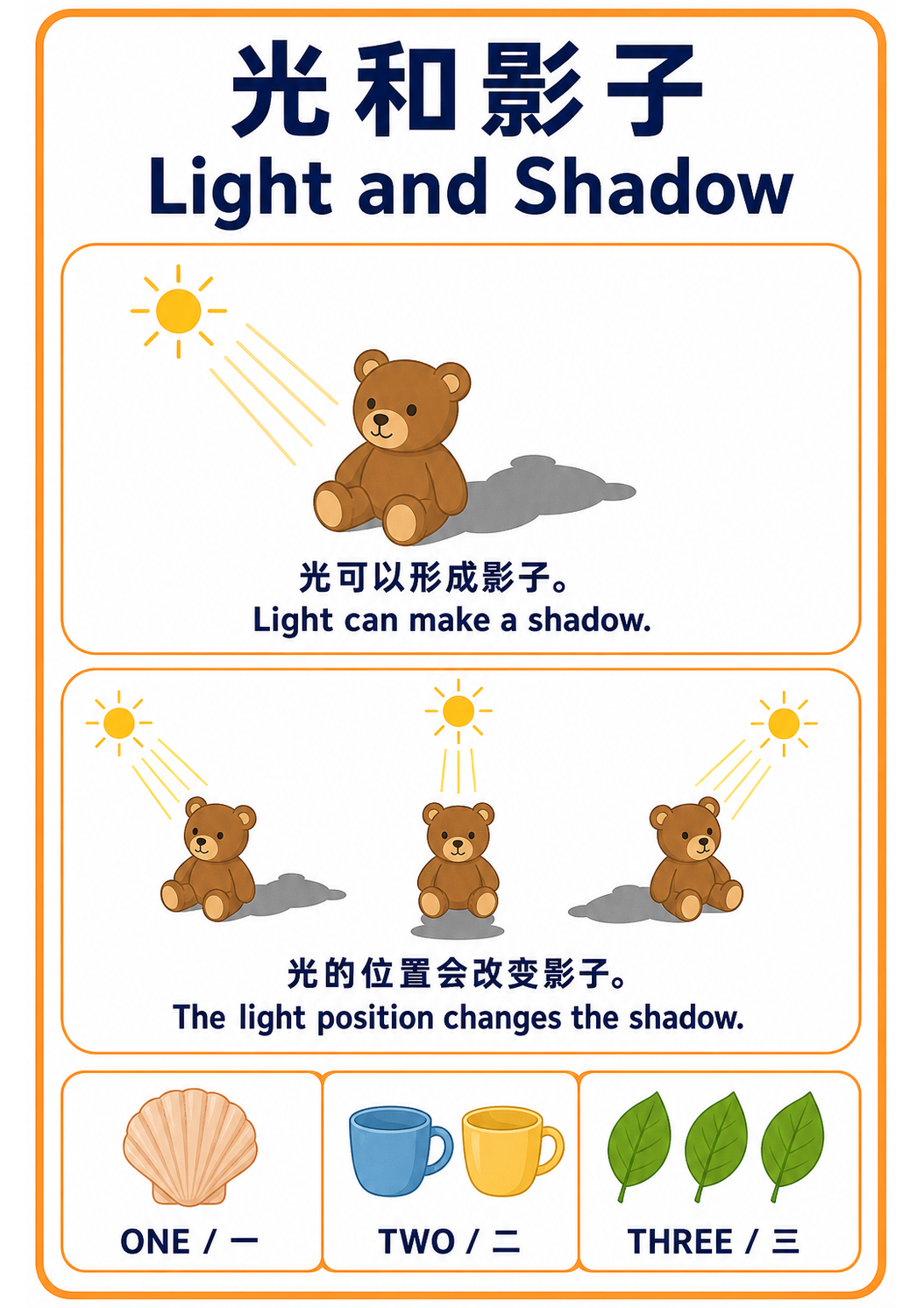
Light and Shadow Play for Toddlers Without Staring at a Lamp
Notice how a shadow appears, moves, and changes using indirect light and one adult-controlled object.
Open guide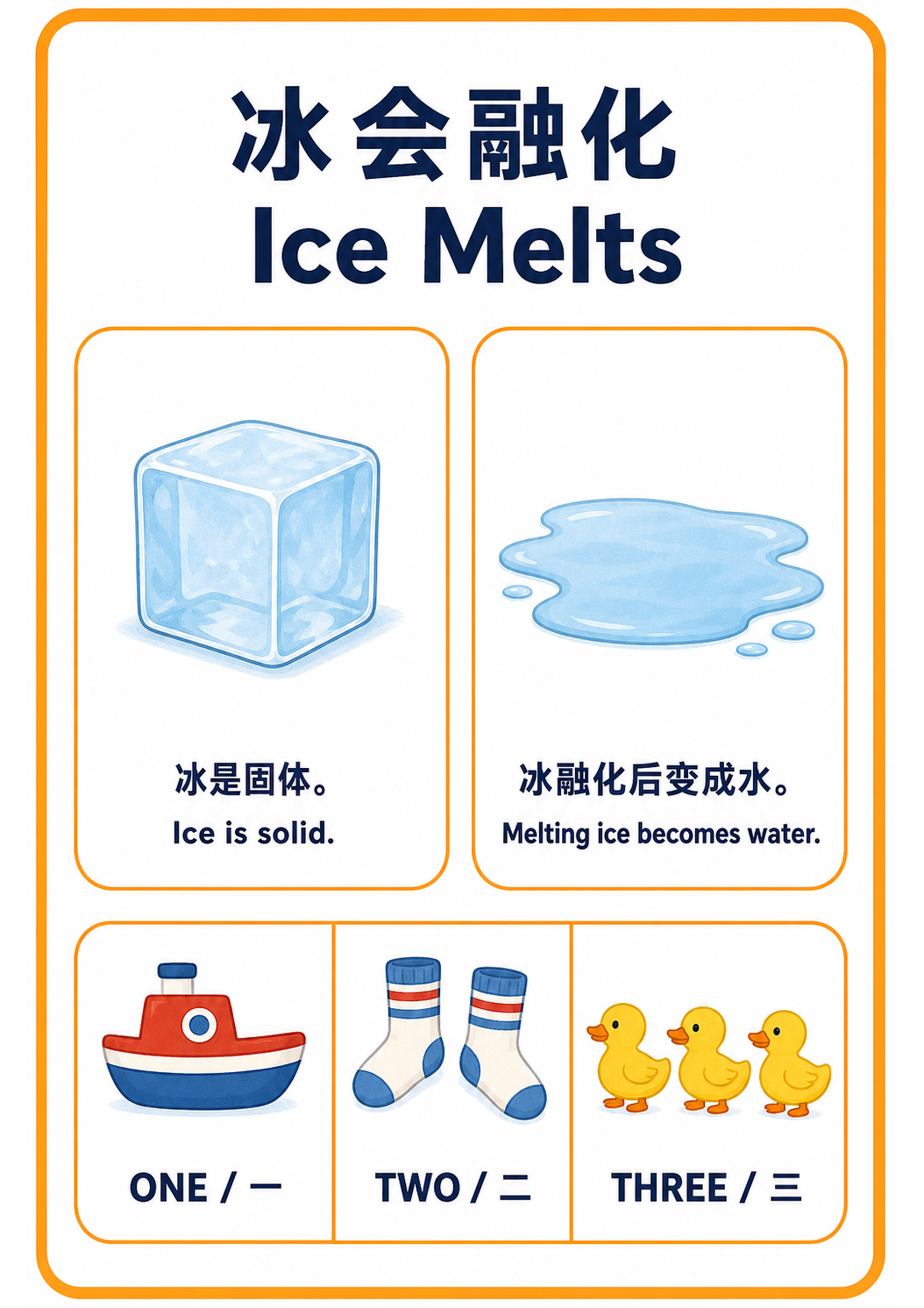
Watch Ice Melt with a Toddler: A No-Tasting Observation
Compare solid ice and liquid water through a picture or an adult-controlled bowl without handling or tasting the ice.
Open guide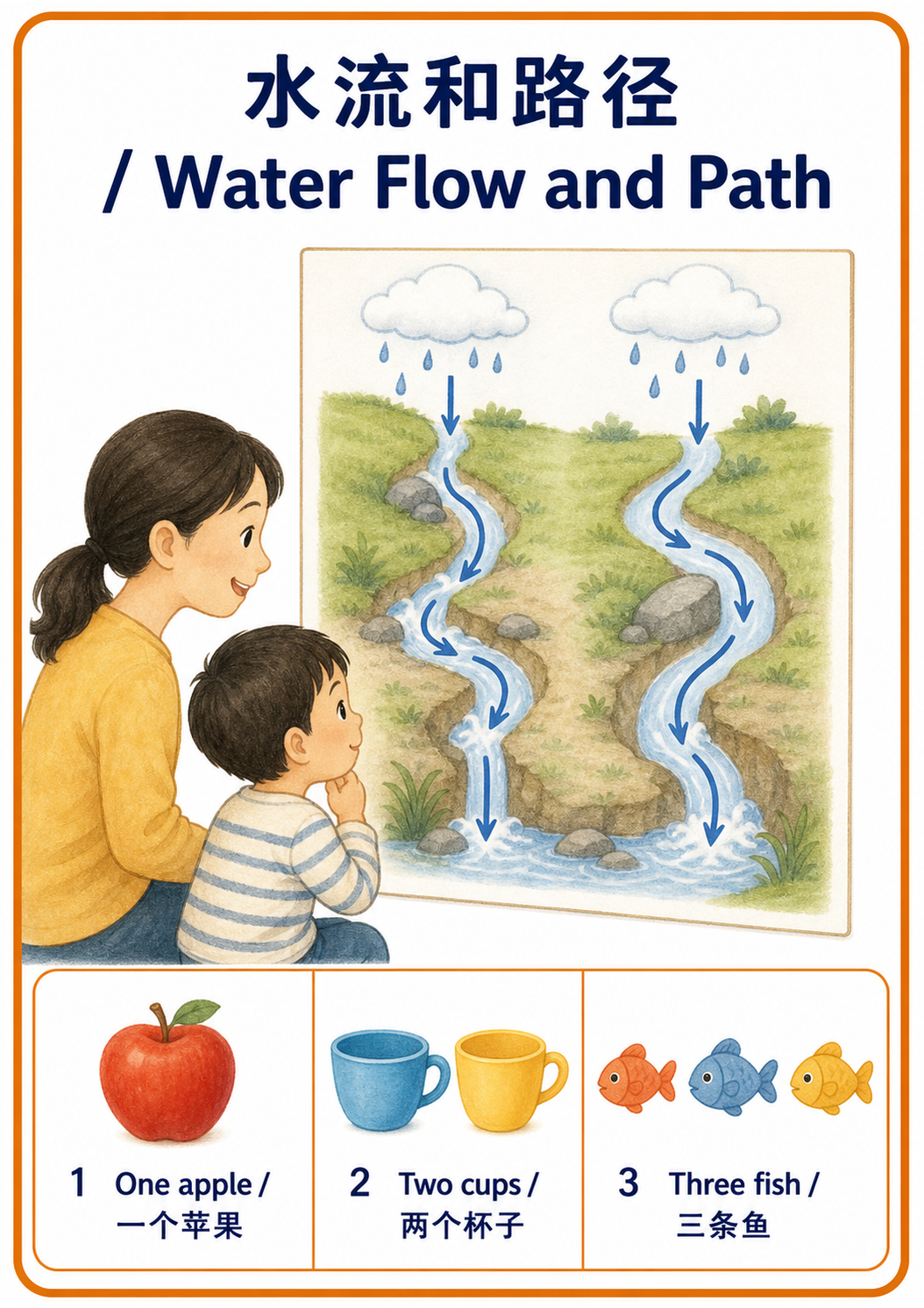
Explore Water Flow with a Toddler Using Pictures First
Trace how water follows a path, compare start and finish, and keep any real-water demonstration fully adult-controlled.
Open guide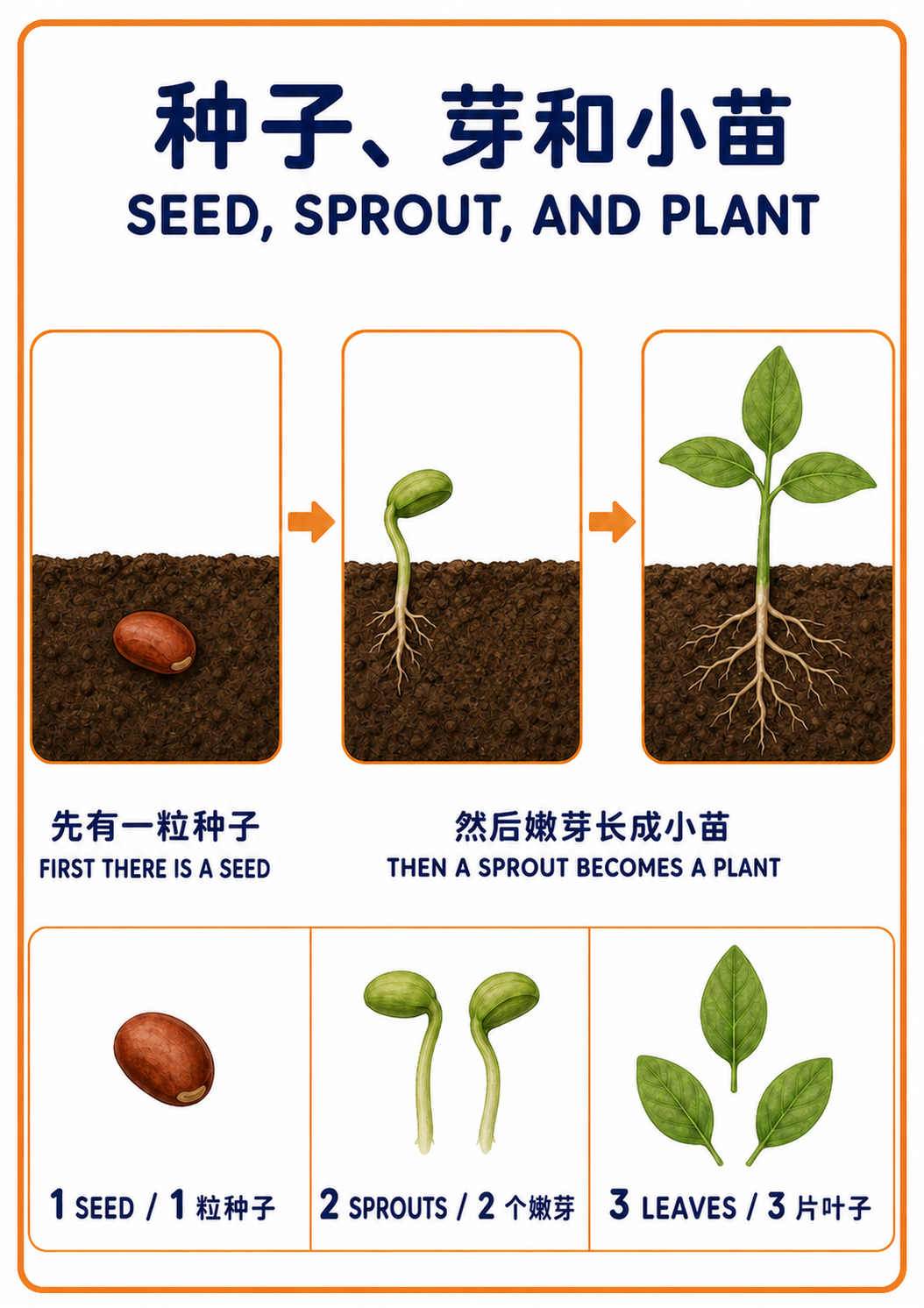
Seed, Sprout, Plant: A Toddler Growth Picture Sequence
Use three pictures to notice that living things change over time without promising a seed will sprout on schedule.
Open guide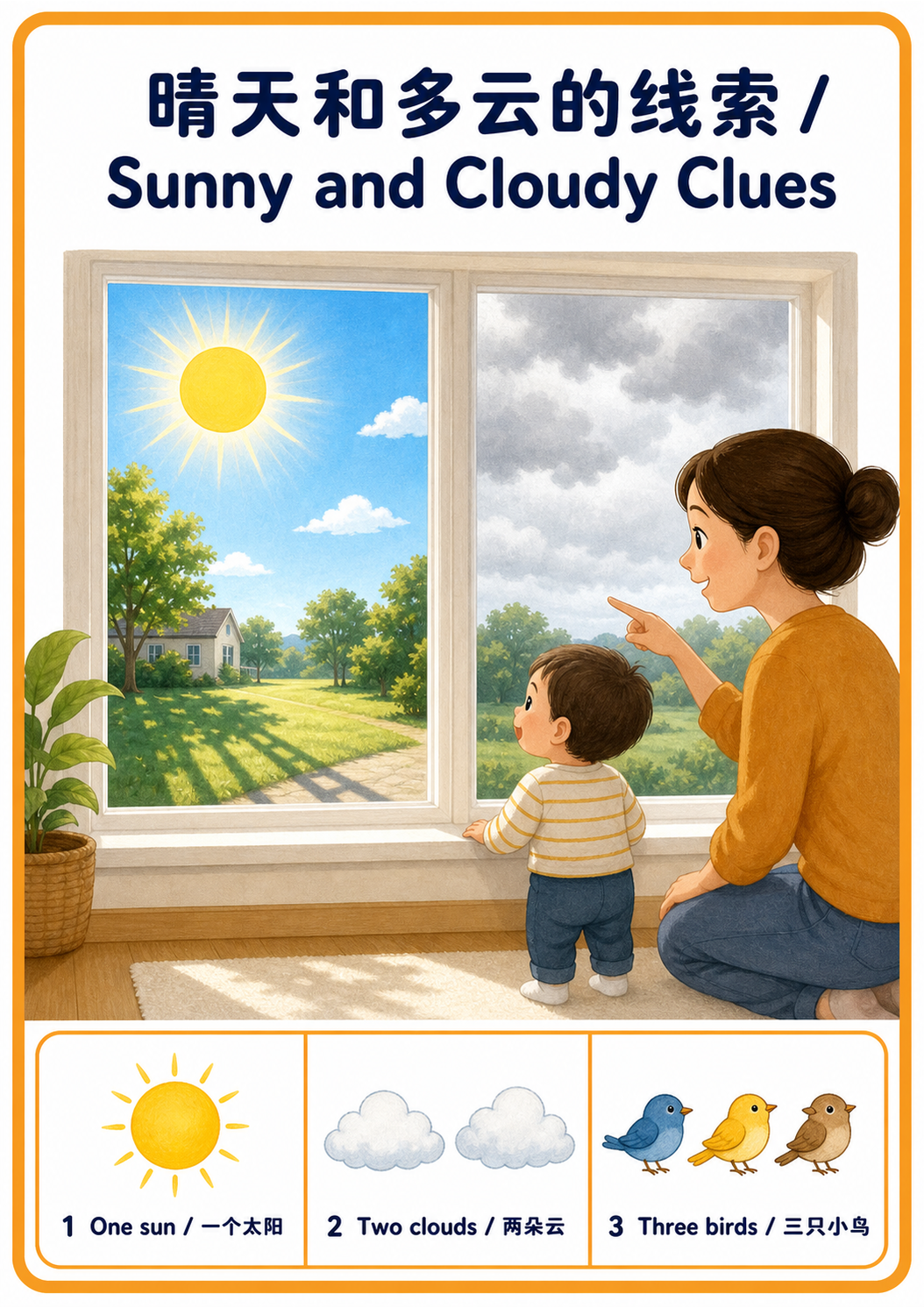
Talk About Sunny and Cloudy Weather with a Toddler
Use visible sky clues and cautious language without treating one picture as a complete forecast.
Open guide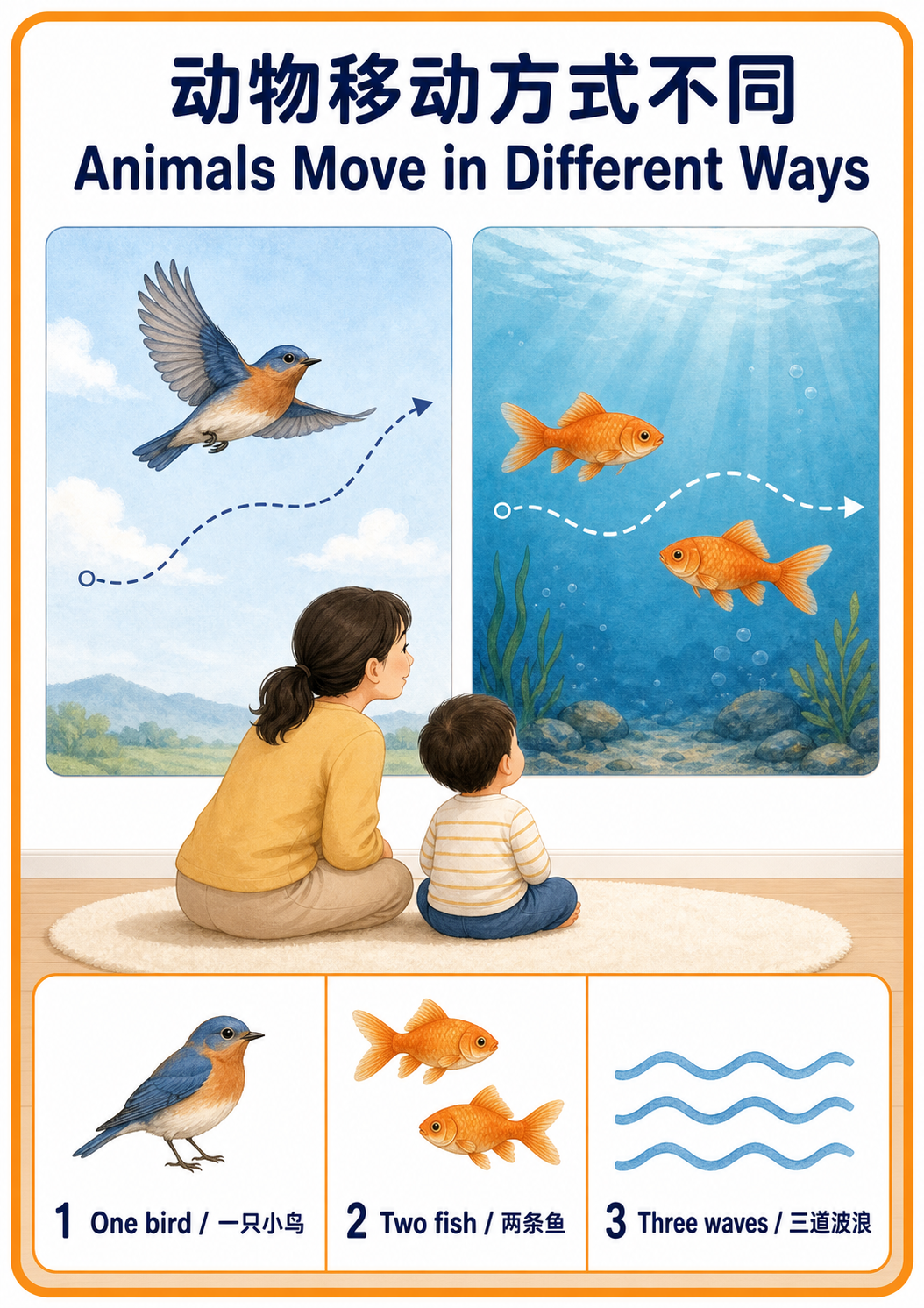
A Gentle Animal Movement Game for Toddlers
Compare walk, hop, swim, and fly through pictures and small optional movements in a clear floor space.
Open guide09
Routines, feelings & connection
Truthful transitions, waiting support, body boundaries, emotions, and participation at home.

A 10-Minute Daily Learning Routine
A small repeatable rhythm that follows attention instead of a long lesson plan.
Open guide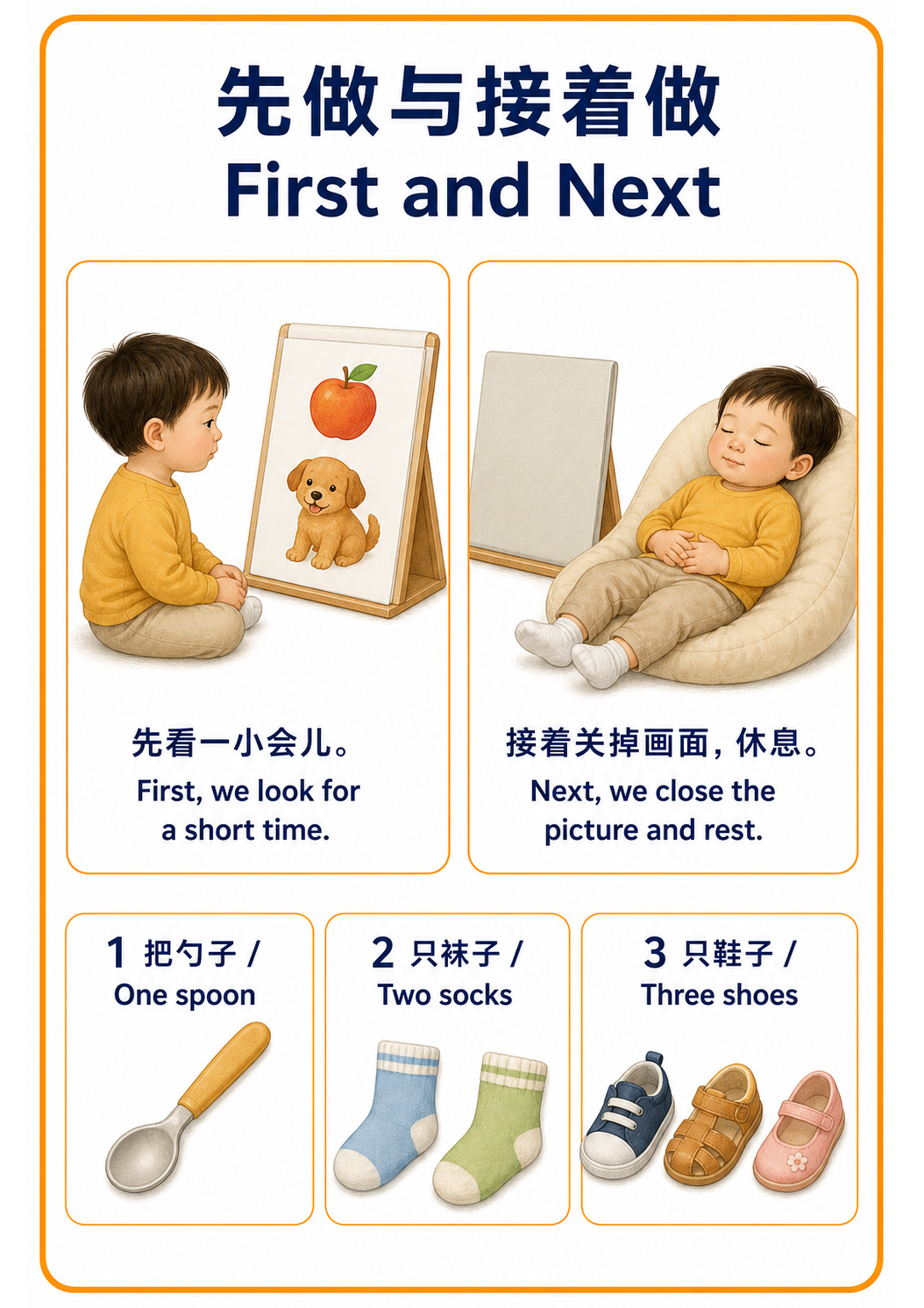
Use First and Next to Support Toddler Transitions
Preview one current step and one following step so a transition is easier to understand without making a false promise.
Open guide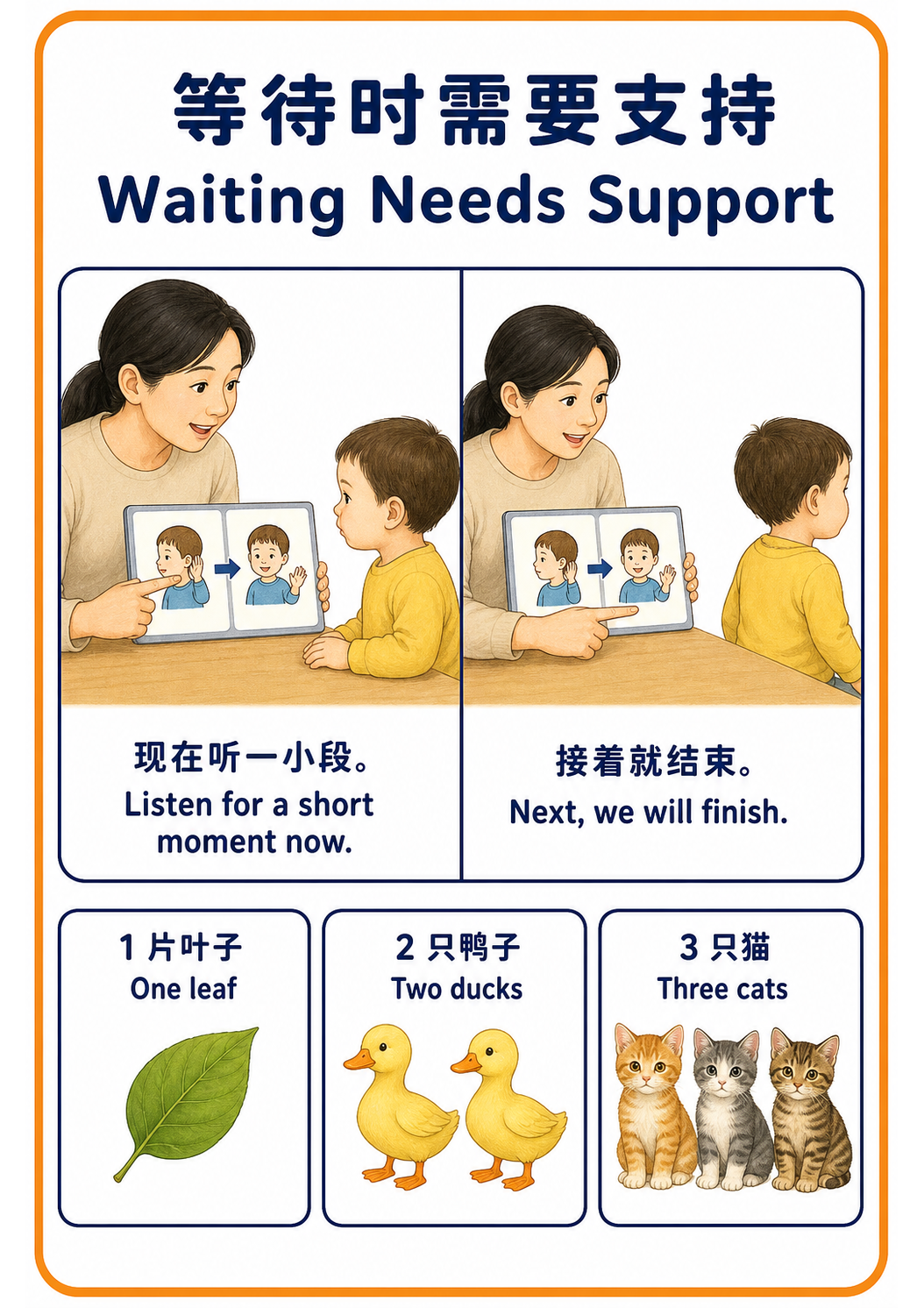
How to Support a Toddler While Waiting
Make a short wait visible, stay connected, and offer a concrete endpoint instead of expecting silent patience.
Open guide
Create a Simple Goodbye-and-Return Ritual for a Toddler
Use a truthful goodbye, one predictable cue, and a calm reunion without disappearing or demanding a cheerful response.
Open guide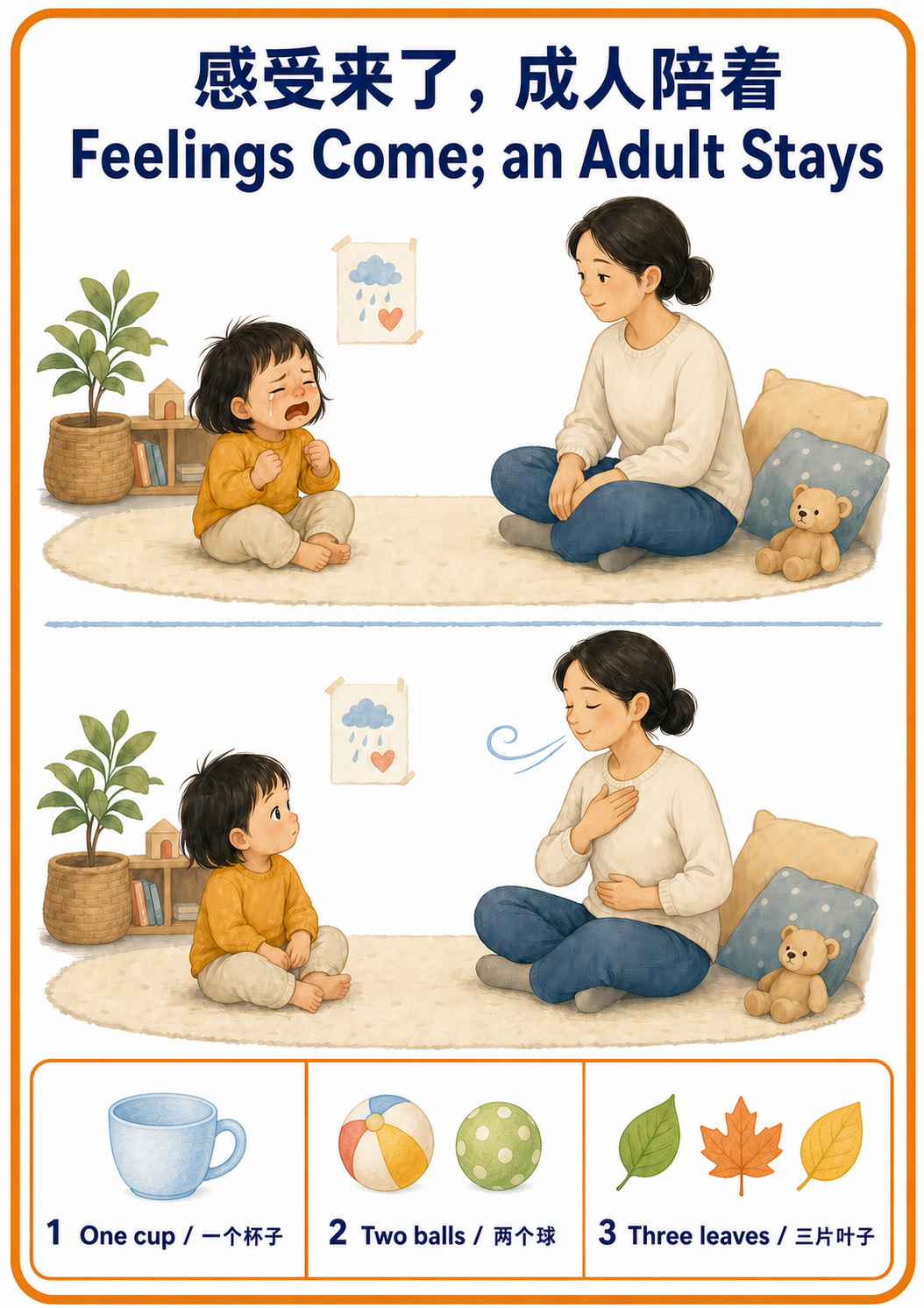
Co-Regulation During Toddler Big Feelings
Keep the environment safe, reduce adult language, and stay available without demanding instant calm.
Open guide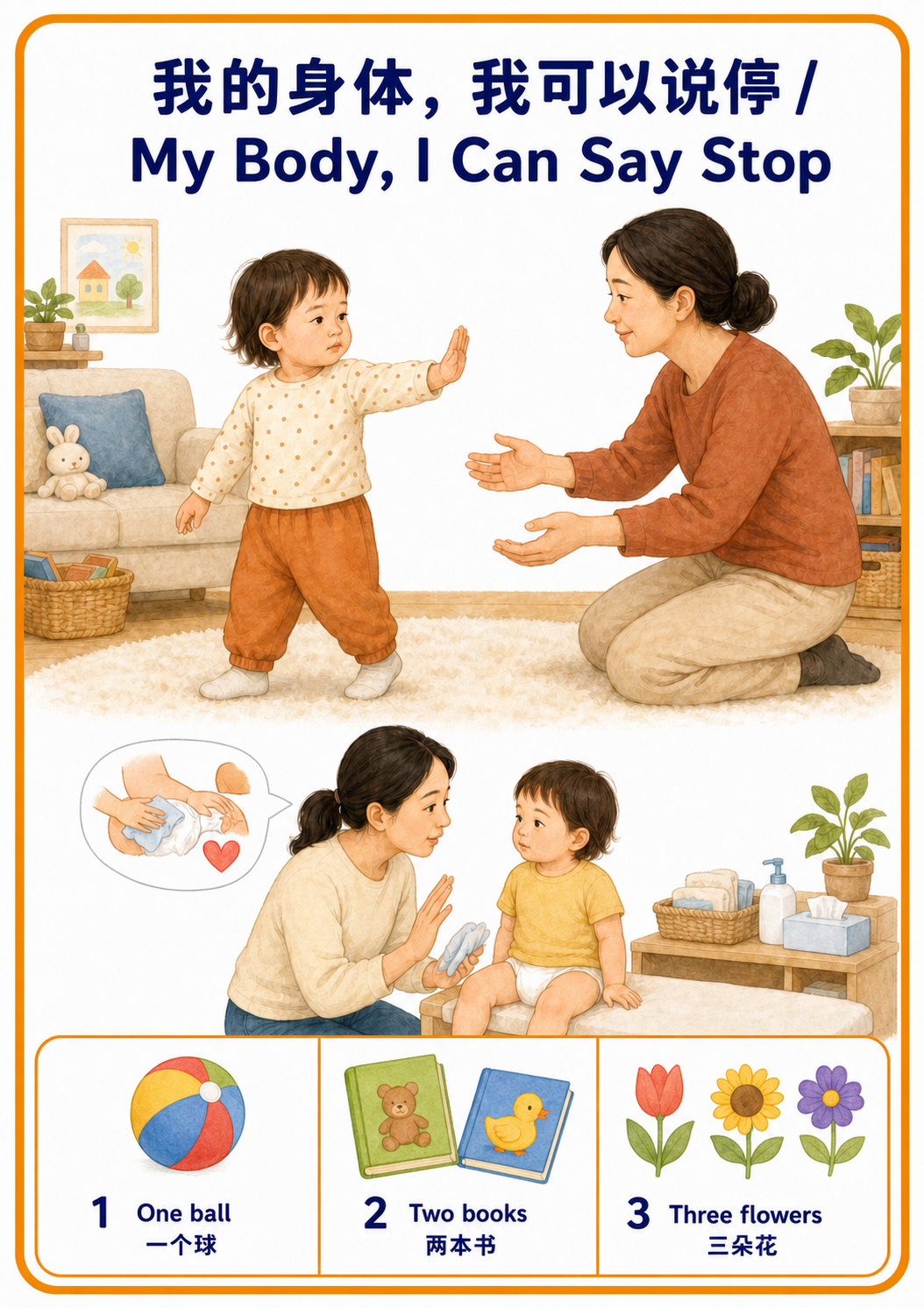
Teach Body Boundaries and Stop in Everyday Toddler Care
Preview necessary care, ask before optional touch, and respond clearly to stop signals while adults maintain safety.
Open guideA Three-Step Morning Routine for Toddlers
Use wake, dress, and breakfast as a flexible visual sequence without turning the morning into a compliance chart.
Open guide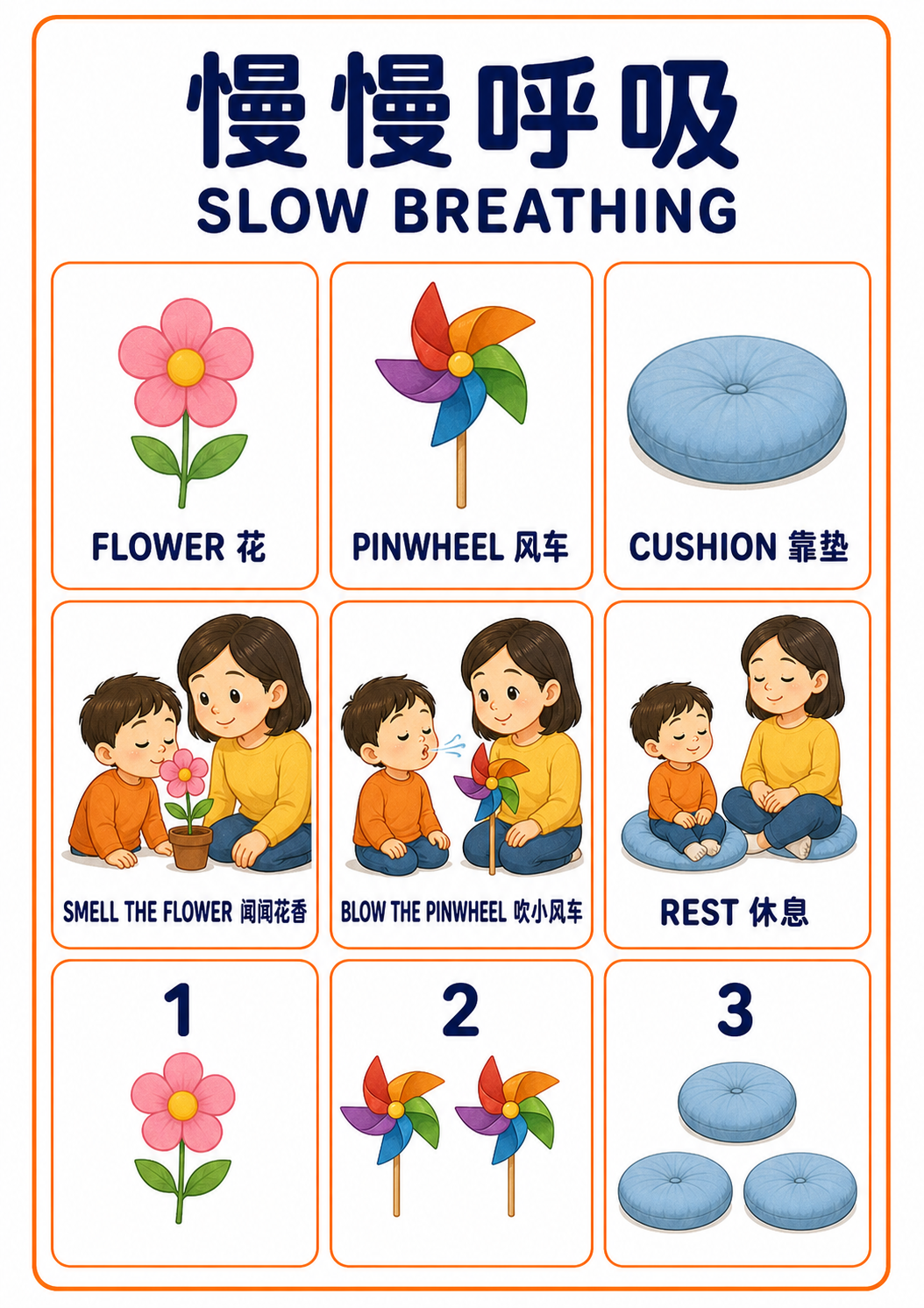
Slow Breathing Together with a Toddler—Without Forcing Deep Breaths
Let an adult model one comfortable slow exhale while a toddler watches, joins, or declines.
Open guideLet a Toddler Help with One Safe Household Chore
Offer one real, manageable contribution such as carrying a towel or placing a book in a basket without expecting adult-level results.
Open guide01
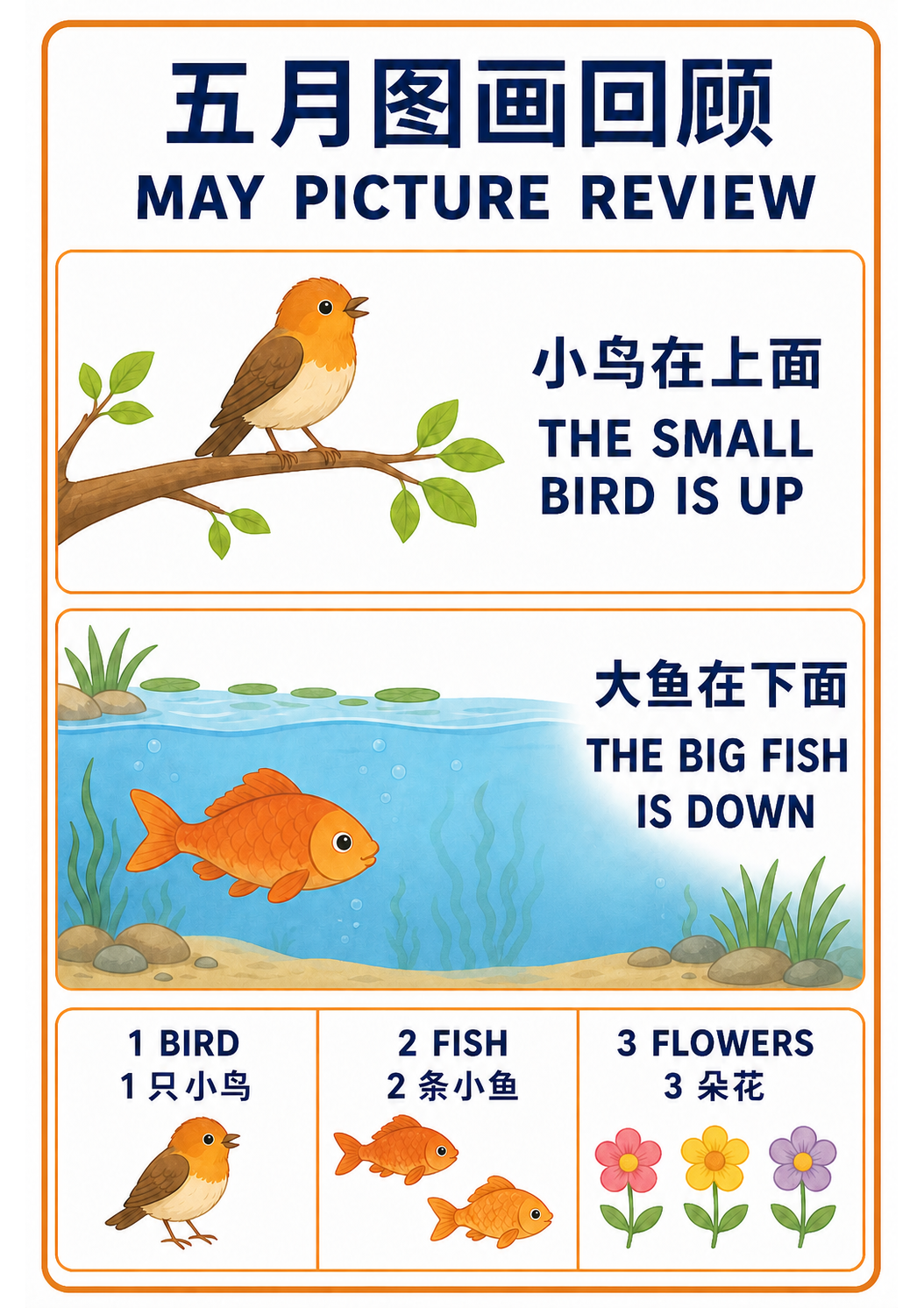
Printables
Free family printables collected from the original activity diary.
06
Hitting, sharing & peer conflict
Immediate safety, turn-taking, sharing, biting, hitting, and playground conflict for ages 2–3.
What to Say When a Toddler Hits a Parent
Block the hit, use one calm safety sentence, and teach a usable action after the toddler's body has slowed down.
Open guide →How to Respond When a Toddler Bites
Separate bodies, care for the injury, and teach one replacement without shaming or demanding an immediate apology.
Open guide →How to Stop Toy Grabbing and Support Turn-Taking
Hold the toy conflict, make turns brief and visible, and give toddlers close adult help instead of demanding they solve it alone.
Open guide →What to Do When a Toddler Does Not Want to Share
Separate ownership, turns, and kindness so a 2-year-old can protect special objects while practising supported social choices.
Open guide →How to Help Two Toddlers Who Want the Same Toy
Stay near, translate the conflict, and choose a short turn, duplicate material, or pause instead of deciding which child is the problem.
Open guide →How to Respond When a Toddler Pushes at the Playground
Protect the child who may fall, move away from equipment, and teach a simple space or turn signal after everyone is safe.
Open guide →