
How to Support a Toddler While Waiting
Quick answer: Waiting is not simply doing nothing. A toddler may need an adult to explain what is happening, remain nearby, and show when the wait will end through a visible event rather than an abstract number of minutes.
| Suggested age | Activity time | What you need | Participation can include |
|---|---|---|---|
| About 2–3 years | 3–10 minutes | One picture or one real routine | Looking, listening, pointing, moving, communicating, or stopping |
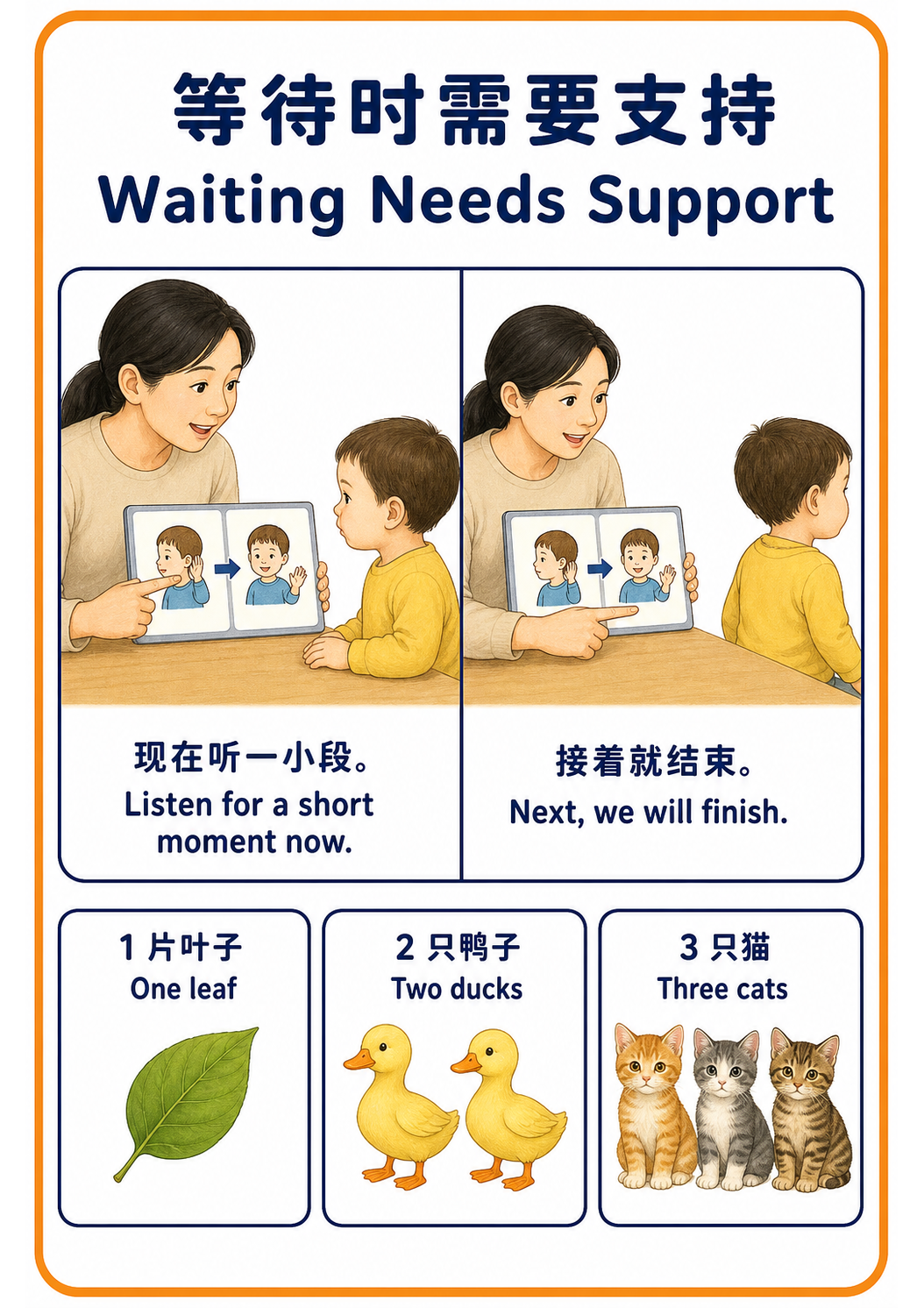
Begin with a Real Family Activity Picture
Open the high-resolution picture to download or print
This guide is adapted from our original family record, Waiting Needs Support. The diary keeps the full plan and context from that day; this page is reorganised around one parent question and keeps the parts another family can use quickly.
What This Activity Actually Supports
A routine supports connection when it makes the next moment more understandable without demanding compliance. Adult reliability, truthful language, and respect for signals matter more than completing a chart.
This is not a developmental test. A quick look, a point, one movement, a sound, a word, quiet observation, or a stop signal can all be valid participation.
Try It Today
1. Name the reason briefly
Use one honest sentence: ‘The food is cooling’ or ‘Another person is using the swing’.
2. Show the endpoint
Point to a clear event such as the bowl reaching the table, the elevator arriving, or one song ending.
3. Stay connected during the wait
Offer a hand, a quiet description, or one simple observation. Avoid demanding stillness when safe movement is possible.
Ready-to-Use Parent Phrases
- We are waiting for the lift to arrive.
- When this song ends, it will be our turn.
- Waiting is hard; I am here.
- You can stand beside me or hold my hand.
Adapt It to the Child in Front of You
Begin with very short waits and use real endpoints. If the wait becomes longer than expected, update the child rather than repeating the original promise.
Record One Real Observation
Notice which support helps: seeing the endpoint, moving safely, holding a hand, hearing a short explanation, or leaving the situation.
Avoid writing “can/cannot” or drawing a developmental conclusion from one activity. A more useful note records what the child noticed first, how the adult responded, and what helped the exchange continue or finish.
Safety and development boundary
Do not practise waiting by delaying food, toileting, comfort, medical attention, or escape from danger. Leave an unsafe or overwhelming situation.
How This Guide Was Made
This page uses the linked original family diary and picture as its experience base, with factual checks against the public sources below. AI assisted with structure and bilingual editing. It is not medical, psychological, or therapeutic advice. Read the editorial and fact-checking policy.
Sources
- CDC: Positive parenting tips for toddlers ages 2–3
- Harvard Center on the Developing Child: Serve and return