
Let a Toddler Help with One Safe Household Chore
Quick answer: Helping can be a form of belonging when the task is real, safe, and small. A toddler does not need a pretend job or a perfect result; one useful action beside an adult is enough.
| Suggested age | Activity time | What you need | Participation can include |
|---|---|---|---|
| About 2–3 years | 3–10 minutes | One picture or one real routine | Looking, listening, pointing, moving, communicating, or stopping |
Begin with a Real Family Activity Picture
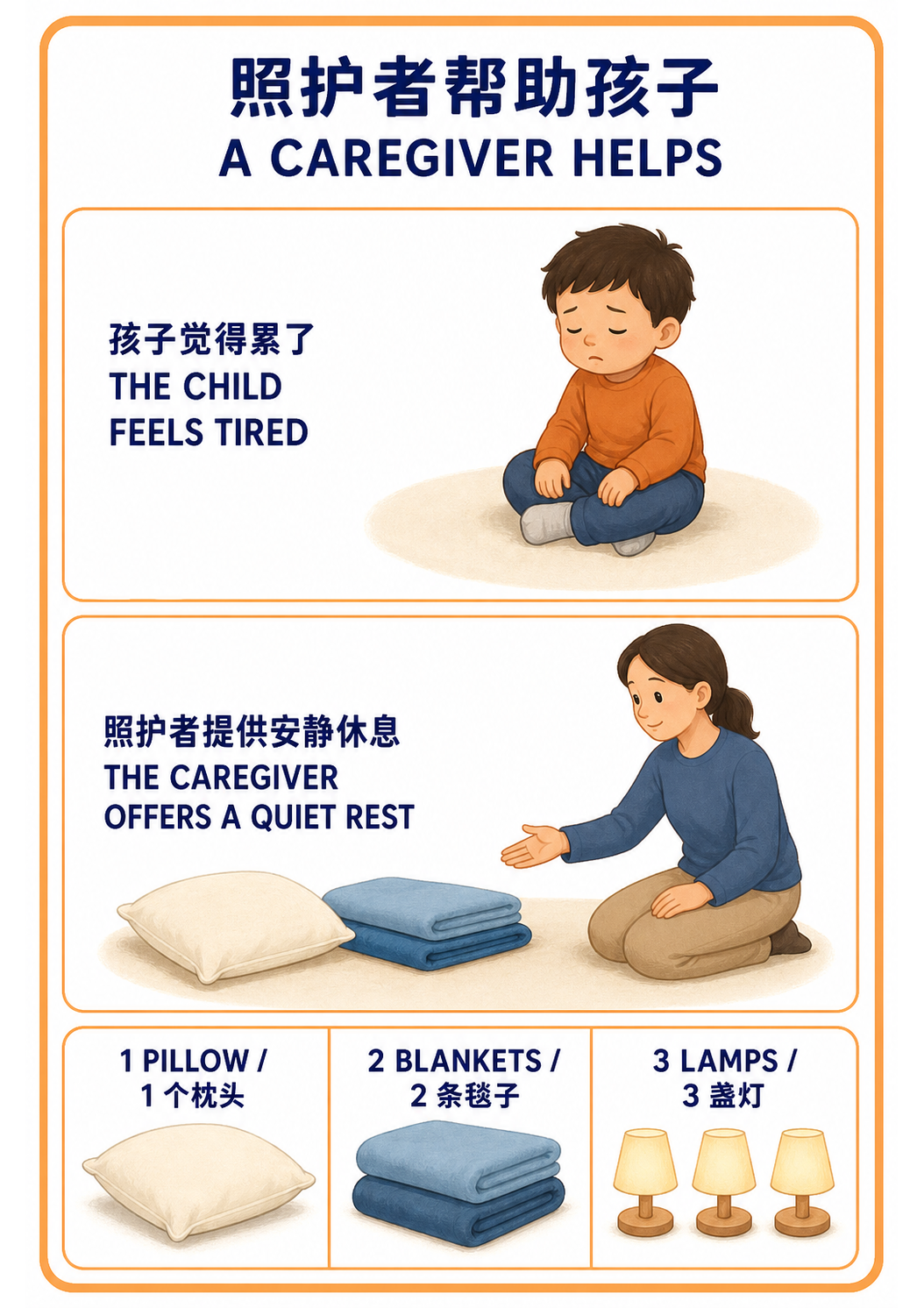
Open the high-resolution picture to download or print
This guide is adapted from our original family record, A Caregiver Helps. The diary keeps the full plan and context from that day; this page is reorganised around one parent question and keeps the parts another family can use quickly.
What This Activity Actually Supports
A routine supports connection when it makes the next moment more understandable without demanding compliance. Adult reliability, truthful language, and respect for signals matter more than completing a chart.
This is not a developmental test. A quick look, a point, one movement, a sound, a word, quiet observation, or a stop signal can all be valid participation.
Try It Today
1. Choose a genuinely safe job
Pick one action such as carrying a clean towel, putting a board book in a basket, or placing a plastic cup on the table.
2. Show the start and finish
Model once with few words, then offer one item. Keep the destination close and visible.
3. Acknowledge the contribution
Describe what the child did—‘You put the towel in the basket’—rather than judging speed, neatness, or obedience.
Ready-to-Use Parent Phrases
- Would you like to carry this clean towel?
- The basket is right here.
- You placed one book inside.
- Thank you; your part is finished.
Adapt It to the Child in Front of You
If the child declines, the adult completes the task without shame. If one item is easy and enjoyable, offer one more rather than handing over the whole chore.
Record One Real Observation
Observe which real jobs attract interest, whether the child understands the endpoint, and how much adult setup makes success possible.
Avoid writing “can/cannot” or drawing a developmental conclusion from one activity. A more useful note records what the child noticed first, how the adult responded, and what helped the exchange continue or finish.
Safety and development boundary
Toddlers do not handle cleaners, medicines, glass, sharp tools, hot laundry, raw food, heavy objects, electrical items, pet waste, or choking hazards.
How This Guide Was Made
This page uses the linked original family diary and picture as its experience base, with factual checks against the public sources below. AI assisted with structure and bilingual editing. It is not medical, psychological, or therapeutic advice. Read the editorial and fact-checking policy.
Sources
- CDC: Positive parenting tips for toddlers ages 2–3
- Harvard Center on the Developing Child: Serve and return