
Tell a Toddler Story with a Wordless Picture Book
Quick answer: A wordless picture book leaves room for a family to make language that fits the child's attention. A complete toddler story can be only three connected pieces: a character, an action, and a place.
| Suggested age | Activity time | What you need | Participation can include |
|---|---|---|---|
| About 2–3 years | 3–10 minutes | One picture or one real routine | Looking, listening, pointing, moving, communicating, or stopping |
Begin with a Real Family Activity Picture
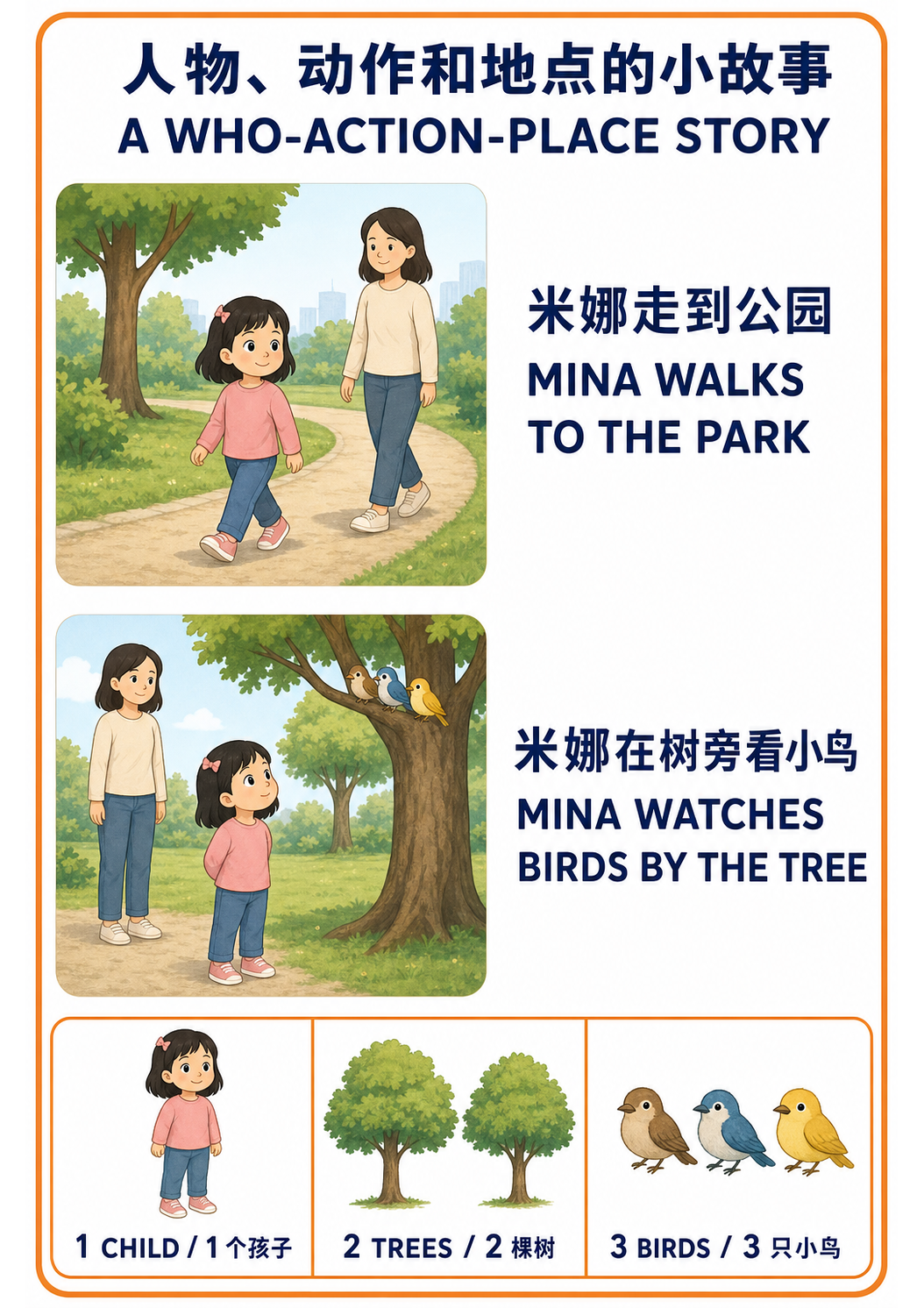
Open the high-resolution picture to download or print
This guide is adapted from our original family record, A Who-Action-Place Story. The diary keeps the full plan and context from that day; this page is reorganised around one parent question and keeps the parts another family can use quickly.
What This Activity Actually Supports
Shared reading can include looking, pointing, page turning, movement, quiet listening, and stopping. The book is a place for joint attention, not a test that requires a spoken answer on every page.
This is not a developmental test. A quick look, a point, one movement, a sound, a word, quiet observation, or a stop signal can all be valid participation.
Try It Today
1. Name who is present
Choose one central character and name them consistently. Let the child point to a different character if that is more interesting.
2. Describe one action
Say what is visibly happening rather than inventing motives: ‘The rabbit carries a basket’.
3. Add the place and close
Connect the action to the setting: ‘The rabbit carries a basket in the garden’. One sentence can be the whole story.
Ready-to-Use Parent Phrases
- A little rabbit is here.
- The rabbit carries a basket.
- They are walking in the garden.
- That is our short story.
Adapt It to the Child in Front of You
If three pieces are too much, name only the character and action. If the child adds an idea, include it even when it differs from the adult's planned story.
Record One Real Observation
Notice which character the child returns to and whether actions, places, sounds, or emotions attract more interest.
Avoid writing “can/cannot” or drawing a developmental conclusion from one activity. A more useful note records what the child noticed first, how the adult responded, and what helped the exchange continue or finish.
Safety and development boundary
Keep invented stories emotionally appropriate for the child. Avoid using frightening scenarios to force attention or teach compliance.
How This Guide Was Made
This page uses the linked original family diary and picture as its experience base, with factual checks against the public sources below. AI assisted with structure and bilingual editing. It is not medical, psychological, or therapeutic advice. Read the editorial and fact-checking policy.
Sources
- Harvard Center on the Developing Child: Serve and return
- CDC: Positive parenting tips for toddlers ages 2–3