
A Gentle Animal Movement Game for Toddlers
Quick answer: Animals move in different ways, and pictures can carry most of the learning. Movement imitation is optional; a child can point, watch, make a sound, or choose one small action.
| Suggested age | Activity time | What you need | Participation can include |
|---|---|---|---|
| About 2–3 years | 3–10 minutes | One picture or one real routine | Looking, listening, pointing, moving, communicating, or stopping |
Begin with a Real Family Activity Picture
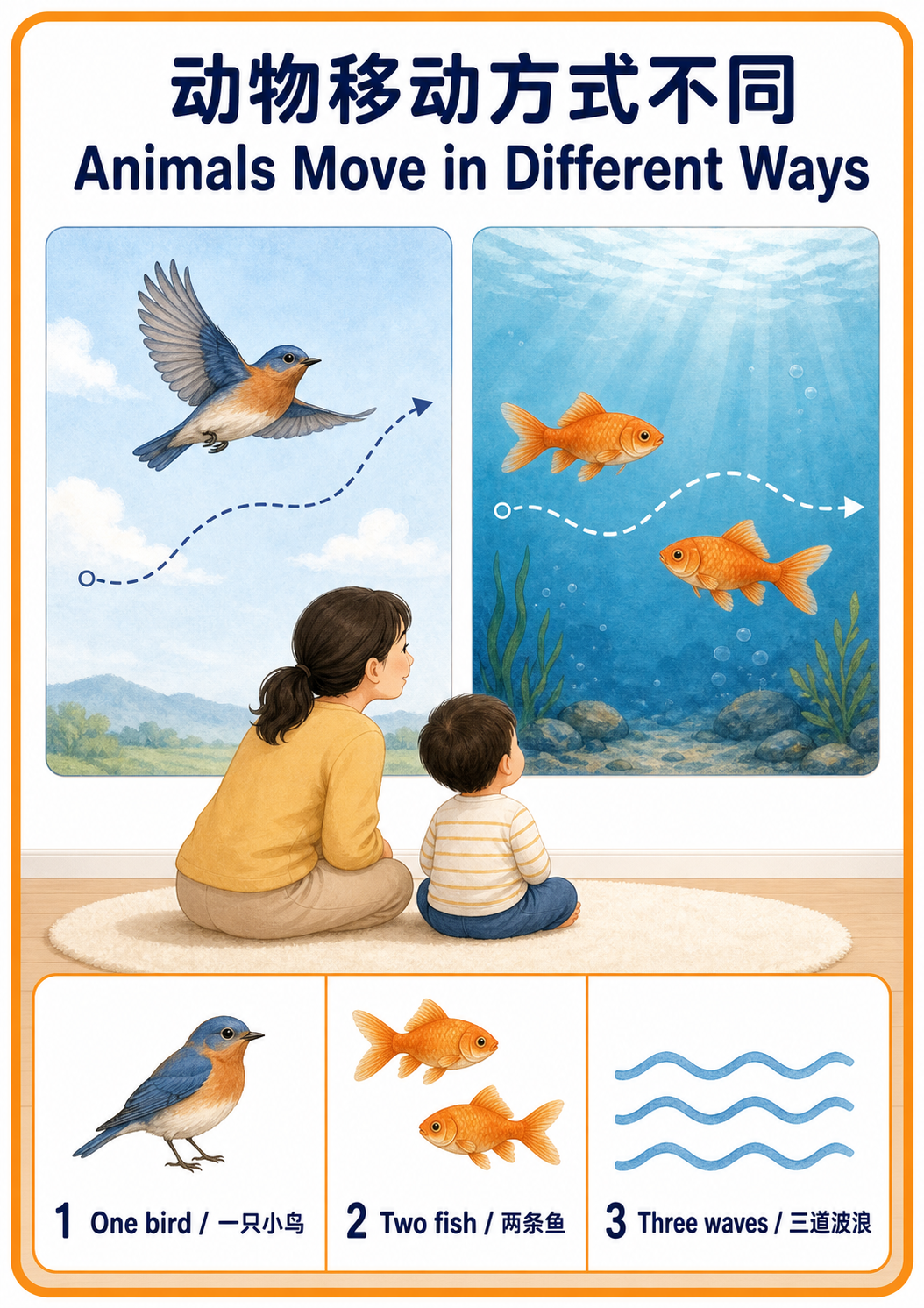
Open the high-resolution picture to download or print
This guide is adapted from our original family record, Animals Move in Different Ways. The diary keeps the full plan and context from that day; this page is reorganised around one parent question and keeps the parts another family can use quickly.
What This Activity Actually Supports
Play and discovery work best when the adult changes one thing at a time, describes what actually happened, and leaves room for the child's own attention. A picture-only version is always acceptable.
This is not a developmental test. A quick look, a point, one movement, a sound, a word, quiet observation, or a stop signal can all be valid participation.
Try It Today
1. Name one animal and movement
Say ‘The bird flies’ or ‘The fish swims’ while pointing to the matching body position or path in the picture.
2. Model a small version
Move hands like wings or fingers like a swimming fish. Keep feet on the floor and the movement within personal space.
3. Offer a contrast
Compare two movements, then let the child choose which picture to revisit. Do not require a full-body imitation.
Ready-to-Use Parent Phrases
- The bird moves through the air.
- The fish moves through water.
- My hands can show a tiny movement.
- You can watch or join.
Adapt It to the Child in Front of You
Play entirely seated or use only fingers. For a child who wants more movement, clear a non-slip area and choose walking or gentle arm actions rather than jumping.
Record One Real Observation
Look for matching a movement to a picture, choosing a favourite animal, changing speed, or communicating stop.
Avoid writing “can/cannot” or drawing a developmental conclusion from one activity. A more useful note records what the child noticed first, how the adult responded, and what helped the exchange continue or finish.
Safety and development boundary
Do not imitate dangerous animal behaviour, climbing, diving, biting, or high jumping. Keep the floor dry and clear, and stop before fatigue.
How This Guide Was Made
This page uses the linked original family diary and picture as its experience base, with factual checks against the public sources below. AI assisted with structure and bilingual editing. It is not medical, psychological, or therapeutic advice. Read the editorial and fact-checking policy.
Sources
- CDC: Positive parenting tips for toddlers ages 2–3
- Harvard Center on the Developing Child: Serve and return