
Safe Ramp Play for Toddlers: Compare Two Gentle Slopes
Quick answer: A low ramp can show how changing a slope changes movement, but the safest first version is often a picture comparison. If a real ramp is used, it should be small, stable, floor-level, and controlled by an adult.
| Suggested age | Activity time | What you need | Participation can include |
|---|---|---|---|
| About 2–3 years | 3–10 minutes | One picture or one real routine | Looking, listening, pointing, moving, communicating, or stopping |
Begin with a Real Family Activity Picture
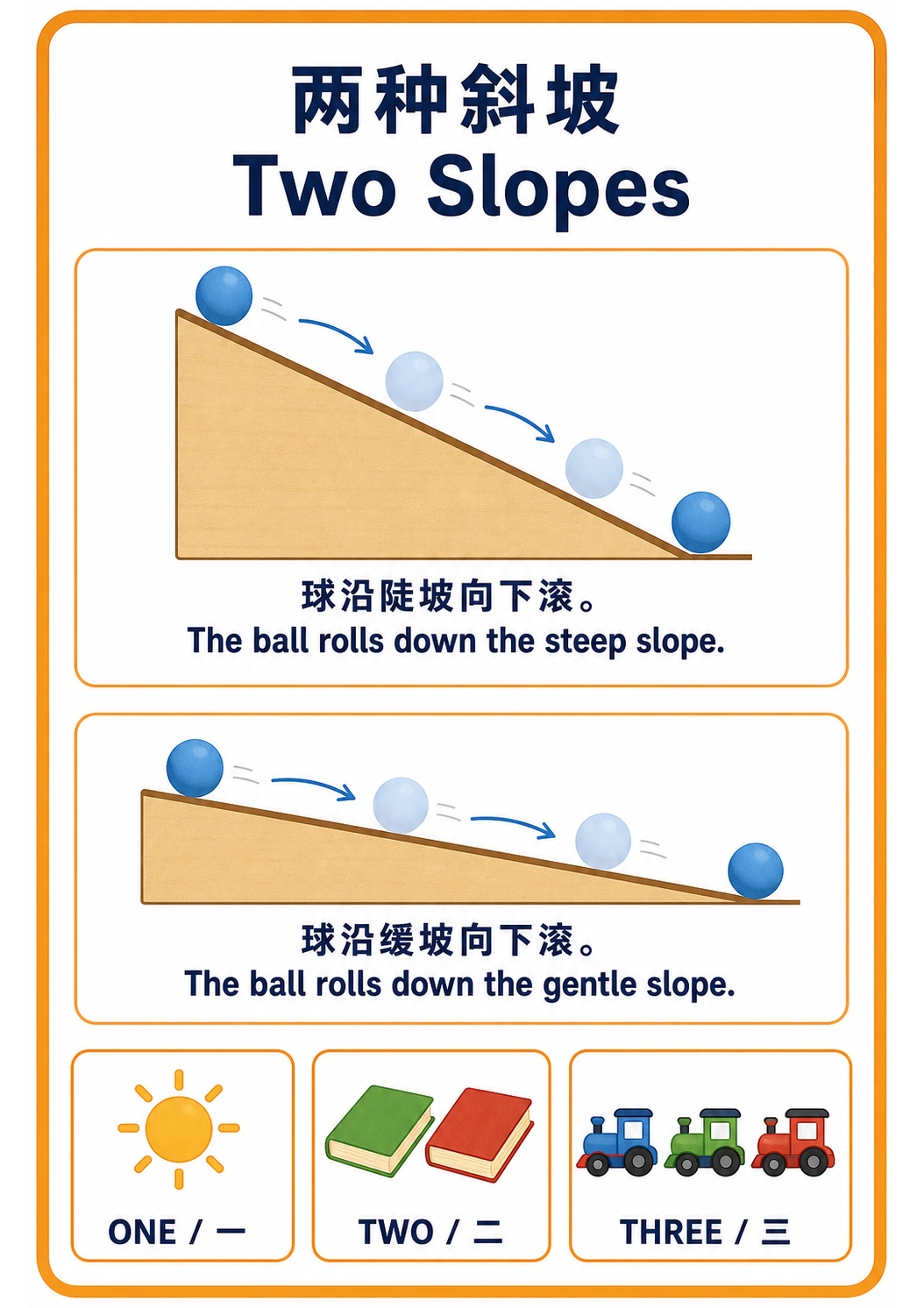
Open the high-resolution picture to download or print
This guide is adapted from our original family record, Two Slopes. The diary keeps the full plan and context from that day; this page is reorganised around one parent question and keeps the parts another family can use quickly.
What This Activity Actually Supports
Play and discovery work best when the adult changes one thing at a time, describes what actually happened, and leaves room for the child's own attention. A picture-only version is always acceptable.
This is not a developmental test. A quick look, a point, one movement, a sound, a word, quiet observation, or a stop signal can all be valid participation.
Try It Today
1. Compare the pictures first
Trace the gentle and slightly steeper paths with one finger and describe where each begins and ends.
2. Build only a floor-level ramp
If appropriate, prop a firm board or large book only a few centimetres high on a non-slip floor. The adult tests stability first.
3. Release; do not throw
Let a large soft ball go from the top once on each slope. Describe the observed difference without promising the same result every time.
Ready-to-Use Parent Phrases
- Both balls start at the top.
- This path slopes a little more.
- The ball reached the bottom.
- Let's stop and make the ramp flat.
Adapt It to the Child in Front of You
Stay entirely with the picture if the environment cannot support a stable ramp. A finger sliding down two drawn lines can carry the same language.
Record One Real Observation
Look for attention to start height, tracking speed, anticipation at the bottom, or attempts to compare the paths.
Avoid writing “can/cannot” or drawing a developmental conclusion from one activity. A more useful note records what the child noticed first, how the adult responded, and what helped the exchange continue or finish.
Safety and development boundary
Never use furniture, stairs, wheeled ride-ons, heavy objects, or a ramp a child can climb. Adult hands stay on the setup, and the activity ends if the ramp shifts.
How This Guide Was Made
This page uses the linked original family diary and picture as its experience base, with factual checks against the public sources below. AI assisted with structure and bilingual editing. It is not medical, psychological, or therapeutic advice. Read the editorial and fact-checking policy.
Sources
- CDC: Positive parenting tips for toddlers ages 2–3
- Harvard Center on the Developing Child: Serve and return