
Bilingual Storytelling at Home Without Translating Every Line
Quick answer: A bilingual story does not need sentence-by-sentence translation. A family can keep the same characters, pictures, and emotional thread while using each language naturally in a short, predictable part of the reading.
| Suggested age | Activity time | What you need | Participation can include |
|---|---|---|---|
| About 2–3 years | 3–10 minutes | One picture or one real routine | Looking, listening, pointing, moving, communicating, or stopping |
Begin with a Real Family Activity Picture
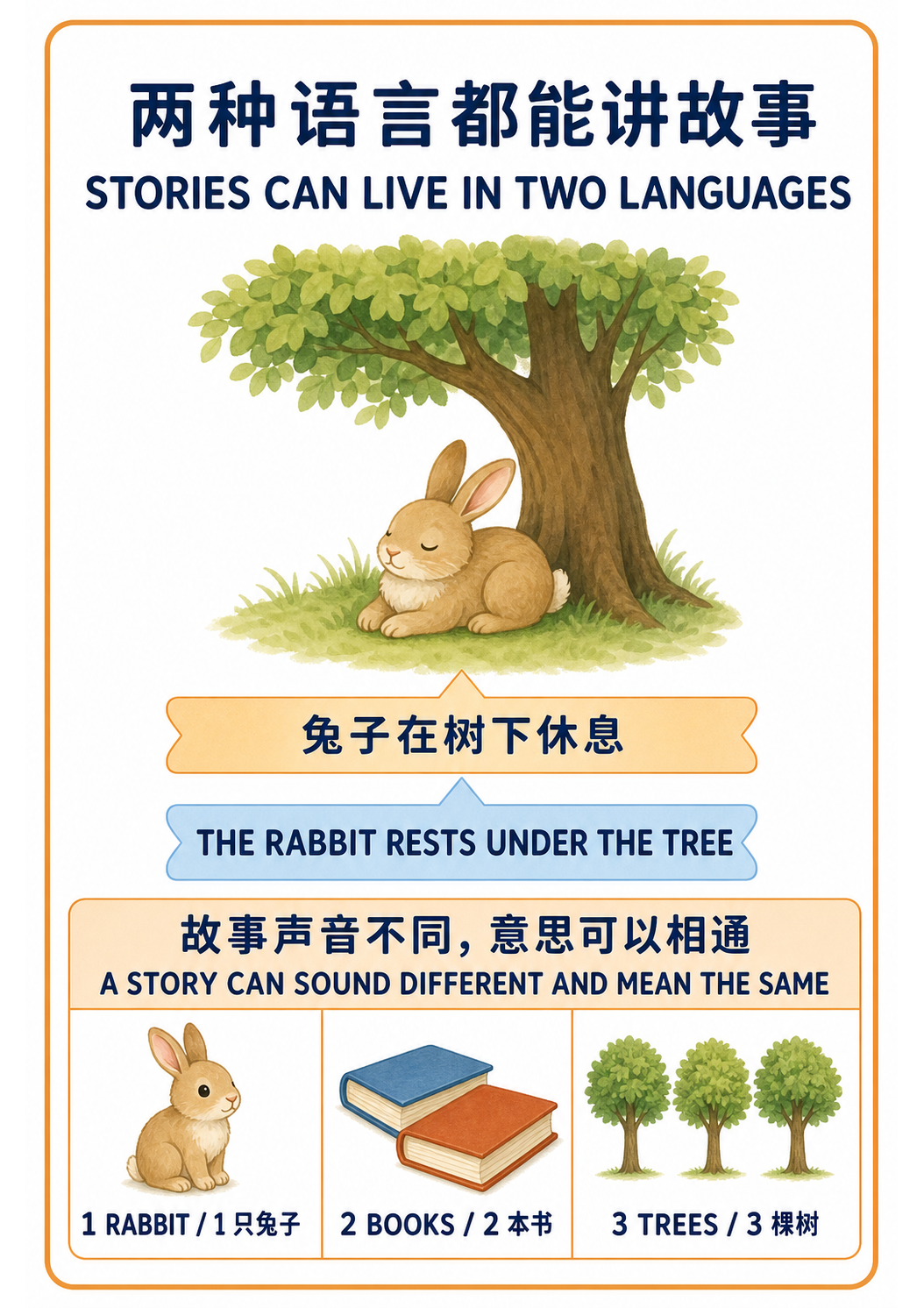
Open the high-resolution picture to download or print
This guide is adapted from our original family record, Stories Can Live in Two Languages. The diary keeps the full plan and context from that day; this page is reorganised around one parent question and keeps the parts another family can use quickly.
What This Activity Actually Supports
The useful unit here is a back-and-forth exchange, not a vocabulary score. Naming what a young child is seeing, doing, or communicating can add language while preserving the child's turn.
This is not a developmental test. A quick look, a point, one movement, a sound, a word, quiet observation, or a stop signal can all be valid participation.
Try It Today
1. Choose an anchor language
Tell the main story in the language that feels easiest for the adult. This protects the flow and allows richer, more natural expression.
2. Add a small second-language moment
Reuse one repeated line, character name, action word, or sound in the other language. Point to the same picture so meaning stays available.
3. Close in the family's comfortable language
Summarise what happened or say goodnight in whichever language supports connection at that moment.
Ready-to-Use Parent Phrases
- The little cat is walking. 小猫在走。
- Again? 再来一次吗?
- The rain stopped. 雨停了。
- All done. 今天读到这里。
Adapt It to the Child in Front of You
If switching languages disrupts attention, use one language today and the other on a later rereading. Bilingual exposure can happen across days, not inside every page.
Record One Real Observation
Notice which repeated words, sounds, or pictures remain enjoyable in both languages. Do not compare vocabulary totals between languages after one reading.
Avoid writing “can/cannot” or drawing a developmental conclusion from one activity. A more useful note records what the child noticed first, how the adult responded, and what helped the exchange continue or finish.
Safety and development boundary
Language choice is a family and cultural decision, not a developmental test. Seek individual professional advice if there are broader communication concerns in all languages a child uses.
How This Guide Was Made
This page uses the linked original family diary and picture as its experience base, with factual checks against the public sources below. AI assisted with structure and bilingual editing. It is not medical, psychological, or therapeutic advice. Read the editorial and fact-checking policy.
Sources
- Harvard Center on the Developing Child: Serve and return
- CDC: Milestones and family activities for 2-year-olds