
Simple Rhyme Play for Toddlers Without Memorising
Quick answer: Rhyming can be heard before it can be explained. A pair of playful words, a repeated beat, and a matching movement give a toddler a chance to enjoy sound patterns without a worksheet or memory test.
| Suggested age | Activity time | What you need | Participation can include |
|---|---|---|---|
| About 2–3 years | 3–10 minutes | One picture or one real routine | Looking, listening, pointing, moving, communicating, or stopping |
Begin with a Real Family Activity Picture
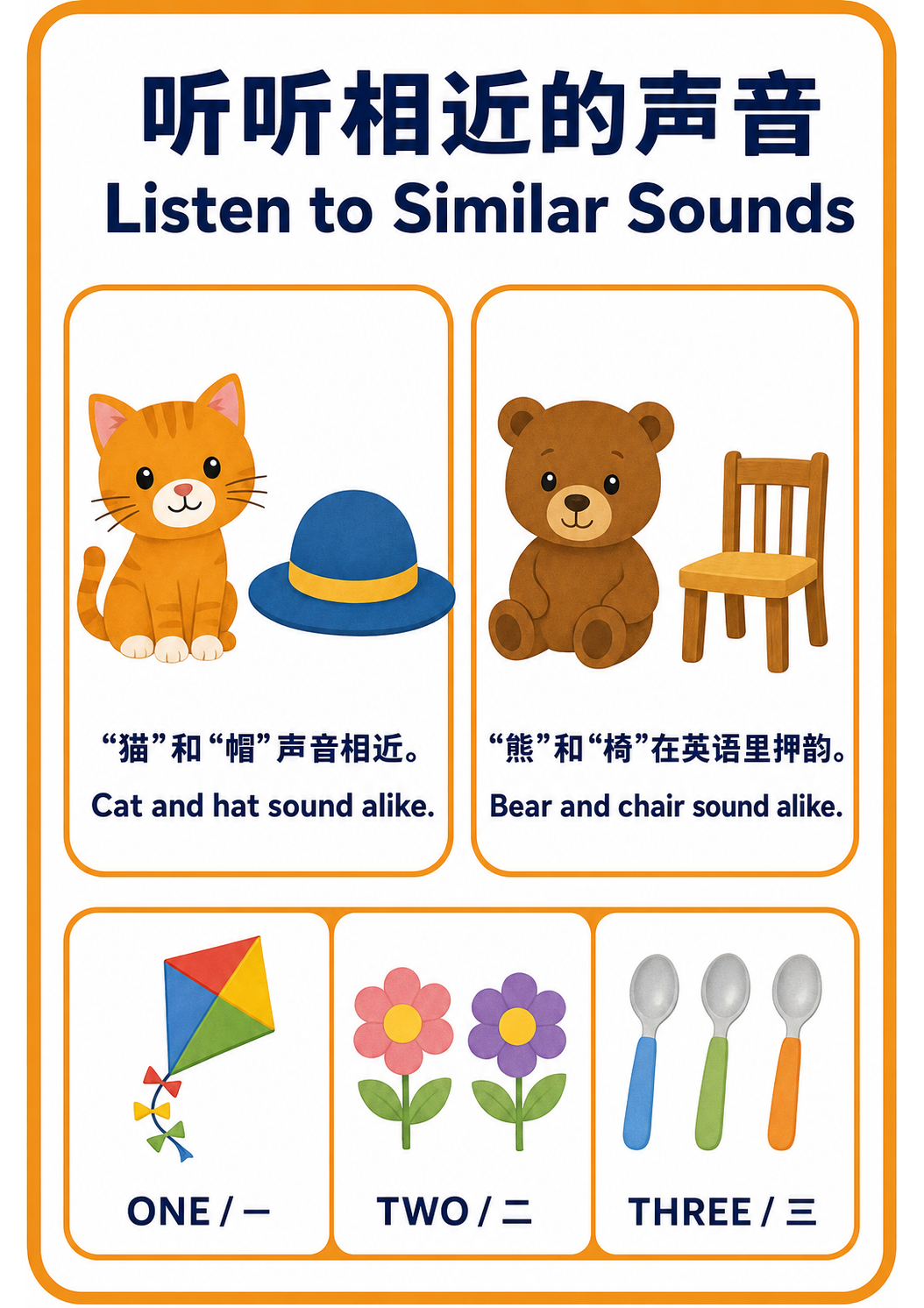
Open the high-resolution picture to download or print
This guide is adapted from our original family record, Listen to Similar Sounds. The diary keeps the full plan and context from that day; this page is reorganised around one parent question and keeps the parts another family can use quickly.
What This Activity Actually Supports
The useful unit here is a back-and-forth exchange, not a vocabulary score. Naming what a young child is seeing, doing, or communicating can add language while preserving the child's turn.
This is not a developmental test. A quick look, a point, one movement, a sound, a word, quiet observation, or a stop signal can all be valid participation.
Try It Today
1. Use a meaningful pair
Choose a real word from the picture or routine and a familiar rhyme, such as cat and hat. Explain any silly word through tone rather than pretending it is vocabulary.
2. Repeat with one movement
Tap knees, sway, or roll hands once for each word. The repeated movement helps mark the similar ending.
3. Leave the last word optional
On the final round, pause before the rhyme. Continue it yourself if the child does not join; the pause is an invitation, not a demand.
Ready-to-Use Parent Phrases
- Cat, hat—tap, tap.
- Moon, spoon—sway together.
- Bee, tree—same ending sound.
- You listened; we can stop.
Adapt It to the Child in Front of You
Use family songs and rhymes in any home language. If a rhyme pair feels unnatural, choose rhythm or repeated syllables instead.
Record One Real Observation
Watch for anticipation before the second word, body movement with the beat, or a request to repeat. These are useful observations even without spoken rhyme production.
Avoid writing “can/cannot” or drawing a developmental conclusion from one activity. A more useful note records what the child noticed first, how the adult responded, and what helped the exchange continue or finish.
Safety and development boundary
Keep movement small and the listening volume comfortable. Rhyme play should not involve jumping on furniture or sudden loud sounds.
How This Guide Was Made
This page uses the linked original family diary and picture as its experience base, with factual checks against the public sources below. AI assisted with structure and bilingual editing. It is not medical, psychological, or therapeutic advice. Read the editorial and fact-checking policy.
Sources
- Harvard Center on the Developing Child: Serve and return
- CDC: Milestones and family activities for 2-year-olds