
How to Brush a Toddler's Teeth When They Refuse
Quick answer: State the health boundary simply—teeth need adult help—then offer choices about position, song, or who starts. Keep the routine brief and predictable, and help the child safely even when they do not choose brushing.
| Suggested age | Activity time | What you need | Participation can include |
|---|---|---|---|
| About 2–3 years | 3–10 minutes | One picture or one real routine | Looking, listening, pointing, moving, communicating, or stopping |
Begin with a Real Family Activity Picture
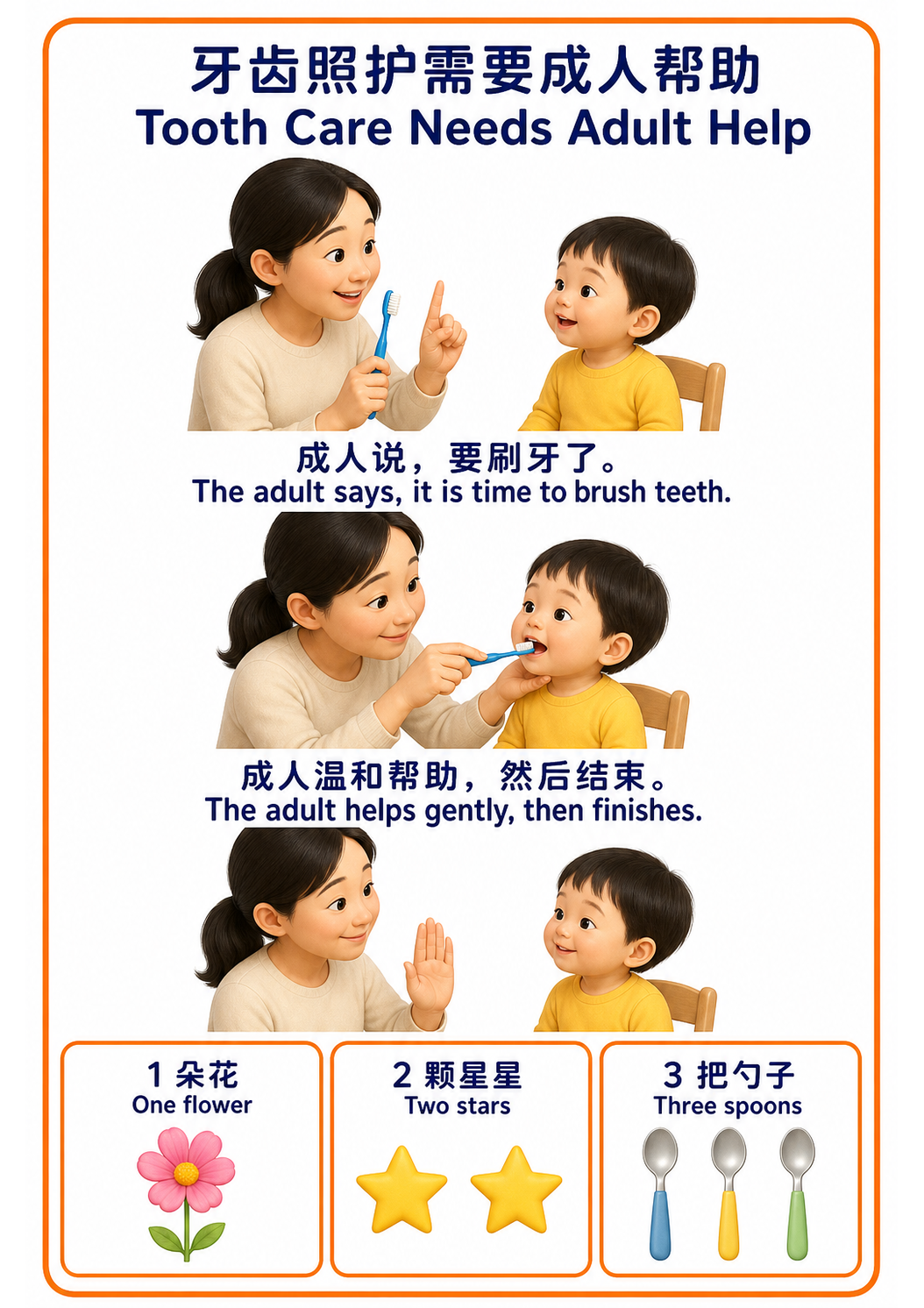
Open the high-resolution picture to download or print
This guide is adapted from our original family record, Tooth Care Needs Adult Help. The diary keeps the full plan and context from that day; this page is reorganised around one parent question and keeps the parts another family can use quickly.
Record boundary: Our January 27 record used a picture sequence to show that tooth care needs adult help. The linked diary records that practice activity; it does not claim that the exact conflict in this guide happened on that day.
What This Activity Actually Supports
Body care combines a real adult responsibility with a child's need for predictability, dignity, and small participation. Choices can shape how care happens, while the adult remains responsible for health, weather, hygiene, and immediate safety.
This is not a developmental test. A quick look, a point, one movement, a sound, a word, quiet observation, or a stop signal can all be valid participation.
Try It Today
1. State the care boundary clearly
Show the same short sequence: toothbrush, child turn, adult turn, rinse or finish. Say what will happen before touching the mouth. Avoid asking ‘Can we brush?’ when the adult cannot safely accept no brushing at all.
2. Offer control inside the boundary
Offer real control inside care: stand or sit, blue or green brush, one song or counting, child first or adult first. Let the toddler hold a second brush or brush the adult's teeth when safe, but do not trade away the necessary adult cleaning.
3. Finish with dignity and reconnection
Use a stable, comfortable position and the least force needed for safety. Narrate briefly, stop if there is choking, injury, or breathing difficulty, and reconnect after finishing: ‘You did not like that. I am here. Teeth are finished.’
Ready-to-Use Parent Phrases
- Teeth need a grown-up's help.
- Blue brush or green brush?
- Your turn, then my careful turn.
- You did not like it; brushing is finished now.
Adapt It to the Child in Front of You
Try a different time, mirror, lighting, flavour, brush texture, or body position if distress repeats. Build comfort outside brushing by touching the cheek or looking at the brush only with consent. Ask a dental professional about persistent pain, bleeding, gagging, or sensory difficulty.
Record One Real Observation
Record time, position, toothpaste or brush, signs of pain, which choice helped, and whether distress began before or after mouth contact. These details can help a dentist distinguish routine protest from a possible oral or sensory problem.
Avoid writing “can/cannot” or drawing a developmental conclusion from one activity. A more useful note records what the child noticed first, how the adult responded, and what helped the exchange continue or finish.
Safety and development boundary
Follow current dental guidance for brushing, fluoride toothpaste amount, supervision, and dental visits. Keep toothpaste and brushes from being swallowed or shared. Seek dental or medical advice for pain, trauma, swelling, bleeding, infection signs, or breathing and swallowing concerns.
How This Guide Was Made
This page uses the linked original family diary and picture as its experience base, with factual checks against the public sources below. AI assisted with structure and bilingual editing. It is not medical, psychological, or therapeutic advice. Read the editorial and fact-checking policy.
Sources
- CDC: Positive parenting tips for toddlers ages 2–3
- Harvard Center on the Developing Child: Serve and return