
How to Handle a Toddler's Store Meltdown Without Buying the Item
Quick answer: Acknowledge the wish without changing the purchase limit: ‘You want that car. We are not buying it today.’ Then reduce language, keep bodies and merchandise safe, and leave the area if the toddler cannot recover there.
| Suggested age | Activity time | What you need | Participation can include |
|---|---|---|---|
| About 2–3 years | 3–10 minutes | One picture or one real routine | Looking, listening, pointing, moving, communicating, or stopping |
Begin with a Real Family Activity Picture
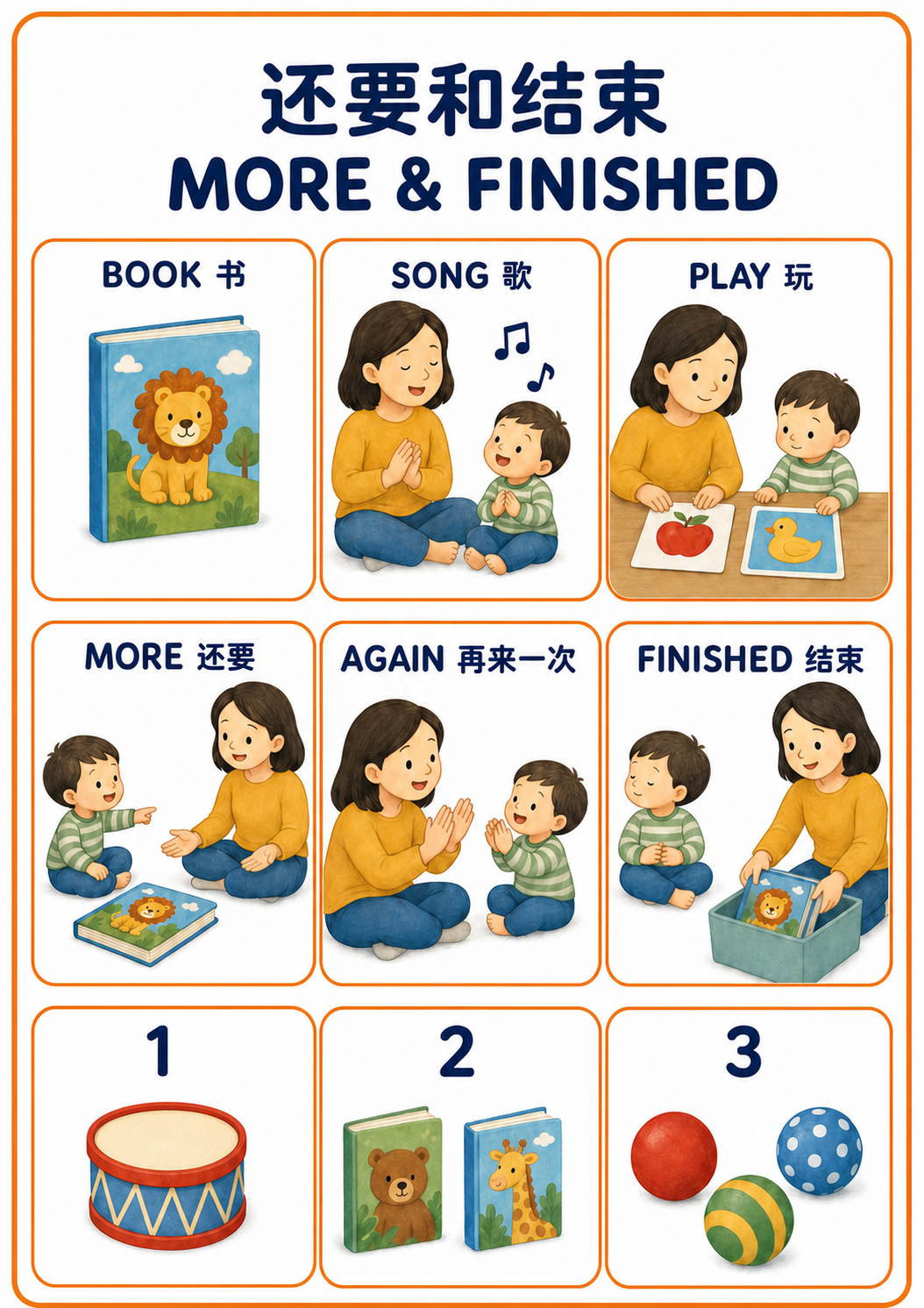
Open the high-resolution picture to download or print
This guide is adapted from our original family record, More & Finished. The diary keeps the full plan and context from that day; this page is reorganised around one parent question and keeps the parts another family can use quickly.
Record boundary: Our July 18 record practised communicating ‘more’ and ‘finished’ as two valid messages. The linked diary records that practice activity; it does not claim that the exact conflict in this guide happened on that day.
What This Activity Actually Supports
Transitions become easier to understand when the adult makes the sequence visible, uses few truthful words, and keeps the boundary steady without treating protest as failure. The goal is supported participation, not instant obedience.
This is not a developmental test. A quick look, a point, one movement, a sound, a word, quiet observation, or a stop signal can all be valid participation.
Try It Today
1. Name the immediate next step
State the answer once with the item named. Long explanations about money, behaviour, or future birthdays can sound like the negotiation is still open. If useful, add one true next step: ‘We are buying milk, then going home.’
2. Make participation smaller
Give a non-purchase role such as holding the list, finding bananas, or choosing which necessary item goes in the basket. Do not offer a different treat merely to stop the feeling; the small role is participation, not compensation.
3. Hold the limit through protest
Block throwing, hitting, opening packages, or running. Say ‘I will keep you and the shop safe.’ Move to a quieter area or leave with the child if necessary. The adult can be kind about disappointment and firm about not buying at the same time.
Ready-to-Use Parent Phrases
- You want the car. We are not buying it today.
- It is hard to hear no.
- Your job can be holding the list.
- I will help us leave safely.
Adapt It to the Child in Front of You
For predictable difficult aisles, shop with a short list, eat beforehand, and name the purchase plan before entering. Online shopping, pickup, or a shorter visit may be a valid accommodation during a hard season; it is not a failure of teaching.
Record One Real Observation
Record hunger, fatigue, store length, the location of the item, and whether the answer changed after protest. These details help the family plan; ‘had a tantrum’ alone does not show which condition made the moment harder.
Avoid writing “can/cannot” or drawing a developmental conclusion from one activity. A more useful note records what the child noticed first, how the adult responded, and what helped the exchange continue or finish.
Safety and development boundary
Move immediately if the child can reach traffic, glass, heavy displays, medicines, chemicals, small objects, or other customers. One adult may need to abandon the basket and leave; merchandise and shopping goals are secondary to safety.
How This Guide Was Made
This page uses the linked original family diary and picture as its experience base, with factual checks against the public sources below. AI assisted with structure and bilingual editing. It is not medical, psychological, or therapeutic advice. Read the editorial and fact-checking policy.
Sources
- CDC: Positive parenting tips for toddlers ages 2–3
- Harvard Center on the Developing Child: Serve and return