
How to Leave the Playground Without a Power Struggle
Quick answer: Do not try to make a toddler agree that leaving is fun. Give a short truthful sequence—one last action, then shoes or stroller—acknowledge the disappointment, and help the body leave if waiting longer is not available.
| Suggested age | Activity time | What you need | Participation can include |
|---|---|---|---|
| About 2–3 years | 3–10 minutes | One picture or one real routine | Looking, listening, pointing, moving, communicating, or stopping |
Begin with a Real Family Activity Picture
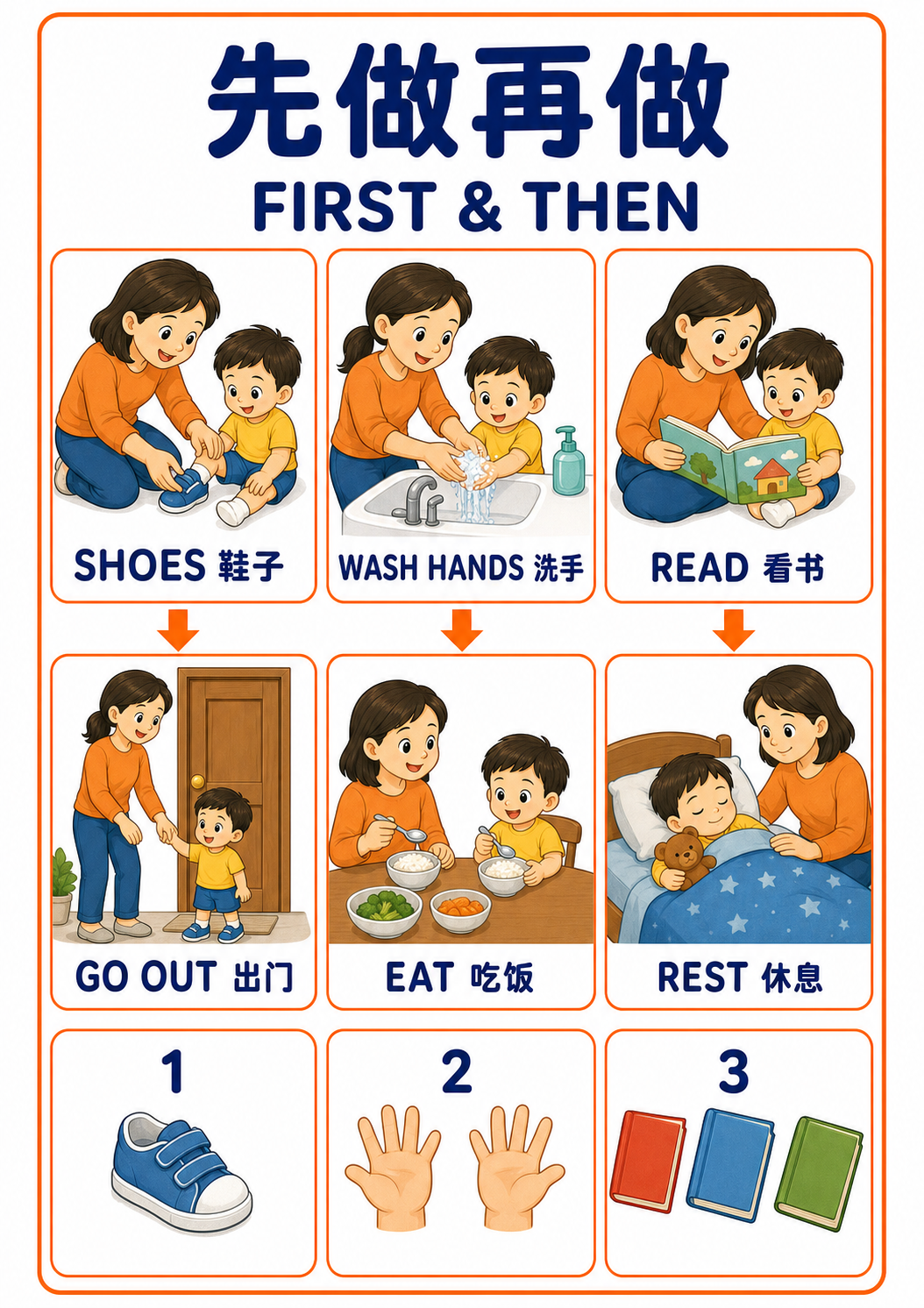
Open the high-resolution picture to download or print
This guide is adapted from our original family record, First & Then. The diary keeps the full plan and context from that day; this page is reorganised around one parent question and keeps the parts another family can use quickly.
Record boundary: Our July 27 record practised a visible first-and-then sequence with familiar actions. The linked diary records that practice activity; it does not claim that the exact conflict in this guide happened on that day.
What This Activity Actually Supports
Transitions become easier to understand when the adult makes the sequence visible, uses few truthful words, and keeps the boundary steady without treating protest as failure. The goal is supported participation, not instant obedience.
This is not a developmental test. A quick look, a point, one movement, a sound, a word, quiet observation, or a stop signal can all be valid participation.
Try It Today
1. Name the immediate next step
Move close, get to the child's level, and say what remains: ‘One more slide, then we walk to the gate.’ Avoid a string of five-minute warnings that keeps changing, because a warning only helps when the adult can follow it.
2. Make participation smaller
Let the toddler choose the final safe action or how to travel to the exit: slide or swing, walk or be carried, hold the red strap or the blue strap. The choice changes participation, not whether the family is leaving.
3. Hold the limit through protest
If the child cries, keep the sentence short: ‘You wanted more. It is time to leave. I will help.’ Block running toward danger and carry the child safely when necessary; agreement is not required before the transition can finish.
Ready-to-Use Parent Phrases
- One more slide, then we go to the gate.
- You wanted to keep playing.
- Walk or be carried?
- I will help your body leave safely.
Adapt It to the Child in Front of You
For a child who becomes more upset with countdowns, skip numbers and use one concrete event. For a child who needs more predictability, show the same first-then picture before arriving and again before the final action. Keep the promise exact rather than adding surprise errands.
Record One Real Observation
Record which cue the child noticed, whether the final choice reduced confusion, and how long recovery took after leaving. Do not rate the child as good or difficult; compare whether the adult sequence stayed clear and consistent.
Avoid writing “can/cannot” or drawing a developmental conclusion from one activity. A more useful note records what the child noticed first, how the adult responded, and what helped the exchange continue or finish.
Safety and development boundary
Near roads, parking areas, water, climbing equipment, or crowds, physical safety comes before offering extra time. An adult may need to hold hands, block movement, use a stroller, or carry the child despite protest.
How This Guide Was Made
This page uses the linked original family diary and picture as its experience base, with factual checks against the public sources below. AI assisted with structure and bilingual editing. It is not medical, psychological, or therapeutic advice. Read the editorial and fact-checking policy.
Sources
- CDC: Positive parenting tips for toddlers ages 2–3
- Harvard Center on the Developing Child: Serve and return