
How to Help a Toddler Put Away One Toy
Quick answer: Ask for one concrete contribution, make the destination obvious, and finish the larger job together. A two-year-old can practise being part of family care without being responsible for adult-level organisation.
| Suggested age | Activity time | What you need | Participation can include |
|---|---|---|---|
| About 2–3 years | 3–10 minutes | One picture or one real routine | Looking, listening, pointing, moving, communicating, or stopping |
Begin with a Real Family Activity Picture
Open the high-resolution picture to download or print
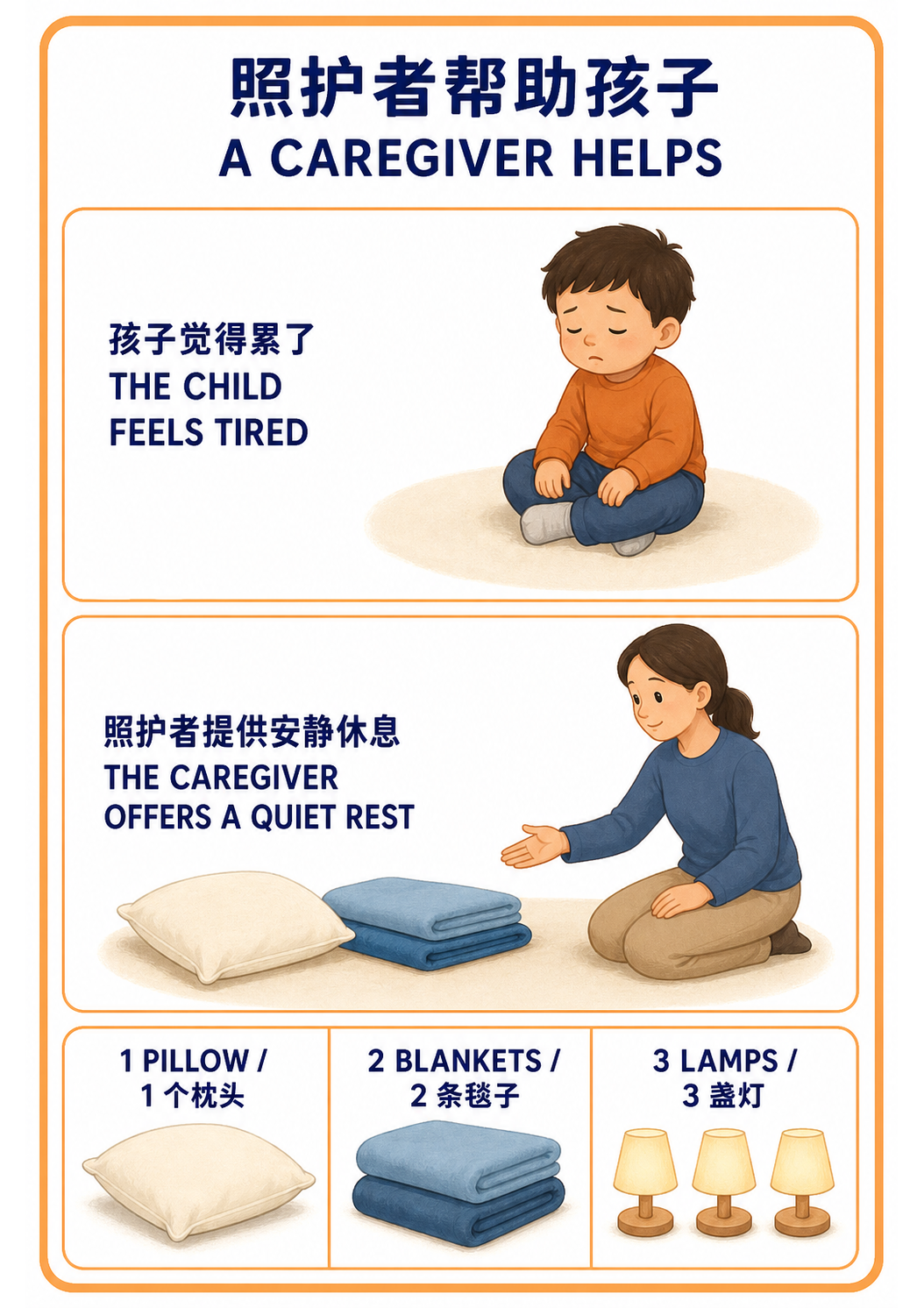
This guide is adapted from our original family record, A Caregiver Helps. The diary keeps the full plan and context from that day; this page is reorganised around one parent question and keeps the parts another family can use quickly.
Record boundary: Our May 19 record used a simple helper story to show a caregiver and child doing one useful action together. The linked diary records that practice activity; it does not claim that the exact conflict in this guide happened on that day.
What This Activity Actually Supports
Transitions become easier to understand when the adult makes the sequence visible, uses few truthful words, and keeps the boundary steady without treating protest as failure. The goal is supported participation, not instant obedience.
This is not a developmental test. A quick look, a point, one movement, a sound, a word, quiet observation, or a stop signal can all be valid participation.
Try It Today
1. Name the immediate next step
Move the basket close and name one object: ‘The truck goes in this basket.’ Avoid ‘clean everything’ or a rapid list of categories. The child needs to see both the object and the endpoint.
2. Make participation smaller
Offer a choice between two objects or let the child carry the basket while the adult places items inside. Model the first action and then pause. One real contribution counts even when the adult completes the rest.
3. Hold the limit through protest
If the child refuses, do not shame or threaten to throw toys away. Say ‘You are finished helping; I will finish the floor.’ Keep the boundary that the path must be safe, while separating that safety need from a moral judgment about tidiness.
Ready-to-Use Parent Phrases
- This truck goes in the basket.
- Car or book—which one will you carry?
- We are doing this together.
- Your one part is finished; I will finish the rest.
Adapt It to the Child in Front of You
Reduce visible toys before the transition if the room is overwhelming. Use open baskets with pictures when categories matter. For a child who loves movement, carry items across the room; for a tired child, place the basket beside them and request only one item.
Record One Real Observation
Note whether the child understood the destination, copied the adult, chose an object, or left after one action. Also record how many items were visible; clutter level often changes the difficulty more than another reminder does.
Avoid writing “can/cannot” or drawing a developmental conclusion from one activity. A more useful note records what the child noticed first, how the adult responded, and what helped the exchange continue or finish.
Safety and development boundary
Adults should remove choking hazards, broken toys, batteries, magnets, sharp pieces, heavy objects, and blocked walking paths themselves. Cleanup practice must not delay making an unsafe floor or room safe.
How This Guide Was Made
This page uses the linked original family diary and picture as its experience base, with factual checks against the public sources below. AI assisted with structure and bilingual editing. It is not medical, psychological, or therapeutic advice. Read the editorial and fact-checking policy.
Sources
- CDC: Positive parenting tips for toddlers ages 2–3
- Harvard Center on the Developing Child: Serve and return