
Teach In, On, and Under with Complete Toddler Sentences
Quick answer: In, on, and under do not make sense alone; each describes one thing in relation to another. Complete short sentences keep both parts visible: the ball is under the table.
| Suggested age | Activity time | What you need | Participation can include |
|---|---|---|---|
| About 2–3 years | 3–10 minutes | One picture or one real routine | Looking, listening, pointing, moving, communicating, or stopping |
Begin with a Real Family Activity Picture
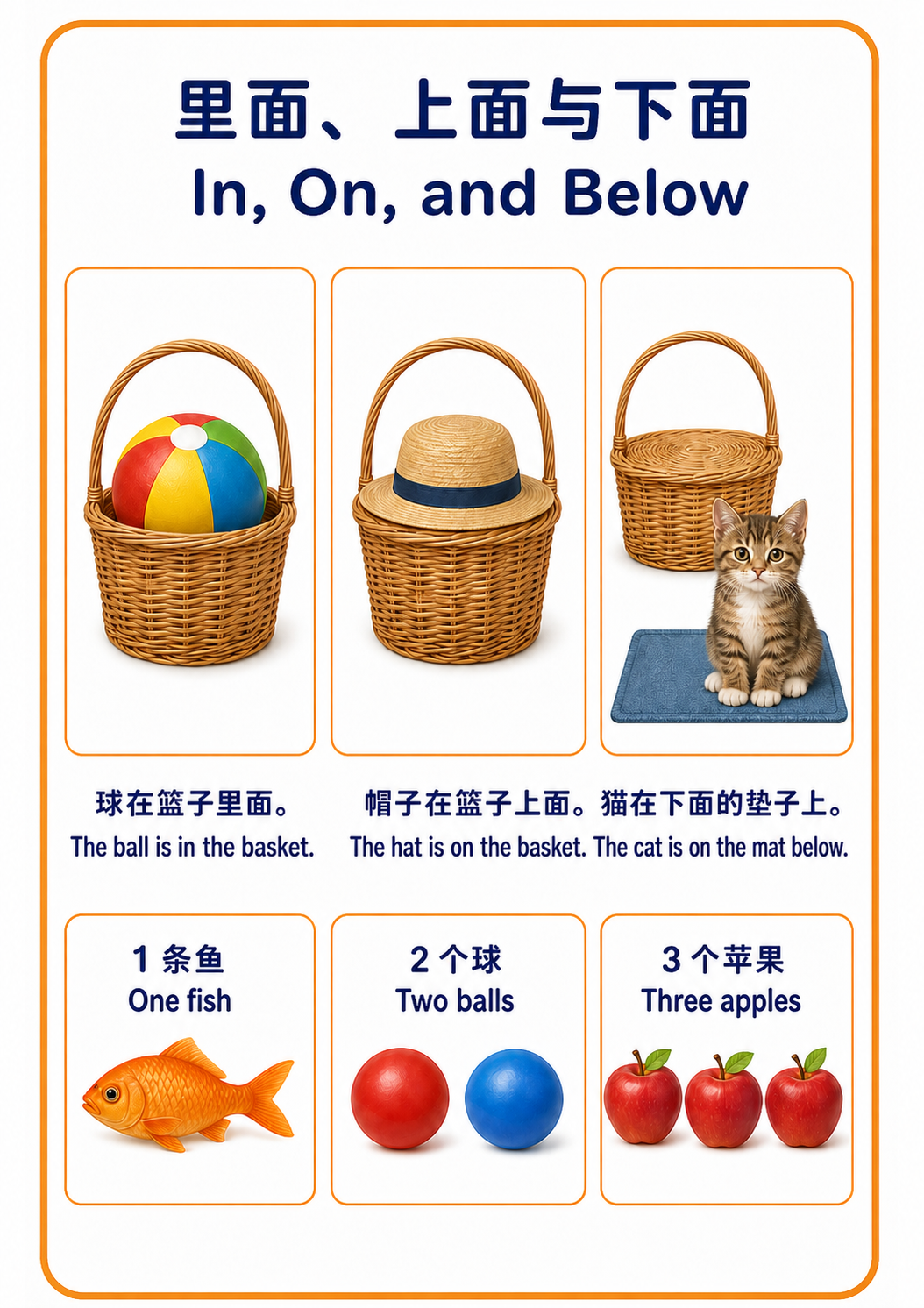
Open the high-resolution picture to download or print
This guide is adapted from our original family record, In, On, and Below. The diary keeps the full plan and context from that day; this page is reorganised around one parent question and keeps the parts another family can use quickly.
What This Activity Actually Supports
Early maths grows through meaningful comparison, quantity, pattern, position, and change in everyday language. Keep the set small and the relationship visible so the child can notice before being asked to explain.
This is not a developmental test. A quick look, a point, one movement, a sound, a word, quiet observation, or a stop signal can all be valid participation.
Try It Today
1. Keep one reference stable
Use the same box, table, or bridge across the three pictures so only the relationship changes.
2. Name both objects
Say ‘The bear is in the box’, not only ‘in’. Point first to the bear and then to the box.
3. Contrast two positions
Compare in with on, or on with under, before adding all three. One contrast may be enough for a session.
Ready-to-Use Parent Phrases
- The bear is in the box.
- The cup is on the table.
- The ball is under the chair.
- Under means under something.
Adapt It to the Child in Front of You
Use pictures if moving real objects would create distraction. With a child who already uses the words, add beside or behind in a later session.
Record One Real Observation
Watch whether the child looks from the target object to the reference, follows a point, or notices when the relation changes.
Avoid writing “can/cannot” or drawing a developmental conclusion from one activity. A more useful note records what the child noticed first, how the adult responded, and what helped the exchange continue or finish.
Safety and development boundary
Do not hide objects under furniture, invite crawling into containers, or place items overhead. Pictures can show spatial relationships safely.
How This Guide Was Made
This page uses the linked original family diary and picture as its experience base, with factual checks against the public sources below. AI assisted with structure and bilingual editing. It is not medical, psychological, or therapeutic advice. Read the editorial and fact-checking policy.
Sources
- NAEYC: Supporting early maths through everyday maths talk
- CDC: Milestones and family activities for 2-year-olds