
A Simple Matching-Pairs Activity for Toddlers
Quick answer: Matching can begin as visible comparison, not a face-down memory game. When both pictures stay available, a toddler can notice what is the same and what is different without remembering hidden locations.
| Suggested age | Activity time | What you need | Participation can include |
|---|---|---|---|
| About 2–3 years | 3–10 minutes | One picture or one real routine | Looking, listening, pointing, moving, communicating, or stopping |
Begin with a Real Family Activity Picture
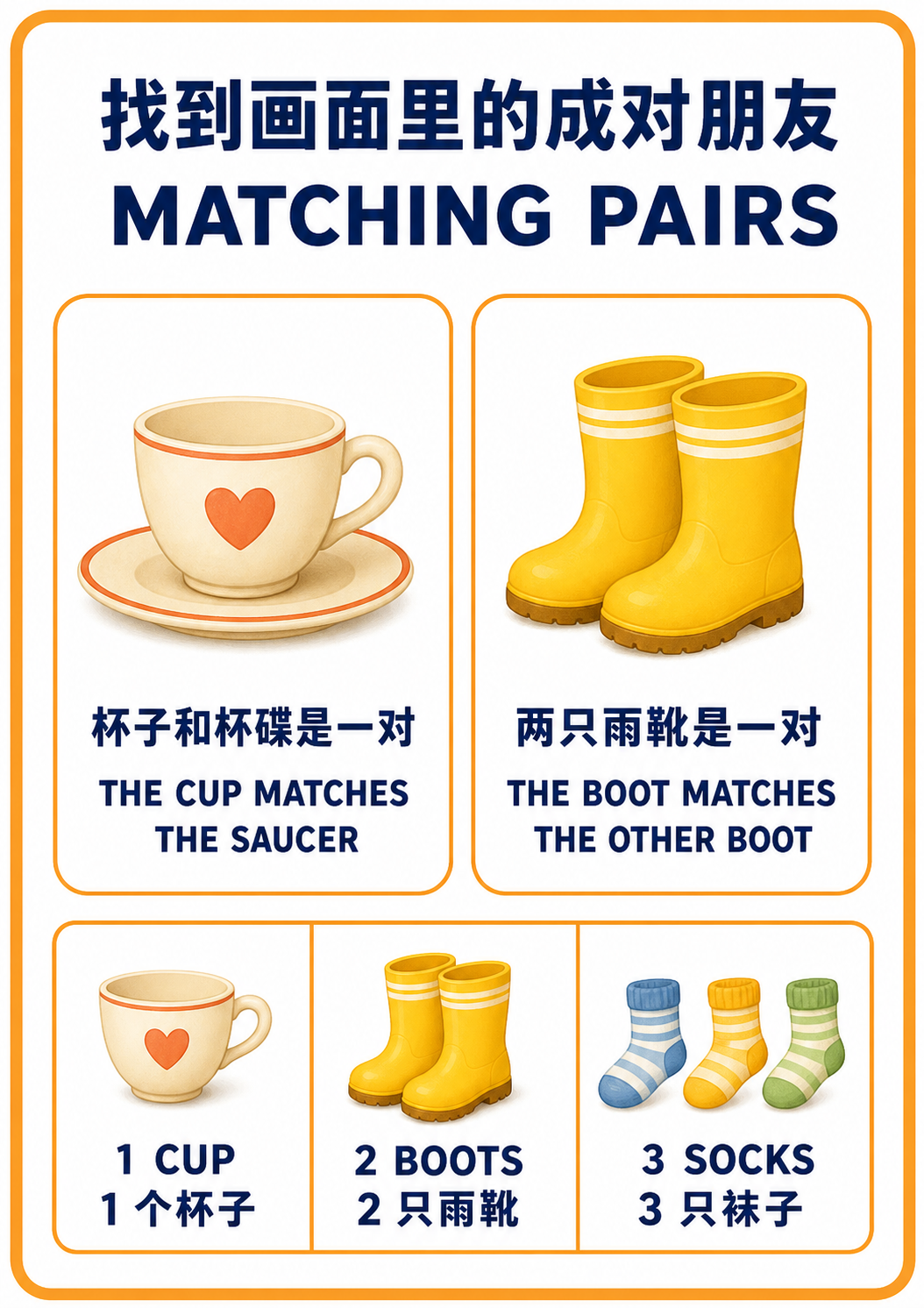
Open the high-resolution picture to download or print
This guide is adapted from our original family record, Matching Pairs. The diary keeps the full plan and context from that day; this page is reorganised around one parent question and keeps the parts another family can use quickly.
What This Activity Actually Supports
Early maths grows through meaningful comparison, quantity, pattern, position, and change in everyday language. Keep the set small and the relationship visible so the child can notice before being asked to explain.
This is not a developmental test. A quick look, a point, one movement, a sound, a word, quiet observation, or a stop signal can all be valid participation.
Try It Today
1. Choose an obvious pair
Start with two identical or nearly identical pictures and one clearly different picture.
2. Compare side by side
Place the pair together and name the shared feature: same animal, same colour, or same shape.
3. Offer one visible match
Keep all choices face up. Let the child look or point; then describe the match rather than announcing a score.
Ready-to-Use Parent Phrases
- These two pictures both show a sock.
- The stripes look the same.
- This hat is different.
- You put the matching pictures together.
Adapt It to the Child in Front of You
Begin by matching a picture to an identical sample. Later, match related but non-identical items only after explaining the new relationship.
Record One Real Observation
Observe whether the child compares outlines, colours, objects, or another detail. A different but consistent match may reveal their rule.
Avoid writing “can/cannot” or drawing a developmental conclusion from one activity. A more useful note records what the child noticed first, how the adult responded, and what helped the exchange continue or finish.
Safety and development boundary
Use large cards without detachable decorations. Avoid matching real medicine containers, electrical parts, or other unsafe household objects.
How This Guide Was Made
This page uses the linked original family diary and picture as its experience base, with factual checks against the public sources below. AI assisted with structure and bilingual editing. It is not medical, psychological, or therapeutic advice. Read the editorial and fact-checking policy.
Sources
- NAEYC: Supporting early maths through everyday maths talk
- CDC: Milestones and family activities for 2-year-olds