
How to Prepare a Toddler for Haircuts and Nail Trimming
Quick answer: Show the tool without using it, explain the sound and touch, and practise one tiny step with a reliable pause signal. Decide beforehand what is optional today and what health or safety need requires adult action.
| Suggested age | Activity time | What you need | Participation can include |
|---|---|---|---|
| About 2–3 years | 3–10 minutes | One picture or one real routine | Looking, listening, pointing, moving, communicating, or stopping |
Begin with a Real Family Activity Picture
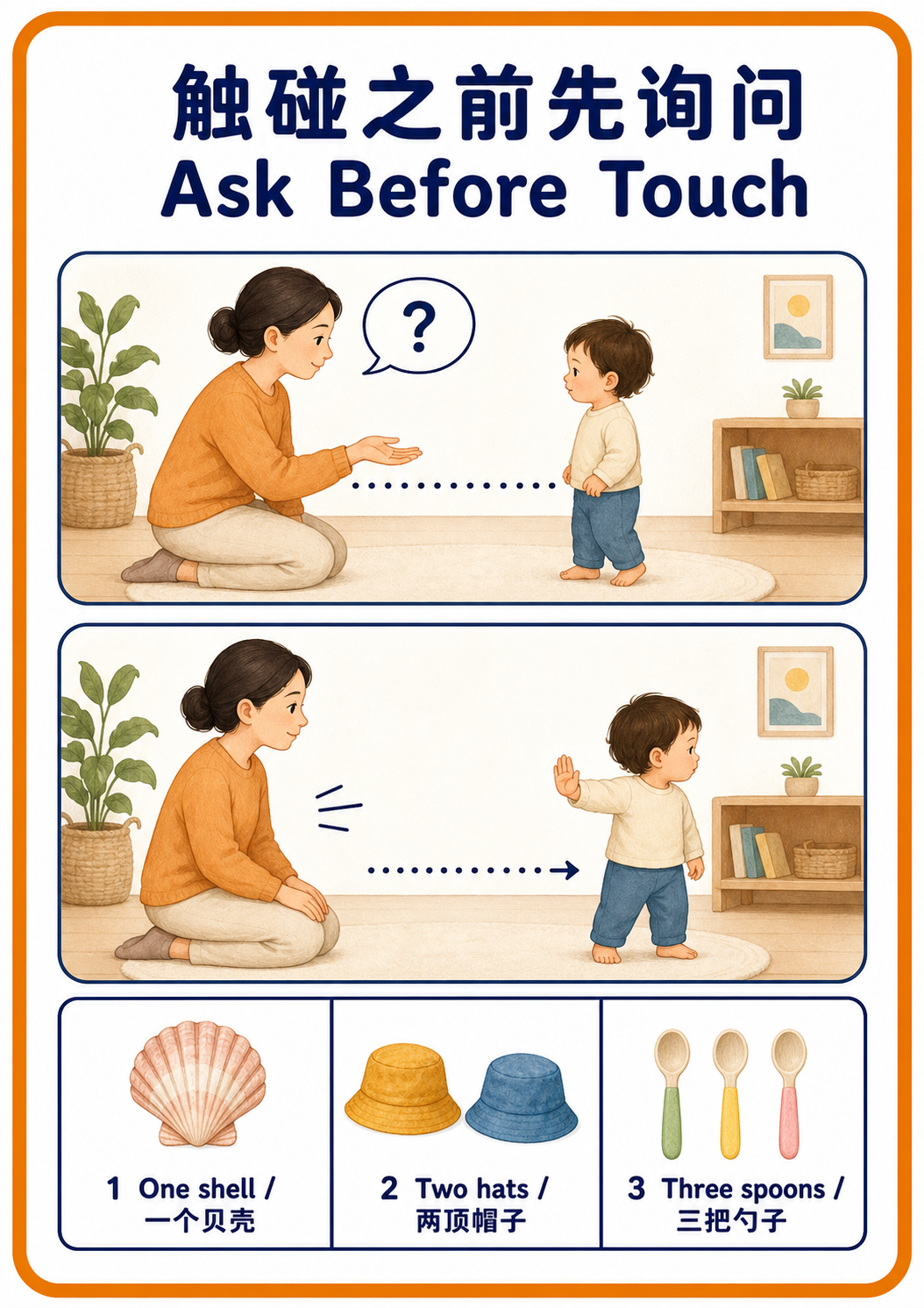
Open the high-resolution picture to download or print
This guide is adapted from our original family record, Ask Before Touch. The diary keeps the full plan and context from that day; this page is reorganised around one parent question and keeps the parts another family can use quickly.
Record boundary: Our April 28 record practised asking before touch and responding when the other person signalled stop. The linked diary records that practice activity; it does not claim that the exact conflict in this guide happened on that day.
What This Activity Actually Supports
Body care combines a real adult responsibility with a child's need for predictability, dignity, and small participation. Choices can shape how care happens, while the adult remains responsible for health, weather, hygiene, and immediate safety.
This is not a developmental test. A quick look, a point, one movement, a sound, a word, quiet observation, or a stop signal can all be valid participation.
Try It Today
1. State the care boundary clearly
Preview with a photo, inactive clipper, comb, or closed nail tool. Demonstrate on the adult or a toy when safe. Say exactly where touch will happen and avoid promising ‘It will not hurt’ when the experience cannot be guaranteed.
2. Offer control inside the boundary
Offer position, cape or towel, song, which hand or section first, and a pause signal. Begin with one nail, one comb stroke, or a few seconds of sound. Honour pauses when the situation is optional so the signal remains trustworthy.
3. Finish with dignity and reconnection
If a sharp, torn nail or hair hygiene issue must be addressed, explain the necessary boundary and use the safest skilled help available. Stop when sudden movement makes tools unsafe; a shorter imperfect result is better than preventable injury.
Ready-to-Use Parent Phrases
- First we look at the tool; it stays off.
- Which hand first?
- Show me pause and I will stop when it is safe.
- This sharp edge needs adult help; I will be careful.
Adapt It to the Child in Front of You
Try daylight, quieter clippers, a different professional, home versus salon, dry versus damp hair, or trimming while the child watches a familiar activity. Sensory preparation may take several visits. A healthcare or occupational professional can help with severe persistent distress.
Record One Real Observation
Record which tool, sound, body area, position, person, and duration were tolerated. Note whether distress began at anticipation, touch, vibration, restraint, or pain. Use the pattern to plan the next smallest step.
Avoid writing “can/cannot” or drawing a developmental conclusion from one activity. A more useful note records what the child noticed first, how the adult responded, and what helped the exchange continue or finish.
Safety and development boundary
Scissors, clippers, razors, and nail tools require competent adult control. Never continue with a sharp tool during unsafe movement. Seek appropriate care for cuts, infection, ingrown nails, scalp conditions, pain, or grooming needs related to a medical condition.
How This Guide Was Made
This page uses the linked original family diary and picture as its experience base, with factual checks against the public sources below. AI assisted with structure and bilingual editing. It is not medical, psychological, or therapeutic advice. Read the editorial and fact-checking policy.
Sources
- CDC: Positive parenting tips for toddlers ages 2–3
- Harvard Center on the Developing Child: Serve and return