
Help a Toddler Name Body Needs: Tired, Thirsty, and Rest
Quick answer: A toddler may show a need through movement, facial expression, reaching, crying, or a change in activity. Adults can offer simple language while staying open to being wrong and meeting the need promptly.
| Suggested age | Activity time | What you need | Participation can include |
|---|---|---|---|
| About 2–3 years | 3–10 minutes | One picture or one real routine | Looking, listening, pointing, moving, communicating, or stopping |
Begin with a Real Family Activity Picture
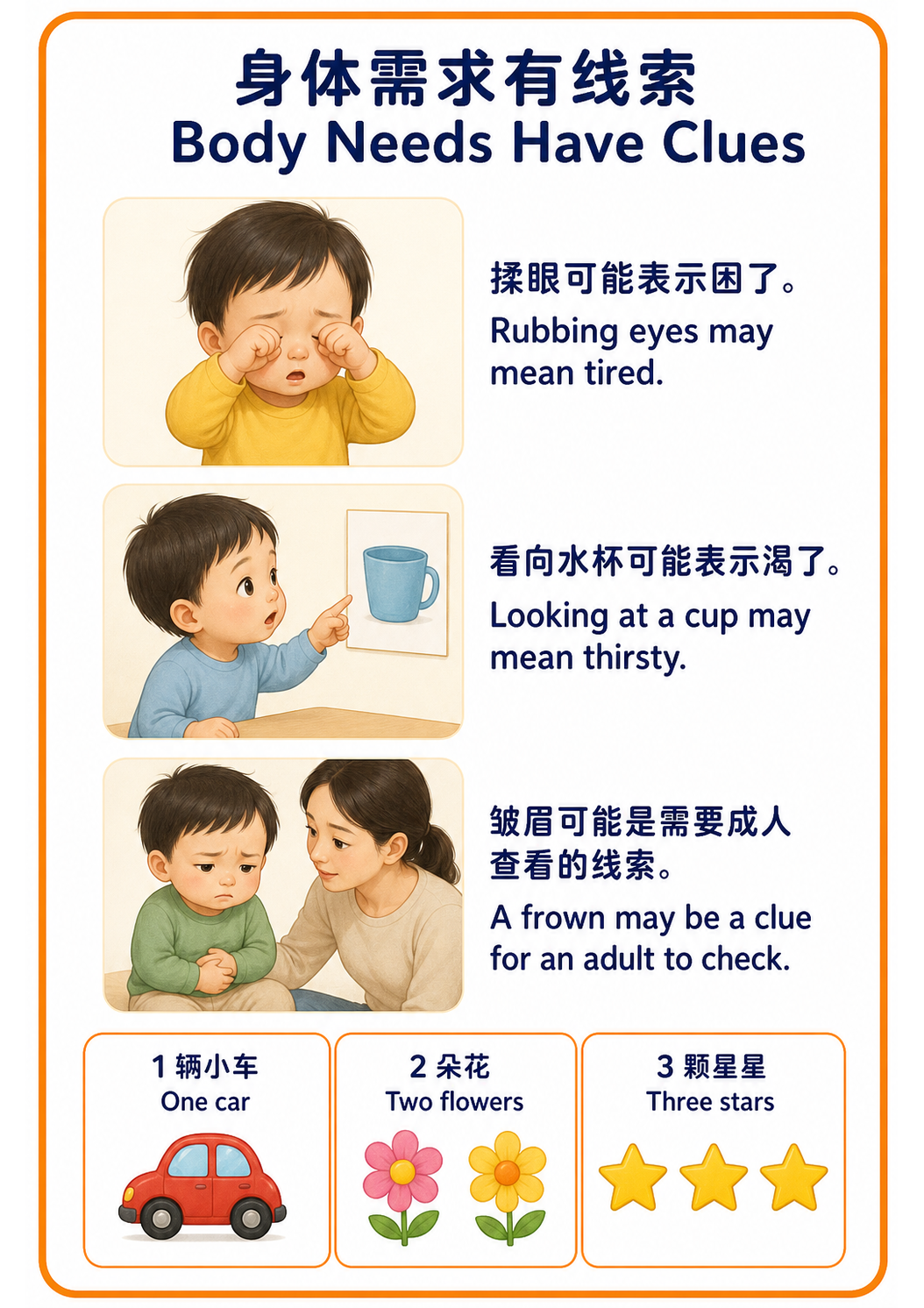
Open the high-resolution picture to download or print
This guide is adapted from our original family record, Clues for Tired and Thirsty. The diary keeps the full plan and context from that day; this page is reorganised around one parent question and keeps the parts another family can use quickly.
What This Activity Actually Supports
The useful unit here is a back-and-forth exchange, not a vocabulary score. Naming what a young child is seeing, doing, or communicating can add language while preserving the child's turn.
This is not a developmental test. A quick look, a point, one movement, a sound, a word, quiet observation, or a stop signal can all be valid participation.
Try It Today
1. Describe the visible clue
Begin with what you can observe: ‘You rubbed your eyes’ or ‘You reached for the cup’. This is more accurate than declaring what the child feels.
2. Offer one possible need
Say ‘Maybe you are tired’ or ‘You might want water’ with a calm, tentative tone.
3. Respond and check through action
Offer the safe, appropriate support. The child's response gives more information than asking repeated questions.
Ready-to-Use Parent Phrases
- You slowed down. Maybe your body needs rest.
- You reached for water. Here is your cup.
- I am not sure yet; I will stay close.
- Your body can tell us in many ways.
Adapt It to the Child in Front of You
Use the family's everyday words and any gestures or communication system the child already knows. Keep choices concrete and limited.
Record One Real Observation
Record the visible clue, the adult's guess, and what happened after support was offered. This helps adults learn patterns without assigning a permanent label.
Avoid writing “can/cannot” or drawing a developmental conclusion from one activity. A more useful note records what the child noticed first, how the adult responded, and what helped the exchange continue or finish.
Safety and development boundary
Do not delay water, food, sleep support, toileting, comfort, or medical care to practise words. New, severe, or persistent symptoms need appropriate professional attention.
How This Guide Was Made
This page uses the linked original family diary and picture as its experience base, with factual checks against the public sources below. AI assisted with structure and bilingual editing. It is not medical, psychological, or therapeutic advice. Read the editorial and fact-checking policy.
Sources
- Harvard Center on the Developing Child: Serve and return
- CDC: Milestones and family activities for 2-year-olds