
Watch Ice Melt with a Toddler: A No-Tasting Observation
Quick answer: Melting is a visible change from solid ice to liquid water. A toddler can notice before and after without holding slippery ice, tasting it, or waiting through a long experiment.
| Suggested age | Activity time | What you need | Participation can include |
|---|---|---|---|
| About 2–3 years | 3–10 minutes | One picture or one real routine | Looking, listening, pointing, moving, communicating, or stopping |
Begin with a Real Family Activity Picture
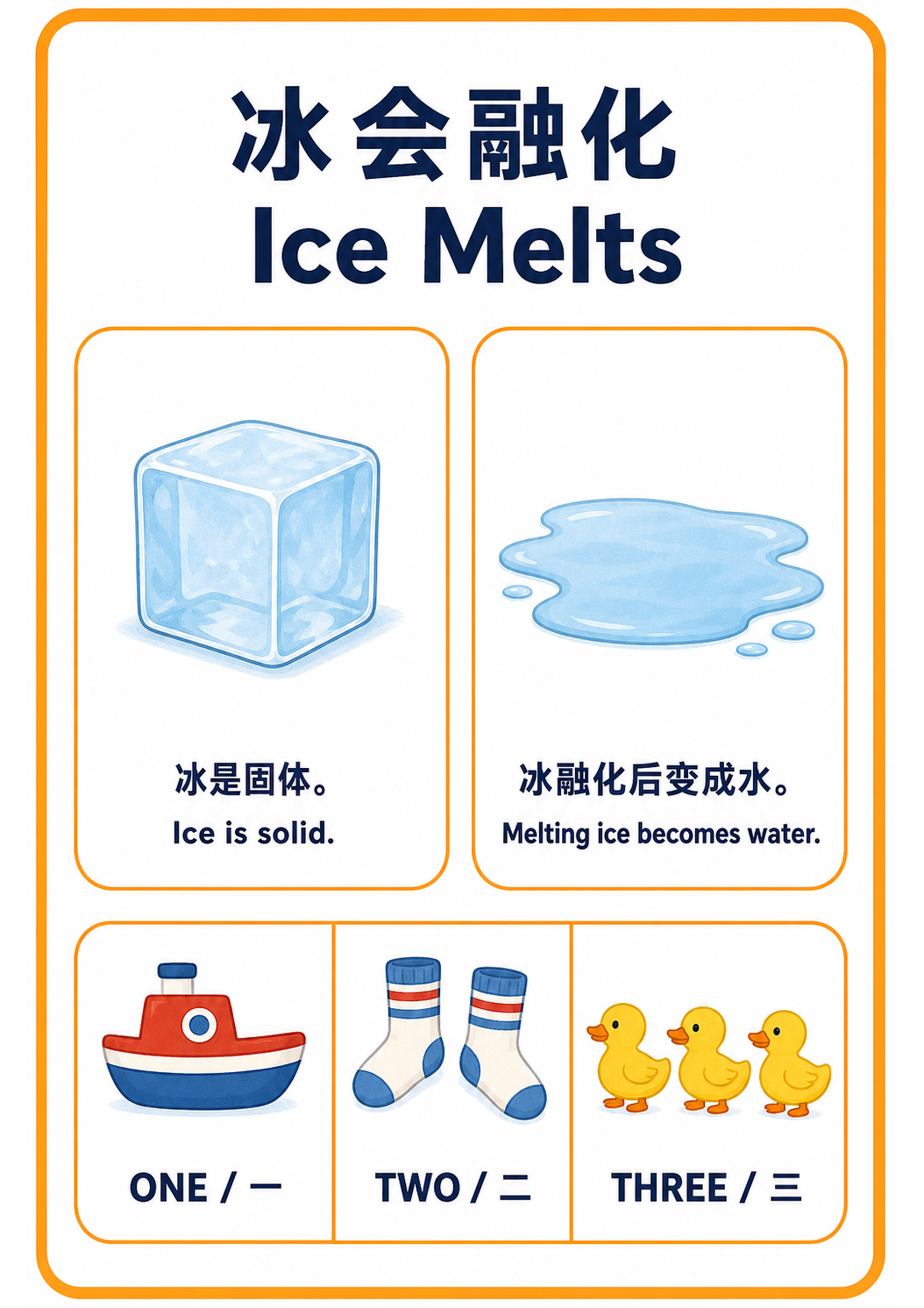
Open the high-resolution picture to download or print
This guide is adapted from our original family record, Ice Melts. The diary keeps the full plan and context from that day; this page is reorganised around one parent question and keeps the parts another family can use quickly.
What This Activity Actually Supports
Play and discovery work best when the adult changes one thing at a time, describes what actually happened, and leaves room for the child's own attention. A picture-only version is always acceptable.
This is not a developmental test. A quick look, a point, one movement, a sound, a word, quiet observation, or a stop signal can all be valid participation.
Try It Today
1. Begin with two pictures
Point to the solid cube and the puddle, using the words ice, water, cold, and melt in short sentences.
2. Optional adult demonstration
Place one ordinary food-safe ice cube in a bowl out of reach. The adult controls the bowl while the child looks from a comfortable distance.
3. Return for one comparison
After a short interval, show the bowl again and describe the water. There is no need to watch continuously.
Ready-to-Use Parent Phrases
- The ice is solid.
- The room is warmer than the ice.
- Some ice changed into water.
- We only look; the adult holds the bowl.
Adapt It to the Child in Front of You
Use only the printable if cold, water, or waiting is uncomfortable. A before-and-after photo taken by the adult can replace the live demonstration.
Record One Real Observation
Look for attention to the wet surface, a gesture comparing the pictures, or use of words such as cold, ice, water, and gone.
Avoid writing “can/cannot” or drawing a developmental conclusion from one activity. A more useful note records what the child noticed first, how the adult responded, and what helped the exchange continue or finish.
Safety and development boundary
Ice is slippery and can be a choking hazard. Keep it out of the child's mouth and hands, wipe spills immediately, and supervise continuously.
How This Guide Was Made
This page uses the linked original family diary and picture as its experience base, with factual checks against the public sources below. AI assisted with structure and bilingual editing. It is not medical, psychological, or therapeutic advice. Read the editorial and fact-checking policy.
Sources
- CDC: Positive parenting tips for toddlers ages 2–3
- Harvard Center on the Developing Child: Serve and return