
Slow Breathing Together with a Toddler—Without Forcing Deep Breaths
Quick answer: Breathing is always happening, but asking a distressed toddler to ‘take a deep breath’ can add pressure. A gentler option is for the adult to model one comfortable slow exhale and leave participation open.
| Suggested age | Activity time | What you need | Participation can include |
|---|---|---|---|
| About 2–3 years | 3–10 minutes | One picture or one real routine | Looking, listening, pointing, moving, communicating, or stopping |
Begin with a Real Family Activity Picture
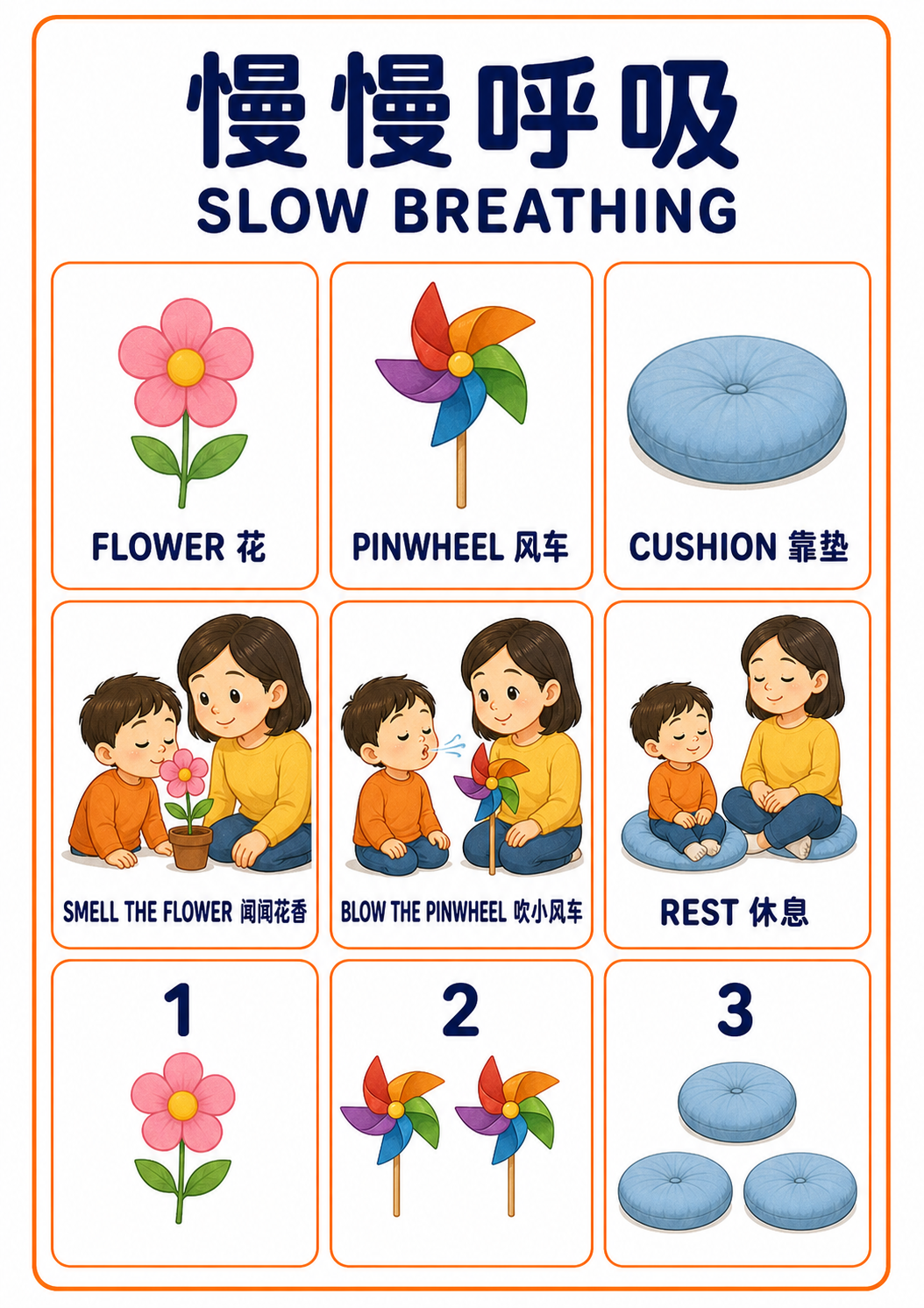
Open the high-resolution picture to download or print
This guide is adapted from our original family record, Slow Breathing. The diary keeps the full plan and context from that day; this page is reorganised around one parent question and keeps the parts another family can use quickly.
What This Activity Actually Supports
A routine supports connection when it makes the next moment more understandable without demanding compliance. Adult reliability, truthful language, and respect for signals matter more than completing a chart.
This is not a developmental test. A quick look, a point, one movement, a sound, a word, quiet observation, or a stop signal can all be valid participation.
Try It Today
1. Settle the adult first
Relax shoulders and make the environment quieter. Do not place a child in a fixed posture or require eye contact.
2. Model one ordinary breath
Breathe in comfortably and let the exhale become a little slower. Avoid very large inhalations, repeated breath holding, or competitive counting.
3. Return to normal breathing
After one or two models, resume ordinary breathing and notice what the child chooses—watching, copying, moving away, or doing something else.
Ready-to-Use Parent Phrases
- I am making my exhale a little slower.
- You can watch or keep playing.
- Your breathing belongs to your body.
- One slow breath is enough.
Adapt It to the Child in Front of You
Use a quiet hum on the exhale if that feels natural, or simply lower the adult's voice. Skip the activity when attention to breathing feels uncomfortable.
Record One Real Observation
Record whether the child watches, softens movement, imitates, rejects, or prefers another form of comfort. None is a required outcome.
Avoid writing “can/cannot” or drawing a developmental conclusion from one activity. A more useful note records what the child noticed first, how the adult responded, and what helped the exchange continue or finish.
Safety and development boundary
Stop immediately with dizziness, coughing, distress, or breathing difficulty. Breathing exercises do not treat respiratory symptoms or replace medical care.
How This Guide Was Made
This page uses the linked original family diary and picture as its experience base, with factual checks against the public sources below. AI assisted with structure and bilingual editing. It is not medical, psychological, or therapeutic advice. Read the editorial and fact-checking policy.
Sources
- CDC: Positive parenting tips for toddlers ages 2–3
- Harvard Center on the Developing Child: Serve and return