
Help a Toddler Sort by One Clear Rule
Quick answer: Sorting becomes understandable when the rule stays visible and stable. For a first experience, one property—such as colour—works better than a mixture of colour, shape, size, and object name.
| Suggested age | Activity time | What you need | Participation can include |
|---|---|---|---|
| About 2–3 years | 3–10 minutes | One picture or one real routine | Looking, listening, pointing, moving, communicating, or stopping |
Begin with a Real Family Activity Picture
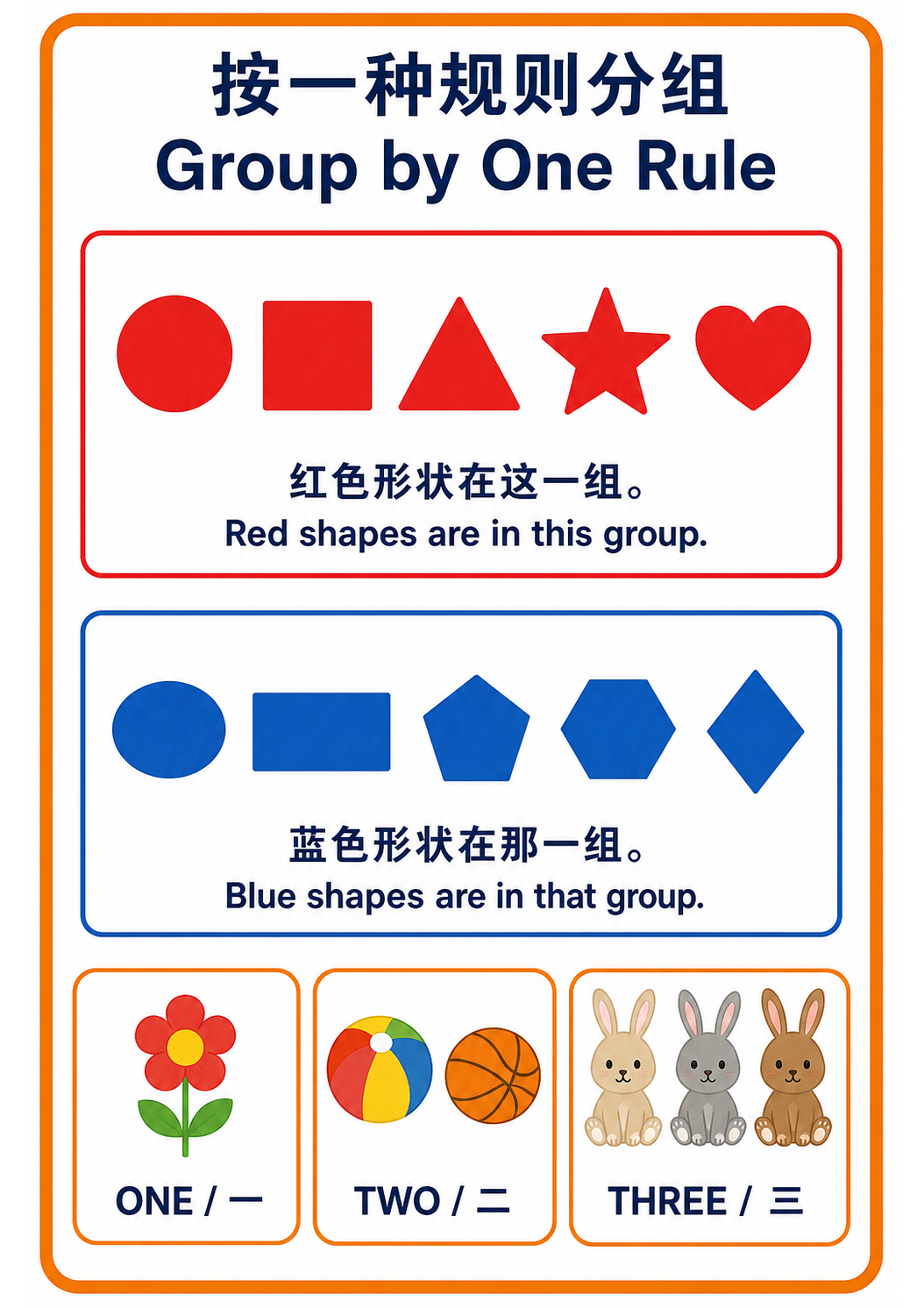
Open the high-resolution picture to download or print
This guide is adapted from our original family record, Group by One Rule. The diary keeps the full plan and context from that day; this page is reorganised around one parent question and keeps the parts another family can use quickly.
What This Activity Actually Supports
Early maths grows through meaningful comparison, quantity, pattern, position, and change in everyday language. Keep the set small and the relationship visible so the child can notice before being asked to explain.
This is not a developmental test. A quick look, a point, one movement, a sound, a word, quiet observation, or a stop signal can all be valid participation.
Try It Today
1. Name the rule
Say ‘We are looking at colour’ and point to the two destination areas or picture groups.
2. Model two placements
Place or point to one item in each group while explaining the visible match in a short sentence.
3. Let the child explore
Offer one item at a time. If it goes elsewhere, describe what the child noticed before calmly showing the current rule again.
Ready-to-Use Parent Phrases
- Today we are sorting by colour.
- The red one goes with the red group.
- You noticed both are round.
- That is another possible rule.
Adapt It to the Child in Front of You
Use pictures instead of loose objects. If two groups are too much, match one item to one sample rather than completing a full sort.
Record One Real Observation
Record what property the child appears to notice, even when it differs from the adult's rule. That may reveal a reasonable alternative classification.
Avoid writing “can/cannot” or drawing a developmental conclusion from one activity. A more useful note records what the child noticed first, how the adult responded, and what helped the exchange continue or finish.
Safety and development boundary
Use large, safe objects only and supervise continuously. Do not sort medicines, food allergens, coins, batteries, or cleaning products.
How This Guide Was Made
This page uses the linked original family diary and picture as its experience base, with factual checks against the public sources below. AI assisted with structure and bilingual editing. It is not medical, psychological, or therapeutic advice. Read the editorial and fact-checking policy.
Sources
- NAEYC: Supporting early maths through everyday maths talk
- CDC: Milestones and family activities for 2-year-olds