
How to Stop Toy Grabbing and Support Turn-Taking
Quick answer: Block the grab, describe the shared problem, and create a short visible turn with adult help. Toddlers learn turn-taking through many supported repetitions; shouting ‘share’ does not show when or how the toy changes hands.
| Suggested age | Activity time | What you need | Participation can include |
|---|---|---|---|
| About 2–3 years | 3–10 minutes | One picture or one real routine | Looking, listening, pointing, moving, communicating, or stopping |
Begin with a Real Family Activity Picture
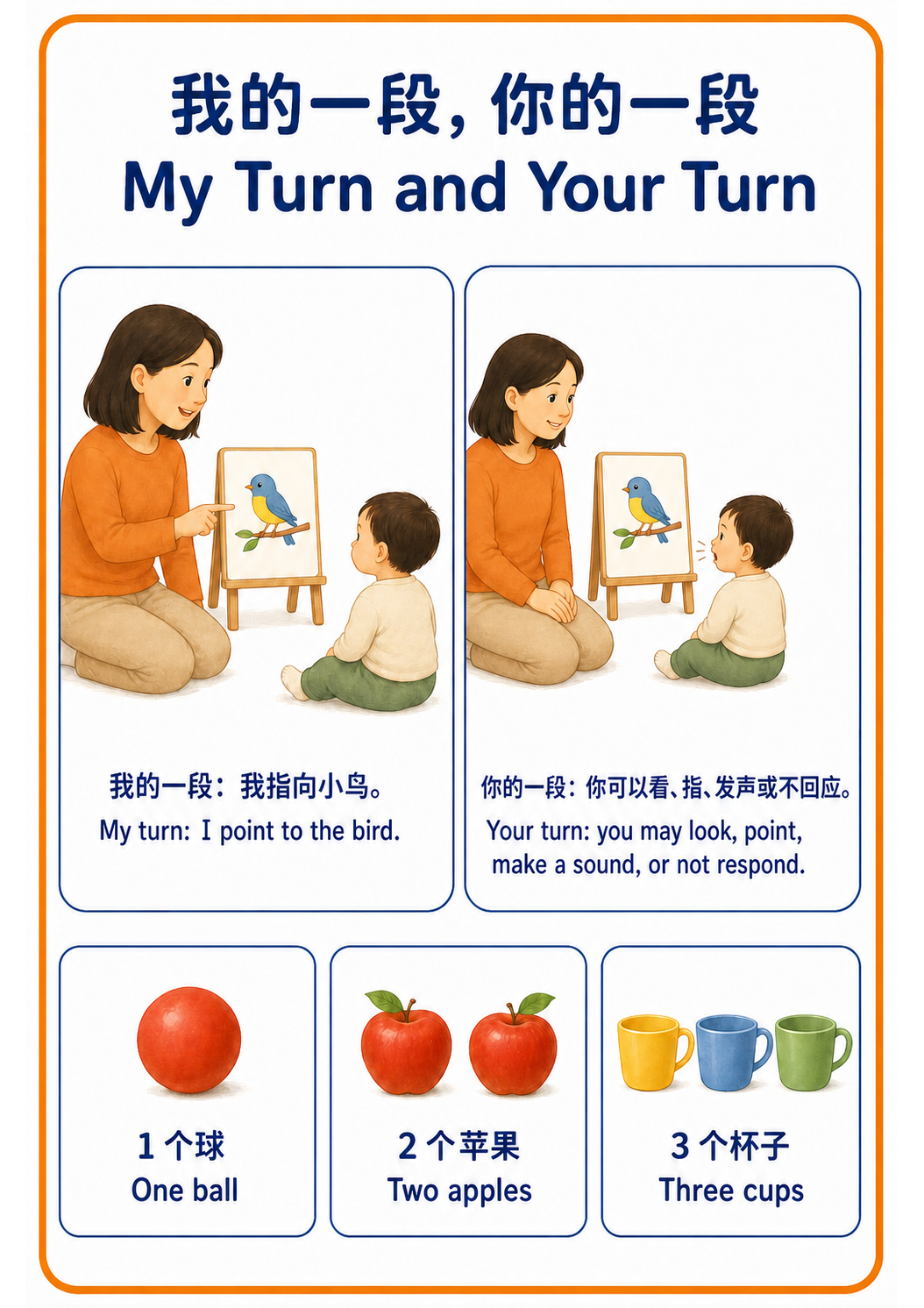
Open the high-resolution picture to download or print
This guide is adapted from our original family record, My Turn and Your Turn. The diary keeps the full plan and context from that day; this page is reorganised around one parent question and keeps the parts another family can use quickly.
Record boundary: Our February 4 record practised short ‘my turn, your turn’ exchanges with an adult nearby. The linked diary records that practice activity; it does not claim that the exact conflict in this guide happened on that day.
What This Activity Actually Supports
When bodies are unsafe, the adult stops the action first and teaches later. A two- or three-year-old still needs close help with waiting, turn-taking, repair, and finding a safe action; labels such as ‘mean’ do not teach the missing skill.
This is not a developmental test. A quick look, a point, one movement, a sound, a word, quiet observation, or a stop signal can all be valid participation.
Try It Today
1. Stop harm and check bodies
Place a hand near the toy and stop pulling that could hurt fingers or bodies. Check whether the current user is still engaged. Say ‘One truck, two children’ rather than deciding one child is greedy.
2. Name the problem without a label
Create an observable endpoint: one trip down the ramp, one scoop, or a short timer the adult controls. Help the waiting child use another object or stay close. A turn should be short enough that the next turn can be trusted.
3. Practise one safe alternative
When the endpoint arrives, narrate the handover and help physically if both children are ready. If the toy cannot be shared safely, put it away temporarily and offer two separate materials; forced grabbing in the name of sharing teaches little.
Ready-to-Use Parent Phrases
- I will not let you pull it from their hands.
- One toy, two children.
- After one ramp trip, it is your turn.
- I will help both turns happen.
Adapt It to the Child in Front of You
Use duplicates when possible for children who are tired or new to group play. Start turn practice with an adult and a low-value object. Some play can remain individual; every object and every moment does not need to become a sharing lesson.
Record One Real Observation
Record the object, length of engagement, waiting support, and whether the endpoint was understandable. Notice whether the adult promised turns that were too long or vague before concluding the child cannot wait.
Avoid writing “can/cannot” or drawing a developmental conclusion from one activity. A more useful note records what the child noticed first, how the adult responded, and what helped the exchange continue or finish.
Safety and development boundary
Intervene immediately with heavy, sharp, breakable, ride-on, choking-size, or entanglement-risk objects. Do not let children pull against each other on stairs, near traffic or water, or while one child could fall.
How This Guide Was Made
This page uses the linked original family diary and picture as its experience base, with factual checks against the public sources below. AI assisted with structure and bilingual editing. It is not medical, psychological, or therapeutic advice. Read the editorial and fact-checking policy.
Sources
- CDC: Positive parenting tips for toddlers ages 2–3
- Harvard Center on the Developing Child: Serve and return