
What to Do When a Toddler Does Not Want to Share
Quick answer: Do not require every personal object to be shared on demand. Put special toys away before visitors, create turns for shared materials, and help the child make one concrete social choice without attaching a selfish label.
| Suggested age | Activity time | What you need | Participation can include |
|---|---|---|---|
| About 2–3 years | 3–10 minutes | One picture or one real routine | Looking, listening, pointing, moving, communicating, or stopping |
Begin with a Real Family Activity Picture
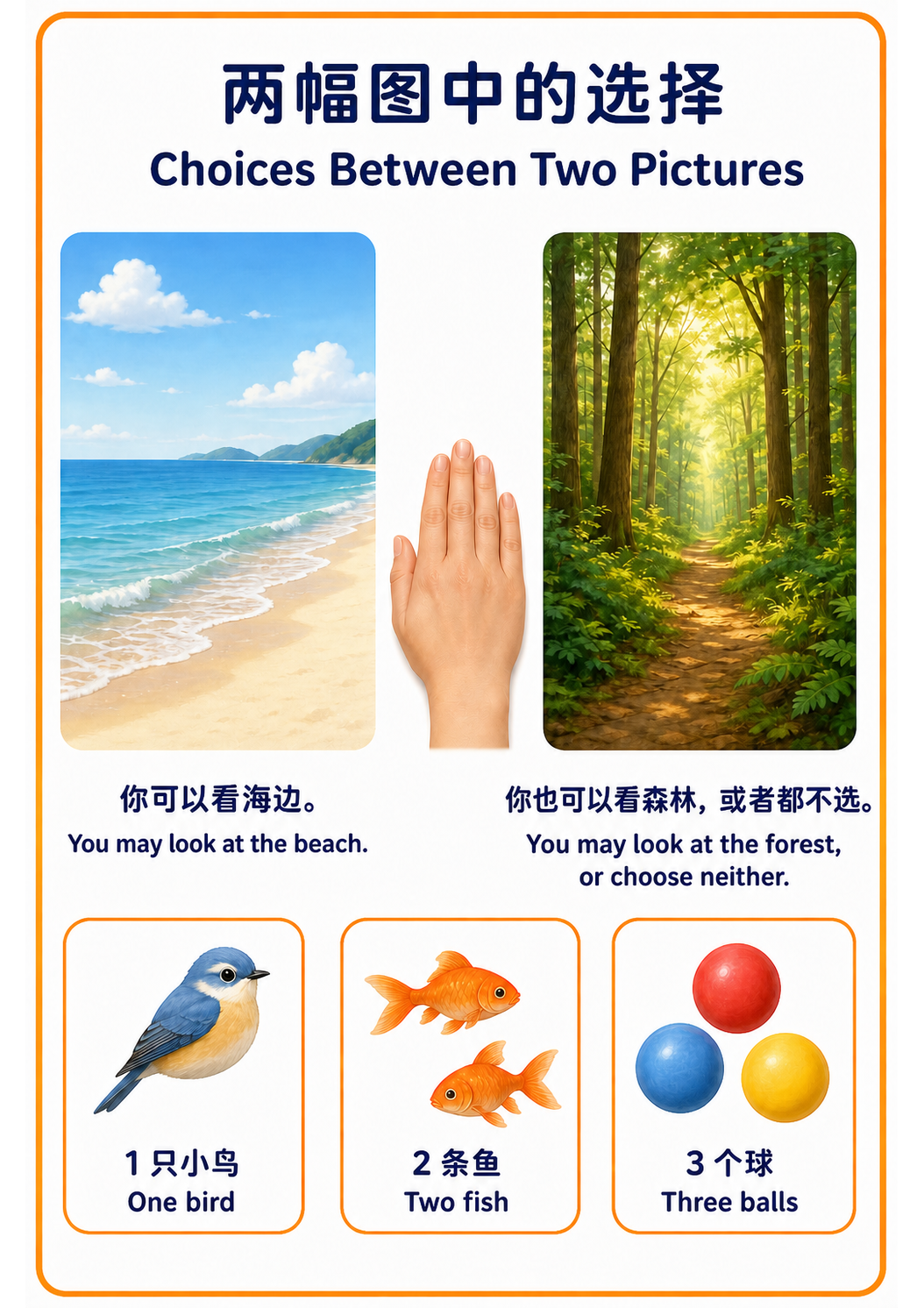
Open the high-resolution picture to download or print
This guide is adapted from our original family record, Choices Between Two Pictures. The diary keeps the full plan and context from that day; this page is reorganised around one parent question and keeps the parts another family can use quickly.
Record boundary: Our February 3 record practised choosing between two visible, acceptable options. The linked diary records that practice activity; it does not claim that the exact conflict in this guide happened on that day.
What This Activity Actually Supports
When bodies are unsafe, the adult stops the action first and teaches later. A two- or three-year-old still needs close help with waiting, turn-taking, repair, and finding a safe action; labels such as ‘mean’ do not teach the missing skill.
This is not a developmental test. A quick look, a point, one movement, a sound, a word, quiet observation, or a stop signal can all be valid participation.
Try It Today
1. Stop harm and check bodies
Identify which items are personal and which belong to the shared play space. Before another child arrives, help move one or two special objects to a protected place. This prevents a predictable conflict without making generosity compulsory.
2. Name the problem without a label
For shared objects, offer two workable choices: keep using it until one visible endpoint, or place it on a waiting spot while choosing another activity. The adult keeps the choices real and does not ask a false question when only one answer is accepted.
3. Practise one safe alternative
Acknowledge the other child's disappointment and help with an alternative. Later model giving, trading, or offering without forcing the owner to perform affection. Kindness grows from supported practice, not from public surrender of every possession.
Ready-to-Use Parent Phrases
- This special toy can rest in your room.
- The playroom blocks are for turns.
- One more build or put it on the waiting spot?
- Not sharing this toy does not make you unkind.
Adapt It to the Child in Front of You
For a new sibling or playdate, start with abundant, low-value materials and a short visit. If either child is already distressed, reduce demands and separate activities. Practise offering with an adult when there is no real competition.
Record One Real Observation
Record whether conflict involved ownership, an unfinished turn, fear of losing the object, adult pressure, or too few materials. These are different problems and need different changes; the word ‘sharing’ can hide that distinction.
Avoid writing “can/cannot” or drawing a developmental conclusion from one activity. A more useful note records what the child noticed first, how the adult responded, and what helped the exchange continue or finish.
Safety and development boundary
Adults decide access to unsafe, fragile, valuable, hygiene-sensitive, or age-inappropriate items. A child may not use ownership to hit, threaten, or control another person's body; stop harm first.
How This Guide Was Made
This page uses the linked original family diary and picture as its experience base, with factual checks against the public sources below. AI assisted with structure and bilingual editing. It is not medical, psychological, or therapeutic advice. Read the editorial and fact-checking policy.
Sources
- CDC: Positive parenting tips for toddlers ages 2–3
- Harvard Center on the Developing Child: Serve and return