How to Track Bilingual Toddler Words Without Testing
Quick answer: Write down words, gestures, signs, sounds, and phrases the child uses spontaneously in either language, plus the context and listener. Observation across ordinary life is more informative than repeated ‘What is this?’ tests.
| Suggested age | Activity time | What you need | Participation can include |
|---|---|---|---|
| About 2–3 years | 3–10 minutes | One picture or one real routine | Looking, listening, pointing, moving, communicating, or stopping |
Begin with a Real Family Activity Picture
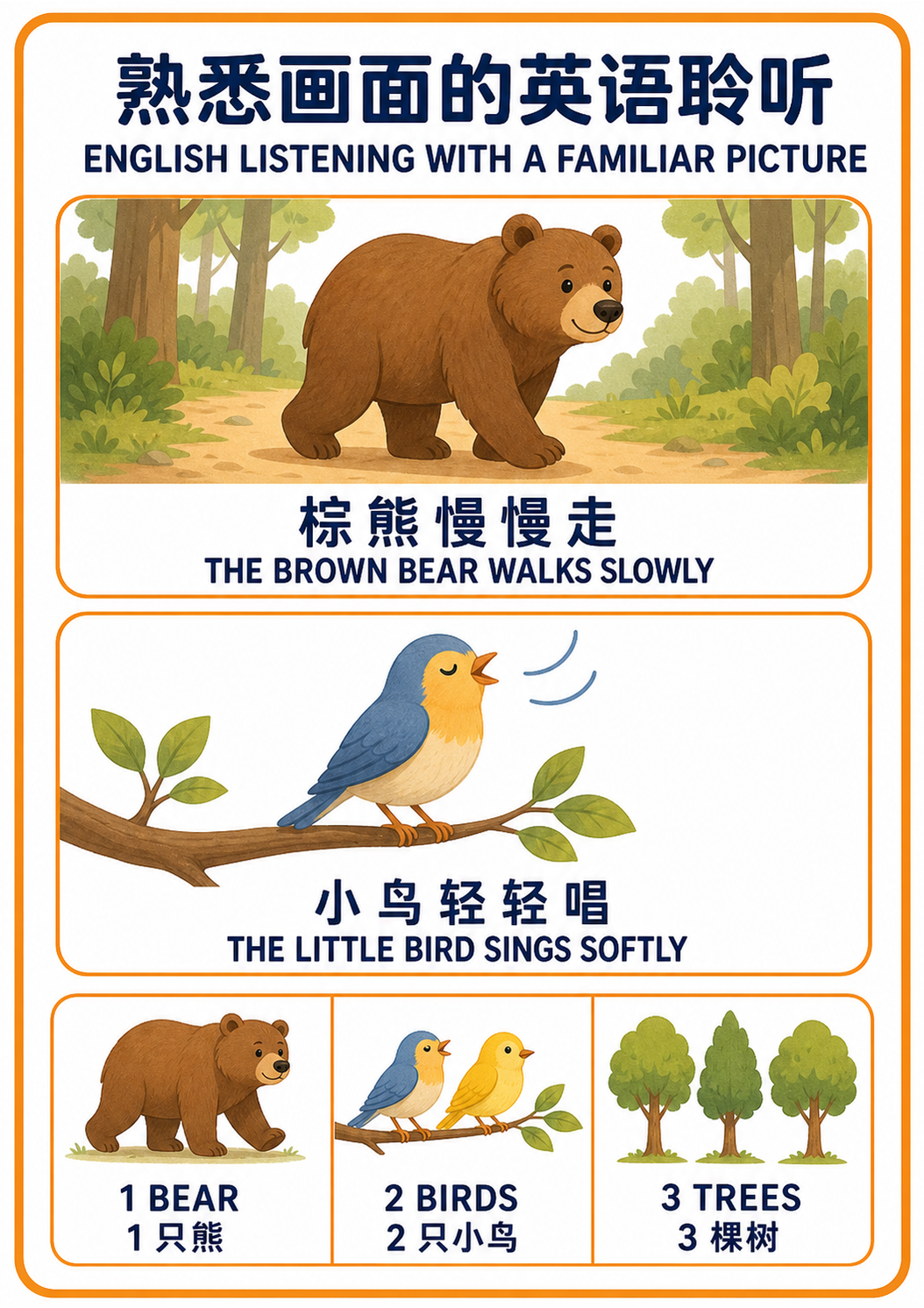
Open the high-resolution picture to download or print
This guide is adapted from our original family record, English Listening with a Familiar Picture. The diary keeps the full plan and context from that day; this page is reorganised around one parent question and keeps the parts another family can use quickly.
Record boundary: Our June 12 record treated listening, looking, pointing, and stopping as valid participation in English. The linked diary records that practice activity; it does not claim that the exact conflict in this guide happened on that day.
What This Activity Actually Supports
A bilingual child's languages can be uneven across people, places, and periods of life. This guide protects meaningful interaction in both languages and avoids turning language choice, mixing, or silence into a test of loyalty or intelligence.
This is not a developmental test. A quick look, a point, one movement, a sound, a word, quiet observation, or a stop signal can all be valid participation.
Try It Today
1. Protect the relationship first
Keep a simple dated note with the child's exact message and what it seemed to do: request, protest, comment, greet, or share attention. Include gestures and signs; do not record only clear adult-like pronunciation.
2. Model language without demanding it
Respond naturally when a word appears and model a useful next phrase. Avoid immediately asking the child to reproduce it for another person or camera. A spontaneous message can disappear under performance pressure.
3. Build one repeatable language moment
Review patterns across both languages and different listeners every few weeks, not every hour. Bring concrete examples to a professional if concerned; a home list is context, not a standardised score or diagnosis.
Ready-to-Use Parent Phrases
- I heard you say ‘more’ to ask for water.
- 你指着门说‘出去’。
- I will write that down later; you do not need to repeat it.
- Both languages belong in this record.
Adapt It to the Child in Front of You
Use a phone note, paper calendar, or weekly voice memo—whichever the caregiver can sustain. For a child using few spoken words, document comprehension, gesture, shared attention, play, and communication attempts without inventing meaning.
Record One Real Observation
Record date, exact form, intended message, person, place, and whether it was spontaneous or imitated. Keep uncertain interpretations marked as uncertain. Look for communication growth, not a competition between languages.
Avoid writing “can/cannot” or drawing a developmental conclusion from one activity. A more useful note records what the child noticed first, how the adult responded, and what helped the exchange continue or finish.
Safety and development boundary
A parent word list cannot confirm or rule out a language, hearing, developmental, or communication condition. Loss of skills or persistent concerns warrant timely discussion with qualified professionals using information from all languages.
How This Guide Was Made
This page uses the linked original family diary and picture as its experience base, with factual checks against the public sources below. AI assisted with structure and bilingual editing. It is not medical, psychological, or therapeutic advice. Read the editorial and fact-checking policy.
Sources
- IALP: Evidence-based answers for parents of bilingual and multilingual children
- Harvard Center on the Developing Child: Serve and return