
Should Parents Correct a Toddler's Mixed-Language Sentences?
Quick answer: Usually, respond to the meaning and give a natural model in the language you are using. A mixed sentence can be an efficient way to communicate with the words available; it does not need an immediate lecture or demand to start again.
| Suggested age | Activity time | What you need | Participation can include |
|---|---|---|---|
| About 2–3 years | 3–10 minutes | One picture or one real routine | Looking, listening, pointing, moving, communicating, or stopping |
Begin with a Real Family Activity Picture
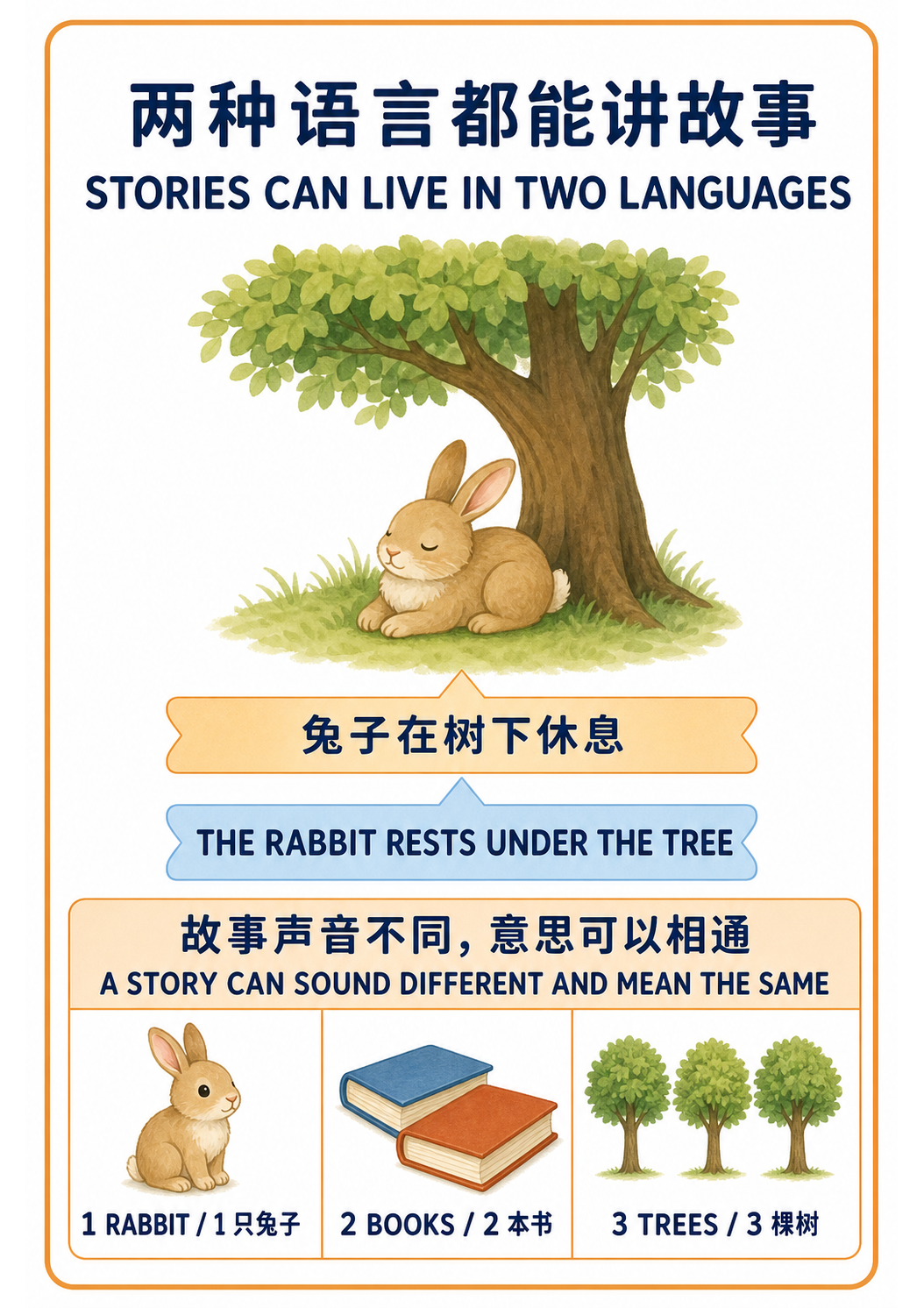
Open the high-resolution picture to download or print
This guide is adapted from our original family record, Stories Can Live in Two Languages. The diary keeps the full plan and context from that day; this page is reorganised around one parent question and keeps the parts another family can use quickly.
Record boundary: Our June 13 record enjoyed one familiar story in two languages without line-by-line testing. The linked diary records that practice activity; it does not claim that the exact conflict in this guide happened on that day.
What This Activity Actually Supports
A bilingual child's languages can be uneven across people, places, and periods of life. This guide protects meaningful interaction in both languages and avoids turning language choice, mixing, or silence into a test of loyalty or intelligence.
This is not a developmental test. A quick look, a point, one movement, a sound, a word, quiet observation, or a stop signal can all be valid participation.
Try It Today
1. Protect the relationship first
Acknowledge the full message. If the child says ‘我要 blue car’, respond to the request or comment before analysing the language. This protects the conversational turn and shows that both languages belong in the family.
2. Model language without demanding it
Model one natural sentence: ‘你要蓝色的车。’ Do not ask the child to repeat or announce that the first version was wrong. If the family is currently speaking English, an English model can be equally natural.
3. Build one repeatable language moment
Keep language-rich routines with real reasons to use each language: stories with grandparents, daily care, songs, neighbourhood play, or video calls. Consistent access matters more than policing every mixed word.
Ready-to-Use Parent Phrases
- 你要蓝色的车。
- Yes, Grandma is coming—奶奶要来了。
- I understood your whole idea.
- Here is one way I would say it.
Adapt It to the Child in Front of You
Older children may welcome explicit comparison during a calm language game; a two-year-old often benefits more from simple modelling. Follow the family's actual languages rather than enforcing a one-person-one-language rule that caregivers cannot sustain naturally.
Record One Real Observation
Record the complete message, listener, setting, and words available in each language. Notice whether mixing changes with fatigue, topic, or person. Do not count mixed sentences as failed sentences.
Avoid writing “can/cannot” or drawing a developmental conclusion from one activity. A more useful note records what the child noticed first, how the adult responded, and what helped the exchange continue or finish.
Safety and development boundary
Language mixing alone is not a diagnosis. If there are broader concerns about communication, understanding, hearing, social interaction, regression, or development across the child's languages, seek a qualified bilingual-informed assessment.
How This Guide Was Made
This page uses the linked original family diary and picture as its experience base, with factual checks against the public sources below. AI assisted with structure and bilingual editing. It is not medical, psychological, or therapeutic advice. Read the editorial and fact-checking policy.
Sources
- IALP: Evidence-based answers for parents of bilingual and multilingual children
- Harvard Center on the Developing Child: Serve and return