
Seed, Sprout, Plant: A Toddler Growth Picture Sequence
Quick answer: A seed-to-plant picture sequence can introduce growth as gradual change. It should stay an observation, not a guarantee that every seed grows or that the stages happen in a fixed number of days.
| Suggested age | Activity time | What you need | Participation can include |
|---|---|---|---|
| About 2–3 years | 3–10 minutes | One picture or one real routine | Looking, listening, pointing, moving, communicating, or stopping |
Begin with a Real Family Activity Picture
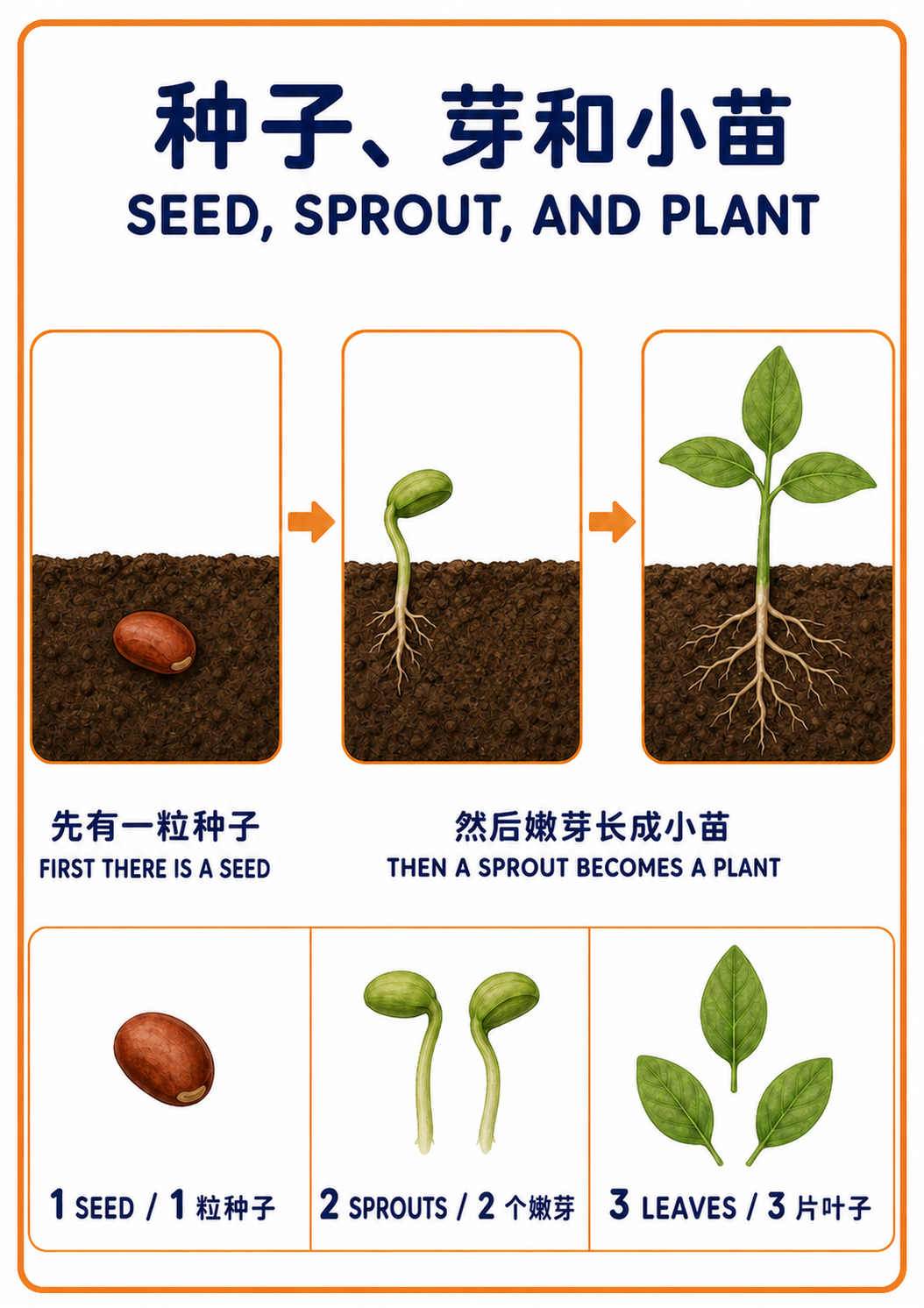
Open the high-resolution picture to download or print
This guide is adapted from our original family record, Seed, Sprout, and Plant. The diary keeps the full plan and context from that day; this page is reorganised around one parent question and keeps the parts another family can use quickly.
What This Activity Actually Supports
Play and discovery work best when the adult changes one thing at a time, describes what actually happened, and leaves room for the child's own attention. A picture-only version is always acceptable.
This is not a developmental test. A quick look, a point, one movement, a sound, a word, quiet observation, or a stop signal can all be valid participation.
Try It Today
1. Look at each stage separately
Name the seed, the small sprout, and the young plant while pointing to one picture at a time.
2. Connect the change
Move across the three pictures and say that growth takes time and needs suitable conditions.
3. Notice one real plant
If a safe household plant is available, look from a distance and describe one visible part without touching or tasting it.
Ready-to-Use Parent Phrases
- This picture shows a seed.
- A small sprout has appeared.
- The plant changed over time.
- Not every seed grows in the same way.
Adapt It to the Child in Front of You
Use only the pictures if plant care is not part of family life. Revisit the sequence occasionally rather than turning growth into a daily progress test.
Record One Real Observation
Look for attention to roots, leaves, size change, or the order of pictures. Record questions without inventing an answer.
Avoid writing “can/cannot” or drawing a developmental conclusion from one activity. A more useful note records what the child noticed first, how the adult responded, and what helped the exchange continue or finish.
Safety and development boundary
Many seeds, plants, soils, fertilisers, and gardening products are unsafe to mouth or touch. Identify plants and keep all materials out of reach.
How This Guide Was Made
This page uses the linked original family diary and picture as its experience base, with factual checks against the public sources below. AI assisted with structure and bilingual editing. It is not medical, psychological, or therapeutic advice. Read the editorial and fact-checking policy.
Sources
- CDC: Positive parenting tips for toddlers ages 2–3
- Harvard Center on the Developing Child: Serve and return