
Talk About Sunny and Cloudy Weather with a Toddler
Quick answer: Weather talk is most accurate when adults describe what can be observed now. A bright patch, cloud cover, wet ground, or moving leaves are clues, but one clue does not always tell the whole weather story.
| Suggested age | Activity time | What you need | Participation can include |
|---|---|---|---|
| About 2–3 years | 3–10 minutes | One picture or one real routine | Looking, listening, pointing, moving, communicating, or stopping |
Begin with a Real Family Activity Picture
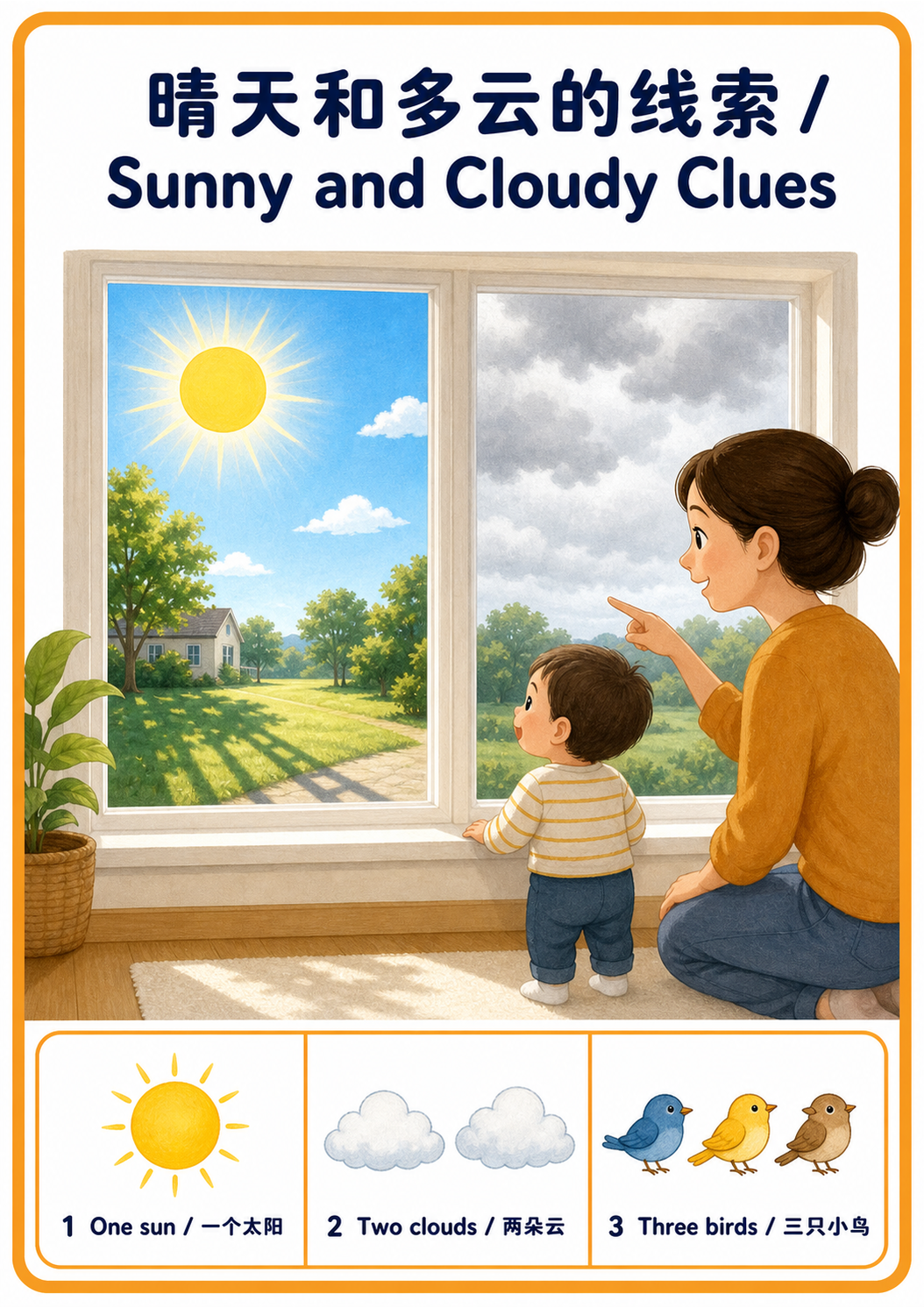
Open the high-resolution picture to download or print
This guide is adapted from our original family record, Sunny and Cloudy Clues. The diary keeps the full plan and context from that day; this page is reorganised around one parent question and keeps the parts another family can use quickly.
What This Activity Actually Supports
Play and discovery work best when the adult changes one thing at a time, describes what actually happened, and leaves room for the child's own attention. A picture-only version is always acceptable.
This is not a developmental test. A quick look, a point, one movement, a sound, a word, quiet observation, or a stop signal can all be valid participation.
Try It Today
1. Begin with the picture
Compare a sunny and cloudy illustration, naming the visible clues instead of attaching value such as good or bad weather.
2. Look safely from indoors
Check the sky through a window or from a sheltered place. Describe only what is visible at that moment.
3. Connect to one practical choice
Say how an adult decides about a hat, coat, or umbrella using current conditions and a reliable forecast.
Ready-to-Use Parent Phrases
- I can see many clouds.
- A bright patch is showing.
- The leaves are moving in the wind.
- We will check the forecast before going out.
Adapt It to the Child in Front of You
If outdoor observation is unavailable, compare two family-safe photos from different days. Avoid asking the child to name the season from one clue.
Record One Real Observation
Record which sky, light, ground, or plant clue the child notices first and whether it connects with a familiar routine.
Avoid writing “can/cannot” or drawing a developmental conclusion from one activity. A more useful note records what the child noticed first, how the adult responded, and what helped the exchange continue or finish.
Safety and development boundary
Observe severe weather from a safe place and follow official warnings. Never look directly at the sun or go outside for an activity during unsafe conditions.
How This Guide Was Made
This page uses the linked original family diary and picture as its experience base, with factual checks against the public sources below. AI assisted with structure and bilingual editing. It is not medical, psychological, or therapeutic advice. Read the editorial and fact-checking policy.
Sources
- CDC: Positive parenting tips for toddlers ages 2–3
- Harvard Center on the Developing Child: Serve and return