
How to Respond When a Toddler Pushes at the Playground
Quick answer: Move in fast enough to prevent another fall, check the child who was pushed, and state the boundary without labelling: ‘I will not let pushing happen.’ Move away from the equipment before trying to explain turns or feelings.
| Suggested age | Activity time | What you need | Participation can include |
|---|---|---|---|
| About 2–3 years | 3–10 minutes | One picture or one real routine | Looking, listening, pointing, moving, communicating, or stopping |
Begin with a Real Family Activity Picture
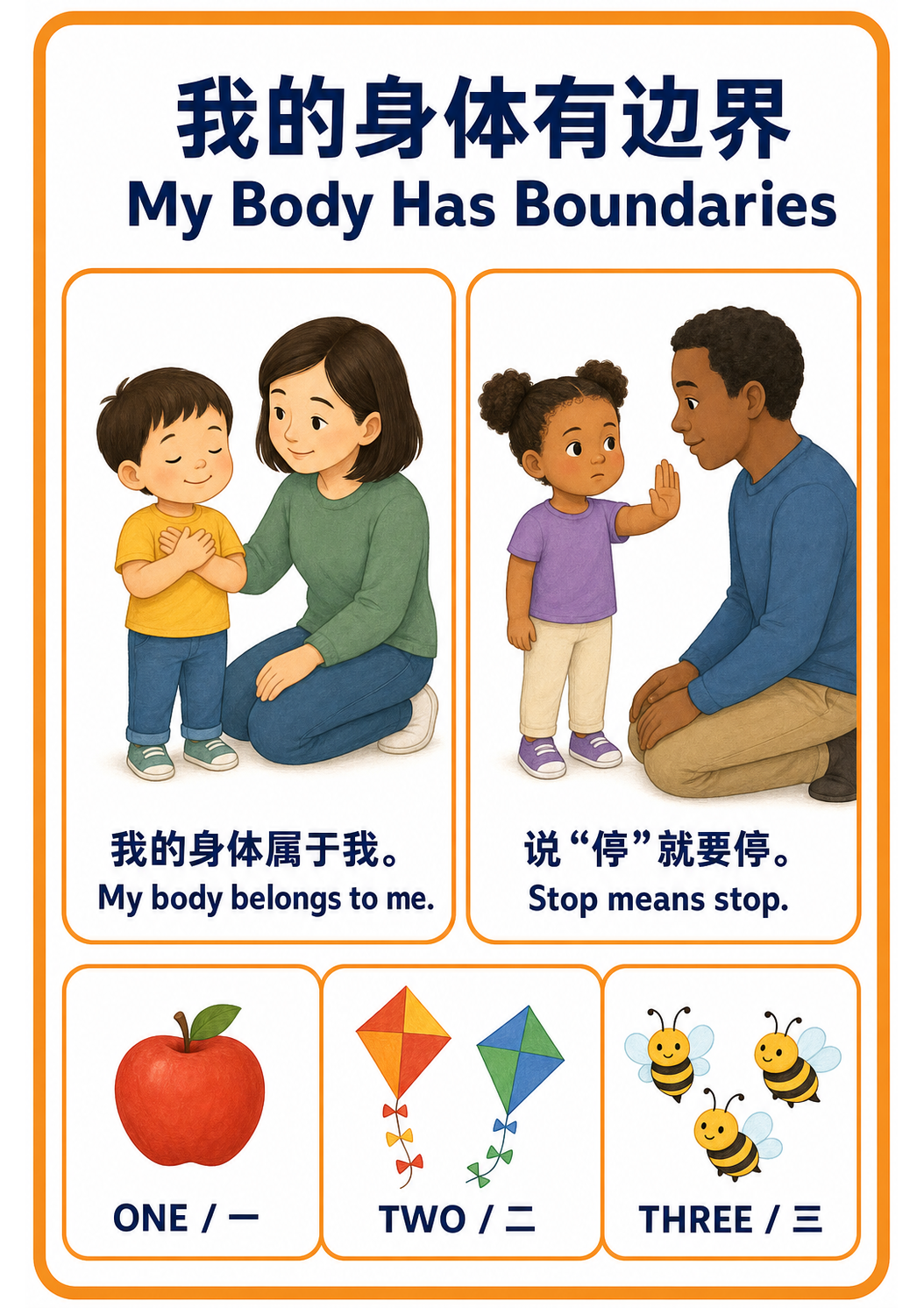
Open the high-resolution picture to download or print
This guide is adapted from our original family record, My Body Has Boundaries. The diary keeps the full plan and context from that day; this page is reorganised around one parent question and keeps the parts another family can use quickly.
Record boundary: Our March 28 record practised noticing body boundaries and asking before entering another person's space. The linked diary records that practice activity; it does not claim that the exact conflict in this guide happened on that day.
What This Activity Actually Supports
When bodies are unsafe, the adult stops the action first and teaches later. A two- or three-year-old still needs close help with waiting, turn-taking, repair, and finding a safe action; labels such as ‘mean’ do not teach the missing skill.
This is not a developmental test. A quick look, a point, one movement, a sound, a word, quiet observation, or a stop signal can all be valid participation.
Try It Today
1. Stop harm and check bodies
Block the next push and guide both children away from edges, stairs, swings, or moving equipment. Attend to injury and fear first. If you did not see the beginning, say only what you know instead of accusing either child of a motive.
2. Name the problem without a label
Describe the immediate problem: ‘You wanted space at the slide.’ Pushing remains unsafe even when the wish makes sense. Keep the teaching sentence short because the playground still requires active supervision.
3. Practise one safe alternative
In a safe flat area, practise ‘space’, ‘my turn’, waiting behind a marker, or bringing an adult. If the child cannot stay safe near that equipment, choose another area or end the visit; this is protection, not public punishment.
Ready-to-Use Parent Phrases
- I will not let pushing happen.
- First I am checking the child who fell.
- You wanted space by the slide.
- Say ‘space’ and bring me.
Adapt It to the Child in Front of You
Stay within reach around predictable bottlenecks and choose quieter times while the skill is emerging. Some children need a wider physical buffer or a different piece of equipment. Repeated practice should happen off the stairs and away from moving swings.
Record One Real Observation
Record the exact equipment, crowding, direction of movement, adult distance, and whether the child was waiting, passing, or protecting space. These facts support prevention better than ‘aggressive at playgrounds’.
Avoid writing “can/cannot” or drawing a developmental conclusion from one activity. A more useful note records what the child noticed first, how the adult responded, and what helped the exchange continue or finish.
Safety and development boundary
Falls from height, head impacts, loss of consciousness, vomiting, severe pain, breathing problems, or significant injury require appropriate urgent assessment. Keep children away from moving swings and equipment edges during conflict.
How This Guide Was Made
This page uses the linked original family diary and picture as its experience base, with factual checks against the public sources below. AI assisted with structure and bilingual editing. It is not medical, psychological, or therapeutic advice. Read the editorial and fact-checking policy.
Sources
- CDC: Positive parenting tips for toddlers ages 2–3
- Harvard Center on the Developing Child: Serve and return