
When a Toddler Refuses a Chinese Picture Book
Quick answer: Let the child decline or stop, then try a smaller invitation: one picture, one familiar line, or a book chosen by the child. Refusing one Chinese book is information about that moment, not proof that the child rejects Chinese.
| Suggested age | Activity time | What you need | Participation can include |
|---|---|---|---|
| About 2–3 years | 3–10 minutes | One picture or one real routine | Looking, listening, pointing, moving, communicating, or stopping |
Begin with a Real Family Activity Picture
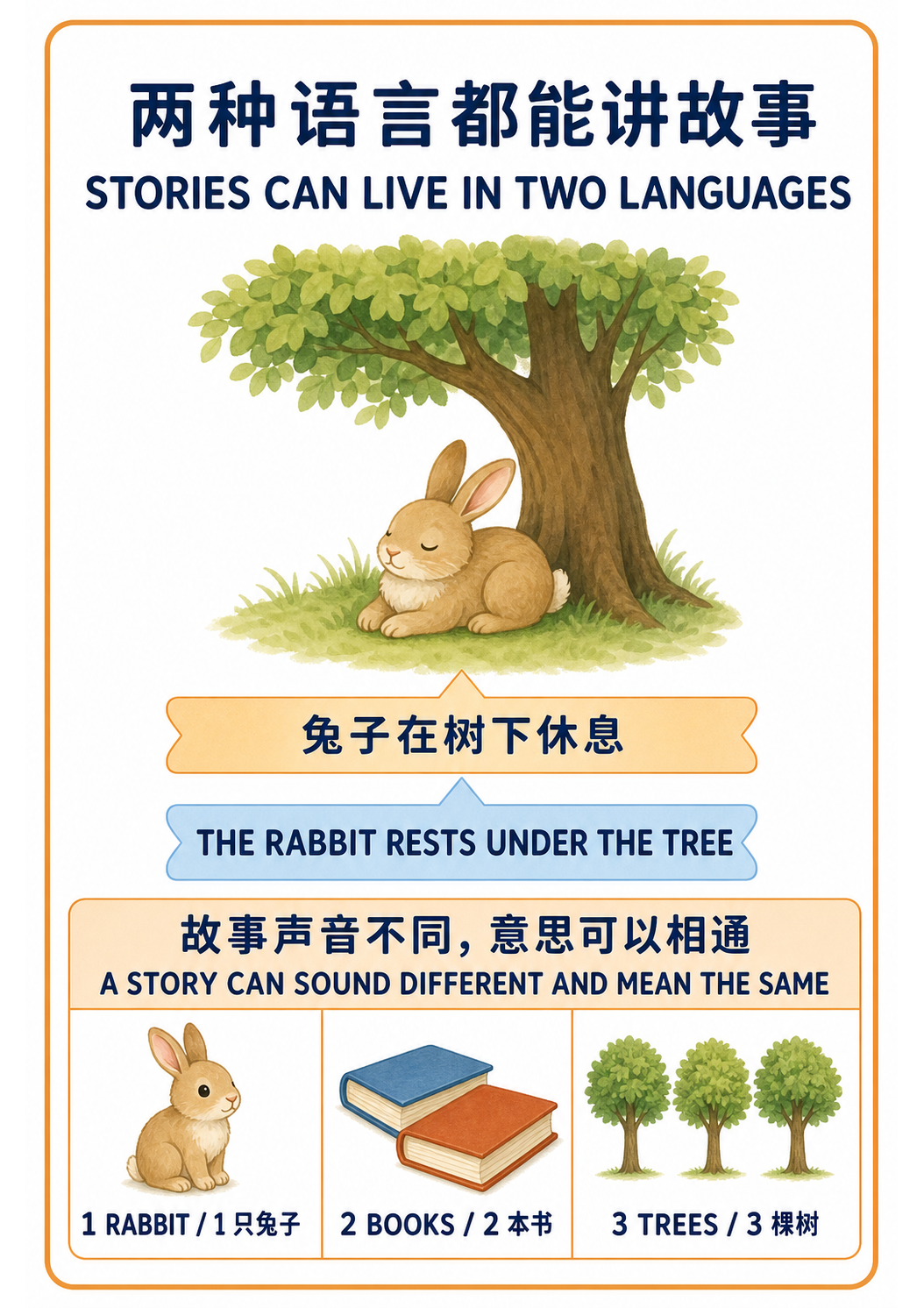
Open the high-resolution picture to download or print
This guide is adapted from our original family record, Stories Can Live in Two Languages. The diary keeps the full plan and context from that day; this page is reorganised around one parent question and keeps the parts another family can use quickly.
Record boundary: Our June 13 record explored the same familiar story in two languages with permission to stop. The linked diary records that practice activity; it does not claim that the exact conflict in this guide happened on that day.
What This Activity Actually Supports
A bilingual child's languages can be uneven across people, places, and periods of life. This guide protects meaningful interaction in both languages and avoids turning language choice, mixing, or silence into a test of loyalty or intelligence.
This is not a developmental test. A quick look, a point, one movement, a sound, a word, quiet observation, or a stop signal can all be valid participation.
Try It Today
1. Protect the relationship first
Acknowledge the no and protect the book from becoming a struggle. Offer two visible books or invite only a picture walk. A toddler who can stop is more likely to return than one held in place for a language lesson.
2. Model language without demanding it
Follow what the child points to and add one short Chinese sentence. There is no need to translate each line, finish the plot, or ask a question on every page. Movement and page turning can remain part of reading.
3. Build one repeatable language moment
Build familiarity outside formal reading: repeat one character name at play, sing a related line, or let a grandparent share the book by video. Return on another day without announcing a test of whether the child remembers.
Ready-to-Use Parent Phrases
- 你不想看这一本,我们可以停。
- 选这本,还是那本?
- 我们只看你指的这一页。
- 你想走动,我把这一句读完就停。
Adapt It to the Child in Front of You
Use sturdy short books, familiar photos, humour, flaps, or repeated lines when long narratives are hard. A child may prefer a different reader, time, or position. Listening while moving can be acceptable if the environment remains safe.
Record One Real Observation
Record the exact book, reader, time, length, body state, and what attracted or repelled attention. Compare Chinese and English books with similar format before concluding that language alone caused refusal.
Avoid writing “can/cannot” or drawing a developmental conclusion from one activity. A more useful note records what the child noticed first, how the adult responded, and what helped the exchange continue or finish.
Safety and development boundary
Do not physically restrain a child for reading or withhold bedtime comfort until a book is completed. Choose age-safe books and supervise torn pages, flaps, batteries, cords, or small attached pieces.
How This Guide Was Made
This page uses the linked original family diary and picture as its experience base, with factual checks against the public sources below. AI assisted with structure and bilingual editing. It is not medical, psychological, or therapeutic advice. Read the editorial and fact-checking policy.
Sources
- IALP: Evidence-based answers for parents of bilingual and multilingual children
- Harvard Center on the Developing Child: Serve and return