
Show Toddlers the Book Cover, Title, and Picture
Quick answer: Before reading, an adult can make the structure of a book visible: this is the cover, these words are the title, and this is the picture. The goal is familiarity with books, not early print testing.
| Suggested age | Activity time | What you need | Participation can include |
|---|---|---|---|
| About 2–3 years | 3–10 minutes | One picture or one real routine | Looking, listening, pointing, moving, communicating, or stopping |
Begin with a Real Family Activity Picture
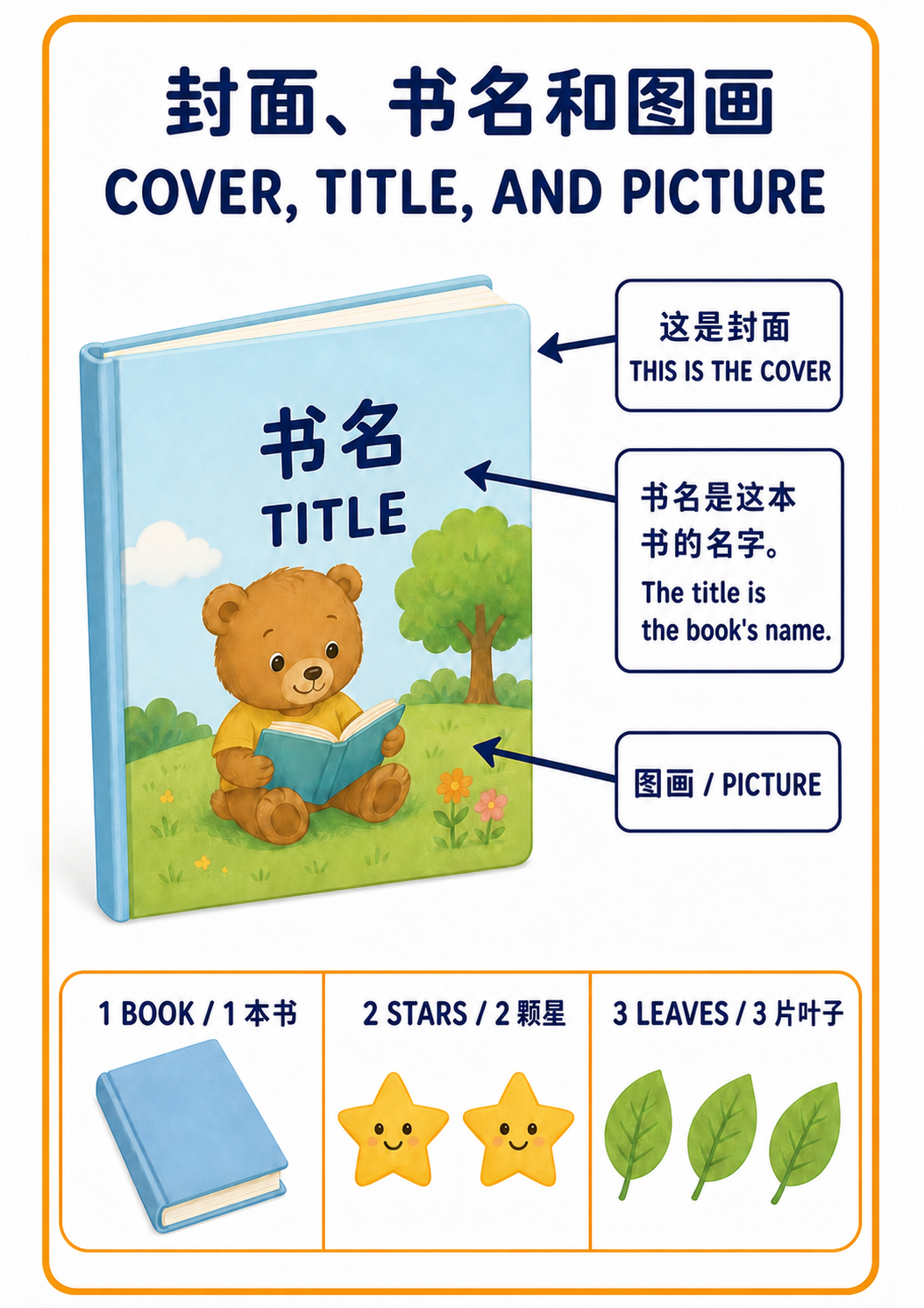
Open the high-resolution picture to download or print
This guide is adapted from our original family record, Cover, Title, and Picture. The diary keeps the full plan and context from that day; this page is reorganised around one parent question and keeps the parts another family can use quickly.
What This Activity Actually Supports
Shared reading can include looking, pointing, page turning, movement, quiet listening, and stopping. The book is a place for joint attention, not a test that requires a spoken answer on every page.
This is not a developmental test. A quick look, a point, one movement, a sound, a word, quiet observation, or a stop signal can all be valid participation.
Try It Today
1. Hold the book naturally
Let the child see the front while you say ‘This is the cover’. Avoid positioning the book like a flashcard.
2. Point once to the title
Read the title aloud as a whole. There is no need to trace every letter or ask the child to identify words.
3. Follow the picture interest
Name one detail the child notices, then open the book or stay on the cover if that is where attention remains.
Ready-to-Use Parent Phrases
- This is the front cover.
- The title says…
- You are looking at the red umbrella.
- Now we can open the book.
Adapt It to the Child in Front of You
With a favourite book, invite the child to find the front by handling it. If book orientation is still emerging, model gently without saying it is wrong.
Record One Real Observation
Notice whether the child turns the book, touches the title area, returns to a cover detail, or anticipates opening it.
Avoid writing “can/cannot” or drawing a developmental conclusion from one activity. A more useful note records what the child noticed first, how the adult responded, and what helped the exchange continue or finish.
Safety and development boundary
Board books may suit children who mouth or pull pages. Check for staples, torn board, or loose pieces before use.
How This Guide Was Made
This page uses the linked original family diary and picture as its experience base, with factual checks against the public sources below. AI assisted with structure and bilingual editing. It is not medical, psychological, or therapeutic advice. Read the editorial and fact-checking policy.
Sources
- Harvard Center on the Developing Child: Serve and return
- CDC: Positive parenting tips for toddlers ages 2–3