
How to Change a Diaper When a Toddler Keeps Moving
Quick answer: Set up supplies before bringing the child, explain each necessary touch, and offer safe control over position or a small job. Movement is information, but the adult still completes needed cleaning and prevents falls or contamination.
| Suggested age | Activity time | What you need | Participation can include |
|---|---|---|---|
| About 2–3 years | 3–10 minutes | One picture or one real routine | Looking, listening, pointing, moving, communicating, or stopping |
Begin with a Real Family Activity Picture
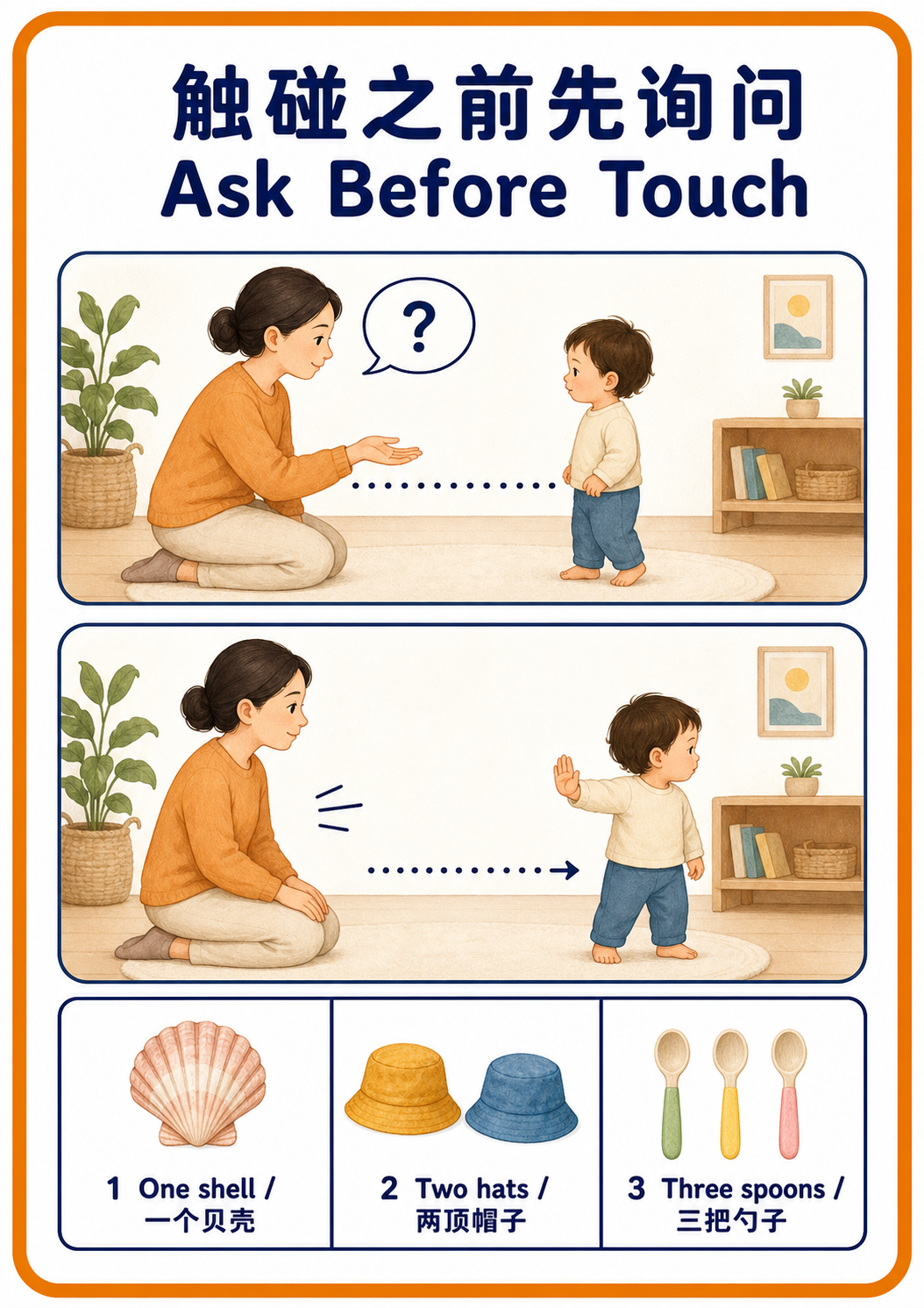
Open the high-resolution picture to download or print
This guide is adapted from our original family record, Ask Before Touch. The diary keeps the full plan and context from that day; this page is reorganised around one parent question and keeps the parts another family can use quickly.
Record boundary: Our April 28 record practised asking before touch and respecting body signals in everyday interactions. The linked diary records that practice activity; it does not claim that the exact conflict in this guide happened on that day.
What This Activity Actually Supports
Body care combines a real adult responsibility with a child's need for predictability, dignity, and small participation. Choices can shape how care happens, while the adult remains responsible for health, weather, hygiene, and immediate safety.
This is not a developmental test. A quick look, a point, one movement, a sound, a word, quiet observation, or a stop signal can all be valid participation.
Try It Today
1. State the care boundary clearly
Gather diaper, wipes, clothing, disposal, and handwashing supplies within reach. Use the floor when possible if rolling from a high surface is a risk. Say ‘Your diaper is wet; I am going to help clean your body.’
2. Offer control inside the boundary
When safe, offer standing or lying, which side to face, or a clean item to hold. Ask before optional touch and announce necessary care. The child can lift, step, or hold clothing as one contribution.
3. Finish with dignity and reconnection
If the child moves into danger or contamination, stabilise the body with the least necessary help and finish promptly. Say what happened without shame: ‘I held you so you would not fall. Cleaning is finished. Now we wash hands.’
Ready-to-Use Parent Phrases
- Your diaper needs changing; I will help.
- Stand or lie down?
- I am wiping now; then we are finished.
- I held you to prevent a fall.
Adapt It to the Child in Front of You
Try standing changes for wet diapers when appropriate, a floor mat, warm wipes, slower transitions, or involving the child in fetching supplies. Persistent pain, rash, constipation, urinary symptoms, or extreme distress needs health guidance rather than more behavioural pressure.
Record One Real Observation
Record whether movement began before entering, during lying down, at a specific touch, or after a long wait. Note skin condition, temperature, position, and signs of pain. This helps separate normal movement from discomfort.
Avoid writing “can/cannot” or drawing a developmental conclusion from one activity. A more useful note records what the child noticed first, how the adult responded, and what helped the exchange continue or finish.
Safety and development boundary
Never leave a child unattended on a changing surface. Keep one hand on the child when elevated, keep supplies and waste out of reach, prevent suffocation and falls, clean contaminated surfaces, and follow health guidance for rash, pain, injury, or infection concerns.
How This Guide Was Made
This page uses the linked original family diary and picture as its experience base, with factual checks against the public sources below. AI assisted with structure and bilingual editing. It is not medical, psychological, or therapeutic advice. Read the editorial and fact-checking policy.
Sources
- CDC: Positive parenting tips for toddlers ages 2–3
- Harvard Center on the Developing Child: Serve and return