
How to Help a Toddler Get Ready to Leave Home
Quick answer: Replace the broad command ‘get ready’ with two or three visible actions. Prepare the environment first, say only the current step, and keep enough adult responsibility that leaving home does not depend on toddler speed.
| Suggested age | Activity time | What you need | Participation can include |
|---|---|---|---|
| About 2–3 years | 3–10 minutes | One picture or one real routine | Looking, listening, pointing, moving, communicating, or stopping |
Begin with a Real Family Activity Picture
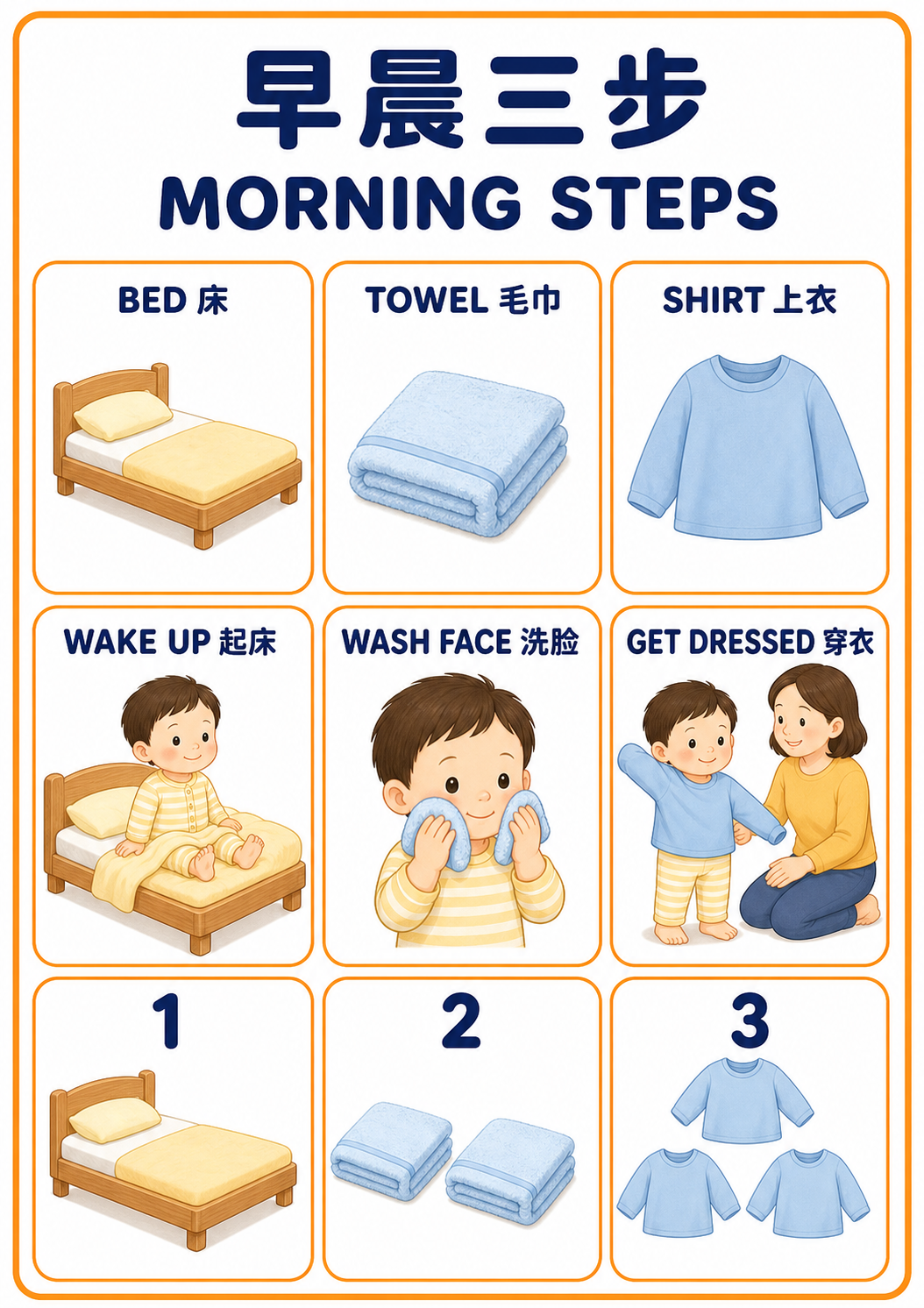
Open the high-resolution picture to download or print
This guide is adapted from our original family record, Morning Steps. The diary keeps the full plan and context from that day; this page is reorganised around one parent question and keeps the parts another family can use quickly.
Record boundary: Our July 7 record used a three-picture morning sequence to make a familiar routine visible. The linked diary records that practice activity; it does not claim that the exact conflict in this guide happened on that day.
What This Activity Actually Supports
Transitions become easier to understand when the adult makes the sequence visible, uses few truthful words, and keeps the boundary steady without treating protest as failure. The goal is supported participation, not instant obedience.
This is not a developmental test. A quick look, a point, one movement, a sound, a word, quiet observation, or a stop signal can all be valid participation.
Try It Today
1. Name the immediate next step
Place the needed shoes, coat, and bag in one reachable area. Point to the first picture and say ‘Shoes now.’ A toddler cannot act on every part of ‘get ready’ at once, especially while searching for objects across the room.
2. Make participation smaller
Offer one useful job: carry the hat, push one arm into the sleeve, or choose which shoe goes first. The adult can pack essentials and manage the clock; participation does not mean transferring the whole departure to the child.
3. Hold the limit through protest
When time is up, say what you will do: ‘I am helping with the second shoe, then we go.’ Avoid threats about being left behind. A calm assist protects the schedule while keeping the child connected to a predictable sequence.
Ready-to-Use Parent Phrases
- First shoes; then the door.
- Your job is the hat.
- Which shoe first?
- I am helping now so we can leave together.
Adapt It to the Child in Front of You
Use only two steps on rushed days. If pictures distract, place each object in order instead. If the child can manage more, invite them to move the picture to a finished pocket, but do not turn the chart into a reward system or test.
Record One Real Observation
Note where the routine actually stalls: finding objects, changing activities, accepting help, or walking through the door. That observation points to the next environmental change more clearly than a general conclusion that the child is slow.
Avoid writing “can/cannot” or drawing a developmental conclusion from one activity. A more useful note records what the child noticed first, how the adult responded, and what helped the exchange continue or finish.
Safety and development boundary
The adult remains responsible for medicines, keys, weather protection, car-seat use, door and street safety, and leaving on time for essential care. Do not let a checklist delay urgent or necessary travel.
How This Guide Was Made
This page uses the linked original family diary and picture as its experience base, with factual checks against the public sources below. AI assisted with structure and bilingual editing. It is not medical, psychological, or therapeutic advice. Read the editorial and fact-checking policy.
Sources
- CDC: Positive parenting tips for toddlers ages 2–3
- Harvard Center on the Developing Child: Serve and return