
How to Keep Chinese After a Toddler Starts English Daycare
Quick answer: Keep Chinese attached to relationships and real home life: a reunion phrase, meal talk, one picture book, bath song, or grandparent call. Consistency matters, but the routine should remain connection rather than a daily language test after daycare.
| Suggested age | Activity time | What you need | Participation can include |
|---|---|---|---|
| About 2–3 years | 3–10 minutes | One picture or one real routine | Looking, listening, pointing, moving, communicating, or stopping |
Begin with a Real Family Activity Picture
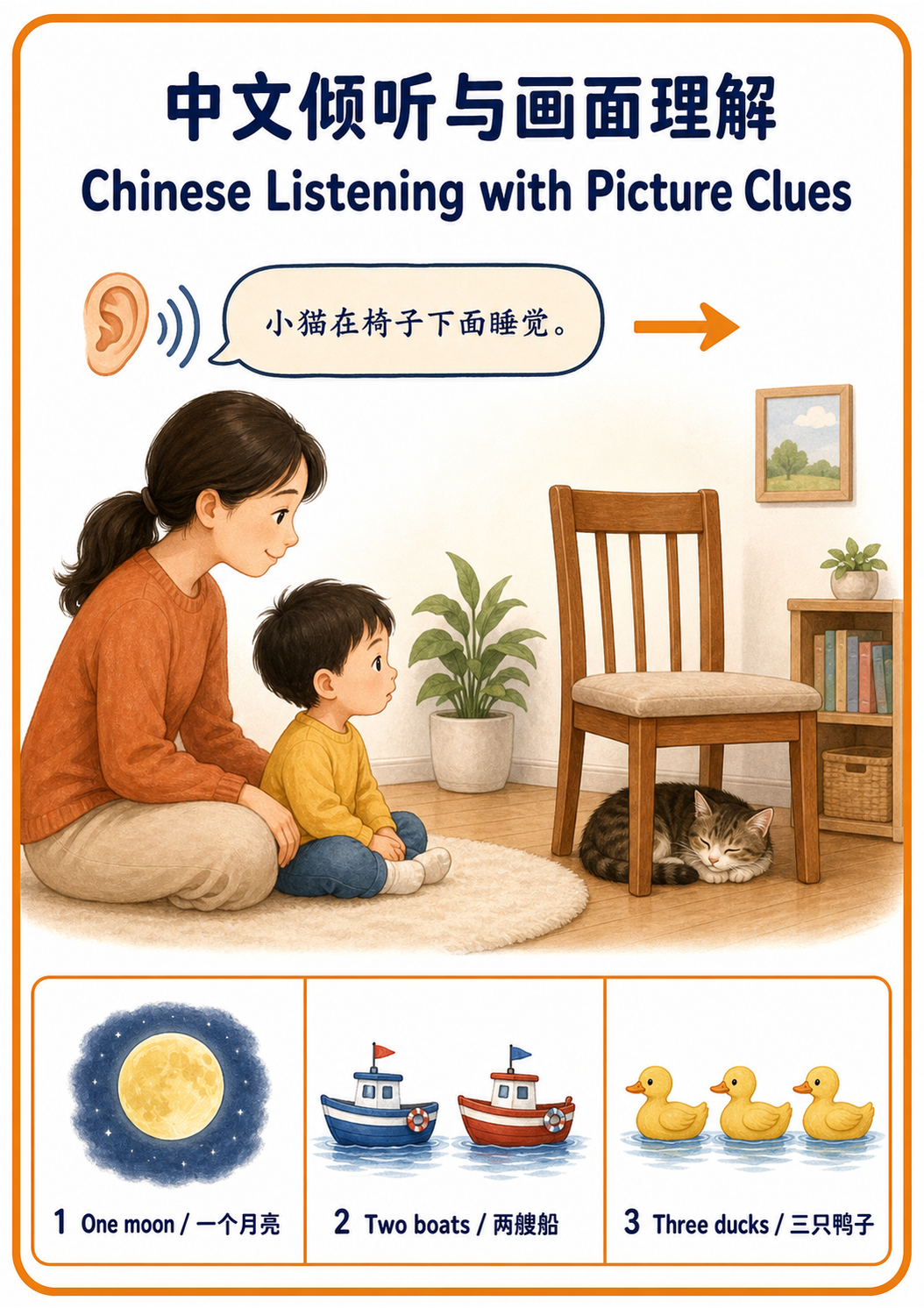
Open the high-resolution picture to download or print
This guide is adapted from our original family record, Chinese Listening with Picture Clues. The diary keeps the full plan and context from that day; this page is reorganised around one parent question and keeps the parts another family can use quickly.
Record boundary: Our April 24 record created a short Chinese-listening moment around familiar pictures. The linked diary records that practice activity; it does not claim that the exact conflict in this guide happened on that day.
What This Activity Actually Supports
A bilingual child's languages can be uneven across people, places, and periods of life. This guide protects meaningful interaction in both languages and avoids turning language choice, mixing, or silence into a test of loyalty or intelligence.
This is not a developmental test. A quick look, a point, one movement, a sound, a word, quiet observation, or a stop signal can all be valid participation.
Try It Today
1. Protect the relationship first
Reconnect before asking for speech. Use the same warm Chinese greeting, snack conversation, or cuddle after daycare. A tired child may need food, movement, or quiet before they can participate in any language-rich exchange.
2. Model language without demanding it
Narrate what is actually happening in short Chinese and accept replies in any language. Add one useful phrase instead of translating every English word or asking ‘How do you say that in Chinese?’ throughout the evening.
3. Build one repeatable language moment
Choose one sustainable anchor: a Chinese bedtime book, weekly family call, weekend outing, or familiar audio story. Repetition with a real person and purpose is more durable than adding a long worksheet routine.
Ready-to-Use Parent Phrases
- 回家了,我很想你。
- 你想先吃点心,还是先抱一抱?
- You said bus—对,今天坐了公共汽车。
- 今晚你来选一本中文书。
Adapt It to the Child in Front of You
If the child strongly resists after a long day, shorten the language moment and preserve warmth. Families with limited Chinese literacy can use audio books, relatives, community groups, or repeated spoken routines. Rich spoken connection still counts.
Record One Real Observation
Record the time of day, child's energy, people involved, language understood, and topics that invite spontaneous attention. Evaluate the routine by whether interaction remains possible, not by the number of Chinese answers produced.
Avoid writing “can/cannot” or drawing a developmental conclusion from one activity. A more useful note records what the child noticed first, how the adult responded, and what helped the exchange continue or finish.
Safety and development boundary
Do not withdraw affection, food, comfort, or ordinary help until the child uses Chinese. Persistent communication or developmental concerns should be considered across all languages with bilingual-informed professionals.
How This Guide Was Made
This page uses the linked original family diary and picture as its experience base, with factual checks against the public sources below. AI assisted with structure and bilingual editing. It is not medical, psychological, or therapeutic advice. Read the editorial and fact-checking policy.
Sources
- IALP: Evidence-based answers for parents of bilingual and multilingual children
- Harvard Center on the Developing Child: Serve and return