
Can a Non-Native English-Speaking Parent Use English with a Toddler?
Quick answer: A parent can share English they know comfortably through songs, books, play, and familiar routines. There is no need to replace the language in which the parent can offer the richest, most natural relationship or to perform a perfect accent.
| Suggested age | Activity time | What you need | Participation can include |
|---|---|---|---|
| About 2–3 years | 3–10 minutes | One picture or one real routine | Looking, listening, pointing, moving, communicating, or stopping |
Begin with a Real Family Activity Picture
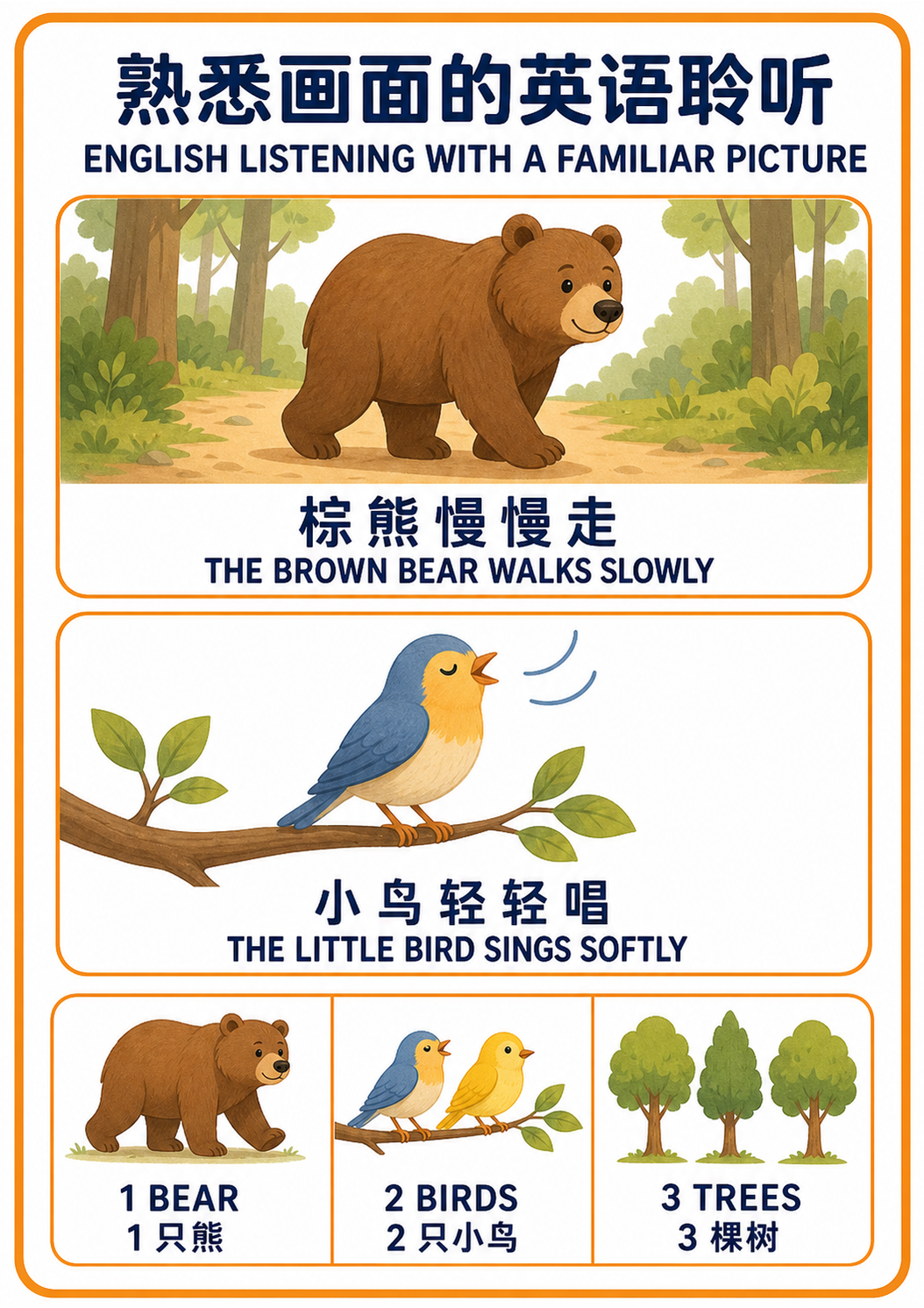
Open the high-resolution picture to download or print
This guide is adapted from our original family record, English Listening with a Familiar Picture. The diary keeps the full plan and context from that day; this page is reorganised around one parent question and keeps the parts another family can use quickly.
Record boundary: Our June 12 record used familiar pictures for a brief, low-pressure English-listening activity. The linked diary records that practice activity; it does not claim that the exact conflict in this guide happened on that day.
What This Activity Actually Supports
A bilingual child's languages can be uneven across people, places, and periods of life. This guide protects meaningful interaction in both languages and avoids turning language choice, mixing, or silence into a test of loyalty or intelligence.
This is not a developmental test. A quick look, a point, one movement, a sound, a word, quiet observation, or a stop signal can all be valid participation.
Try It Today
1. Protect the relationship first
Choose language you genuinely understand and can use warmly: a greeting, action song, picture labels, or repeated book line. Keep the exchange meaningful instead of reciting long sentences whose nuance feels uncertain.
2. Model language without demanding it
Model once and continue the activity. Do not require the toddler to copy pronunciation or treat the parent accent as something shameful. Accurate audio from books or songs can add variety without replacing the live relationship.
3. Build one repeatable language moment
Protect the family's strongest language across meals, feelings, stories, humour, and care. English can occupy a small repeatable pocket while the home language continues to carry complex connection and family identity.
Ready-to-Use Parent Phrases
- Let's wash hands.
- The little dog is running.
- You can listen or point.
- 现在我们继续用最自然的话聊天。
Adapt It to the Child in Front of You
Use bilingual books or audio when pronunciation support increases confidence, and preview unfamiliar words. If English makes the interaction stiff or exhausting, shorten it. A relative, community group, educator, or media source can provide additional exposure.
Record One Real Observation
Record whether the parent felt relaxed, whether the child shared attention, and which words belonged naturally in the routine. Do not judge the session by accent or how many words the child repeated.
Avoid writing “can/cannot” or drawing a developmental conclusion from one activity. A more useful note records what the child noticed first, how the adult responded, and what helped the exchange continue or finish.
Safety and development boundary
Avoid media or products that promise guaranteed fluency or developmental advantage. Language exposure is not treatment. Concerns about communication, hearing, understanding, or development should be discussed with qualified professionals across all languages.
How This Guide Was Made
This page uses the linked original family diary and picture as its experience base, with factual checks against the public sources below. AI assisted with structure and bilingual editing. It is not medical, psychological, or therapeutic advice. Read the editorial and fact-checking policy.
Sources
- IALP: Evidence-based answers for parents of bilingual and multilingual children
- Harvard Center on the Developing Child: Serve and return