
A Three-Step Morning Routine for Toddlers
Quick answer: A three-picture morning sequence can help a toddler see the broad rhythm of the day. It should describe what usually happens, not become a reward chart or a reason to ignore changing needs.
| Suggested age | Activity time | What you need | Participation can include |
|---|---|---|---|
| About 2–3 years | 3–10 minutes | One picture or one real routine | Looking, listening, pointing, moving, communicating, or stopping |
Begin with a Real Family Activity Picture
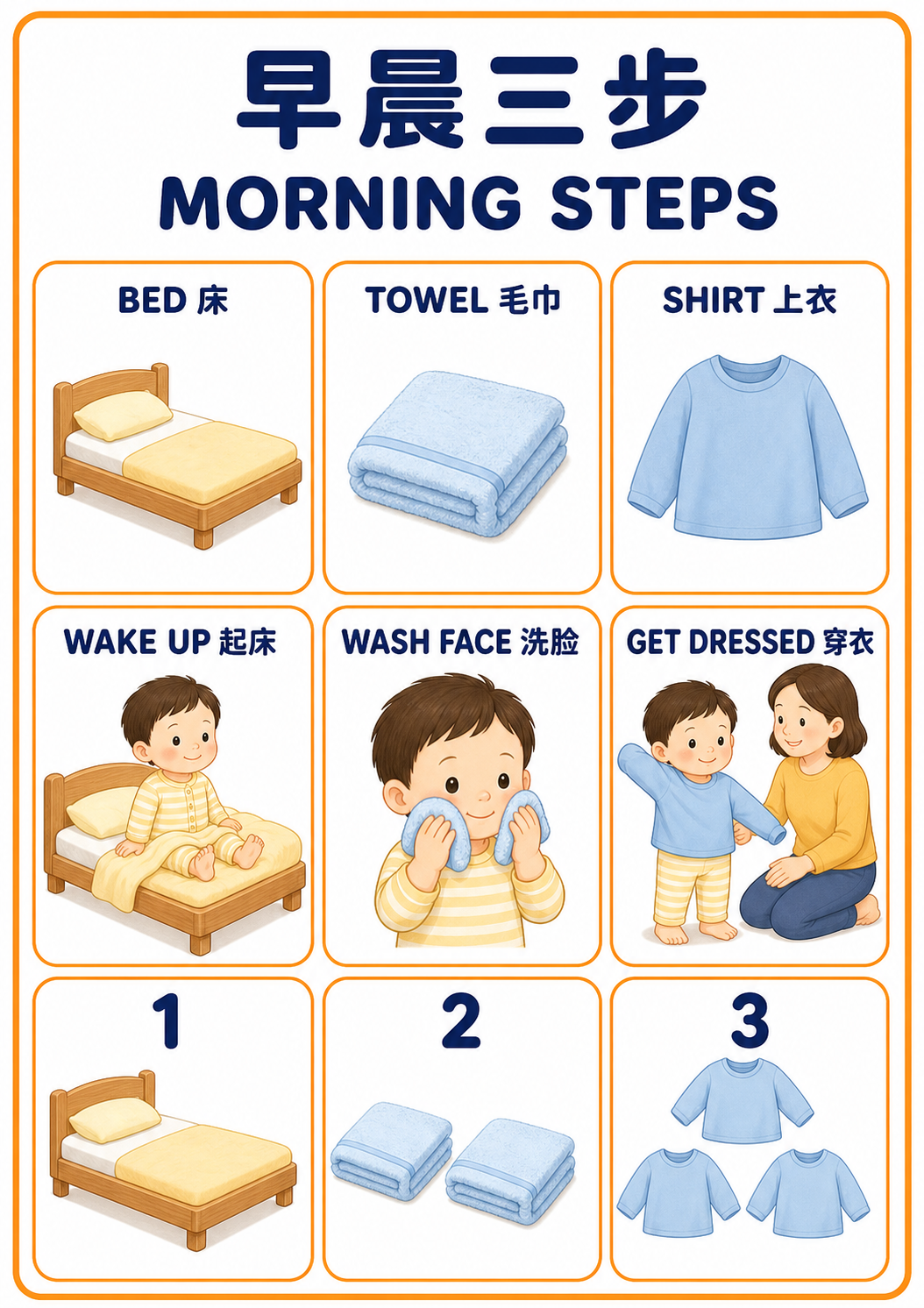
Open the high-resolution picture to download or print
This guide is adapted from our original family record, Morning Steps. The diary keeps the full plan and context from that day; this page is reorganised around one parent question and keeps the parts another family can use quickly.
What This Activity Actually Supports
A routine supports connection when it makes the next moment more understandable without demanding compliance. Adult reliability, truthful language, and respect for signals matter more than completing a chart.
This is not a developmental test. A quick look, a point, one movement, a sound, a word, quiet observation, or a stop signal can all be valid participation.
Try It Today
1. Choose three broad moments
Use wake up, get dressed, and breakfast—or three steps that genuinely fit the family's morning.
2. Point to the current step
Show only where the family is now and name the next step. There is no need to review the whole strip repeatedly.
3. Allow the sequence to bend
Say when a step changes, repeats, or is skipped. Real routines vary with sleep, health, weather, and family schedules.
Ready-to-Use Parent Phrases
- We woke up; now we get dressed.
- Breakfast comes next.
- Today we eat before getting dressed.
- The pictures help us remember, not earn a prize.
Adapt It to the Child in Front of You
Use family photos privately, simple drawings, or the linked printable. Start with two steps if three creates pressure.
Record One Real Observation
Look for checking the current picture, moving toward the next routine, or communicating that the order feels different today.
Avoid writing “can/cannot” or drawing a developmental conclusion from one activity. A more useful note records what the child noticed first, how the adult responded, and what helped the exchange continue or finish.
Safety and development boundary
Adult supervision remains necessary for dressing, food, stairs, bathrooms, and leaving home. A visual routine never replaces active care.
How This Guide Was Made
This page uses the linked original family diary and picture as its experience base, with factual checks against the public sources below. AI assisted with structure and bilingual editing. It is not medical, psychological, or therapeutic advice. Read the editorial and fact-checking policy.
Sources
- CDC: Positive parenting tips for toddlers ages 2–3
- Harvard Center on the Developing Child: Serve and return