
When a Toddler Refuses Weather-Safe Clothes
Quick answer: The adult decides the protection required for the actual conditions; the toddler can choose between two acceptable options or how to put them on. If no safe clothing option is possible, change or postpone the outing rather than arguing indefinitely.
| Suggested age | Activity time | What you need | Participation can include |
|---|---|---|---|
| About 2–3 years | 3–10 minutes | One picture or one real routine | Looking, listening, pointing, moving, communicating, or stopping |
Begin with a Real Family Activity Picture
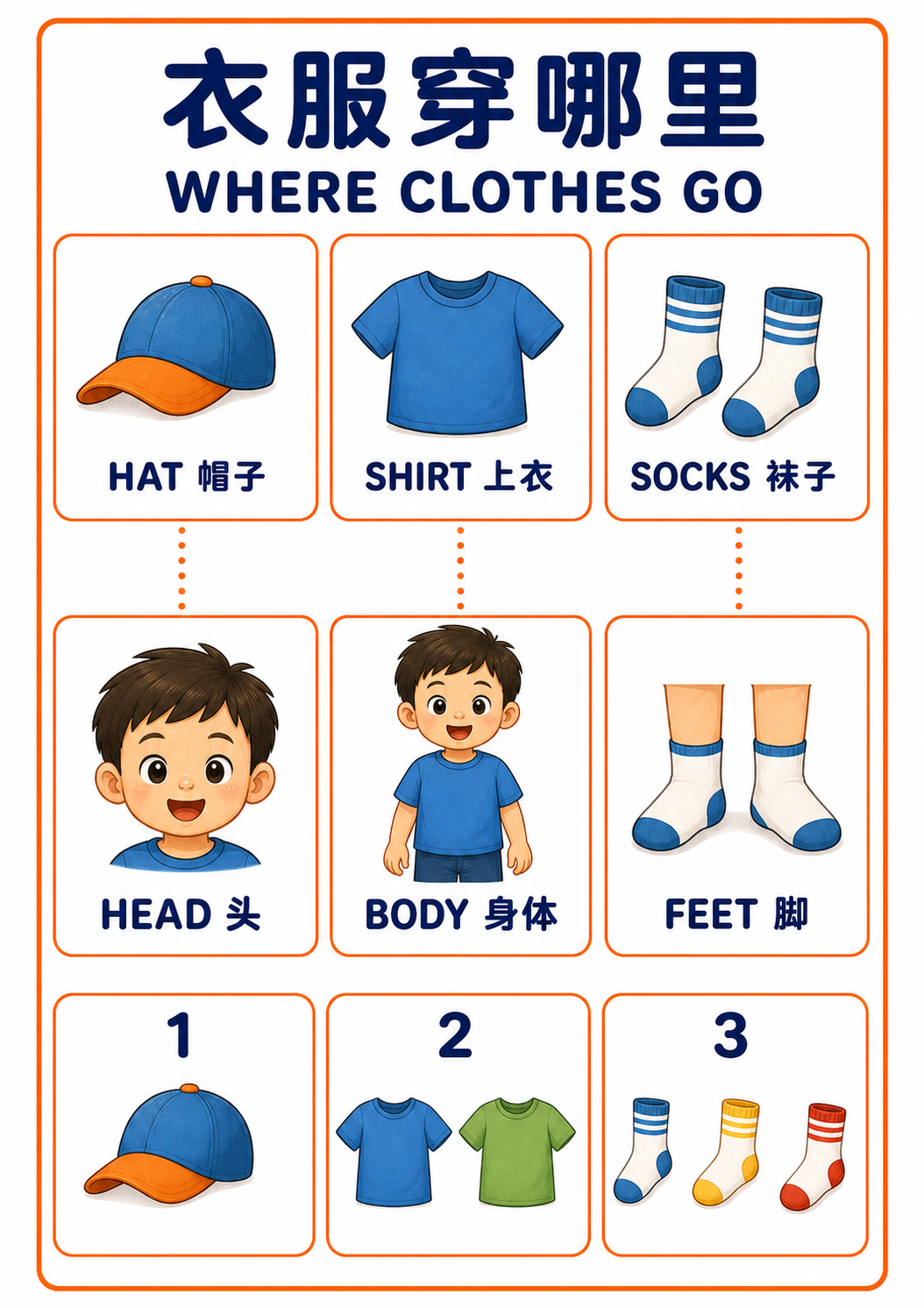
Open the high-resolution picture to download or print
This guide is adapted from our original family record, Where Clothes Go. The diary keeps the full plan and context from that day; this page is reorganised around one parent question and keeps the parts another family can use quickly.
Record boundary: Our July 26 record practised matching familiar clothing to body parts. The linked diary records that practice activity; it does not claim that the exact conflict in this guide happened on that day.
What This Activity Actually Supports
Body care combines a real adult responsibility with a child's need for predictability, dignity, and small participation. Choices can shape how care happens, while the adult remains responsible for health, weather, hygiene, and immediate safety.
This is not a developmental test. A quick look, a point, one movement, a sound, a word, quiet observation, or a stop signal can all be valid participation.
Try It Today
1. State the care boundary clearly
Name the concrete condition and boundary: ‘The ground is hot; feet need shoes,’ or ‘It is cold enough for a coat.’ Avoid exaggerated danger. Prepare only two options that both meet the real need.
2. Offer control inside the boundary
Let the child choose garment, order, or whether to put it on indoors or at the doorway. Check seams, tags, tightness, dampness, and temperature; refusal can provide useful sensory or fit information.
3. Finish with dignity and reconnection
If the child still cannot wear necessary protection, calmly decide the next safe action: adult helps, the outing becomes shorter, the destination changes, or the family stays inside. Do not threaten abandonment or use exposure to prove the adult was right.
Ready-to-Use Parent Phrases
- Feet need protection on this ground.
- Red coat or blue coat?
- Inside or by the door?
- We cannot go out safely without this protection.
Adapt It to the Child in Front of You
Offer layers, softer fabric, seamless socks, a familiar backup, or time to warm the garment. Some conditions need different protection for shade, stroller, active play, rain, snow, heat, or air quality; use reliable local guidance.
Record One Real Observation
Record weather, activity, exact garment, fit, texture, and whether refusal changed indoors versus outdoors. Separate sensory dislike, desire for control, pain, and a garment that is genuinely too hot or cold.
Avoid writing “can/cannot” or drawing a developmental conclusion from one activity. A more useful note records what the child noticed first, how the adult responded, and what helped the exchange continue or finish.
Safety and development boundary
Adults must assess heat, cold, sun, air quality, wind, rain, terrain, and transport safety. Watch for signs of overheating, cold injury, breathing difficulty, allergic reaction, pain, or circulation restriction and seek appropriate help.
How This Guide Was Made
This page uses the linked original family diary and picture as its experience base, with factual checks against the public sources below. AI assisted with structure and bilingual editing. It is not medical, psychological, or therapeutic advice. Read the editorial and fact-checking policy.
Sources
- CDC: Positive parenting tips for toddlers ages 2–3
- Harvard Center on the Developing Child: Serve and return