
Teach Body Boundaries and Stop in Everyday Toddler Care
Quick answer: Body-boundary language belongs in ordinary care, not only in a special lesson. Adults can preview what they need to do, ask before optional touch, and show that a child's stop signal changes what happens whenever safely possible.
| Suggested age | Activity time | What you need | Participation can include |
|---|---|---|---|
| About 2–3 years | 3–10 minutes | One picture or one real routine | Looking, listening, pointing, moving, communicating, or stopping |
Begin with a Real Family Activity Picture
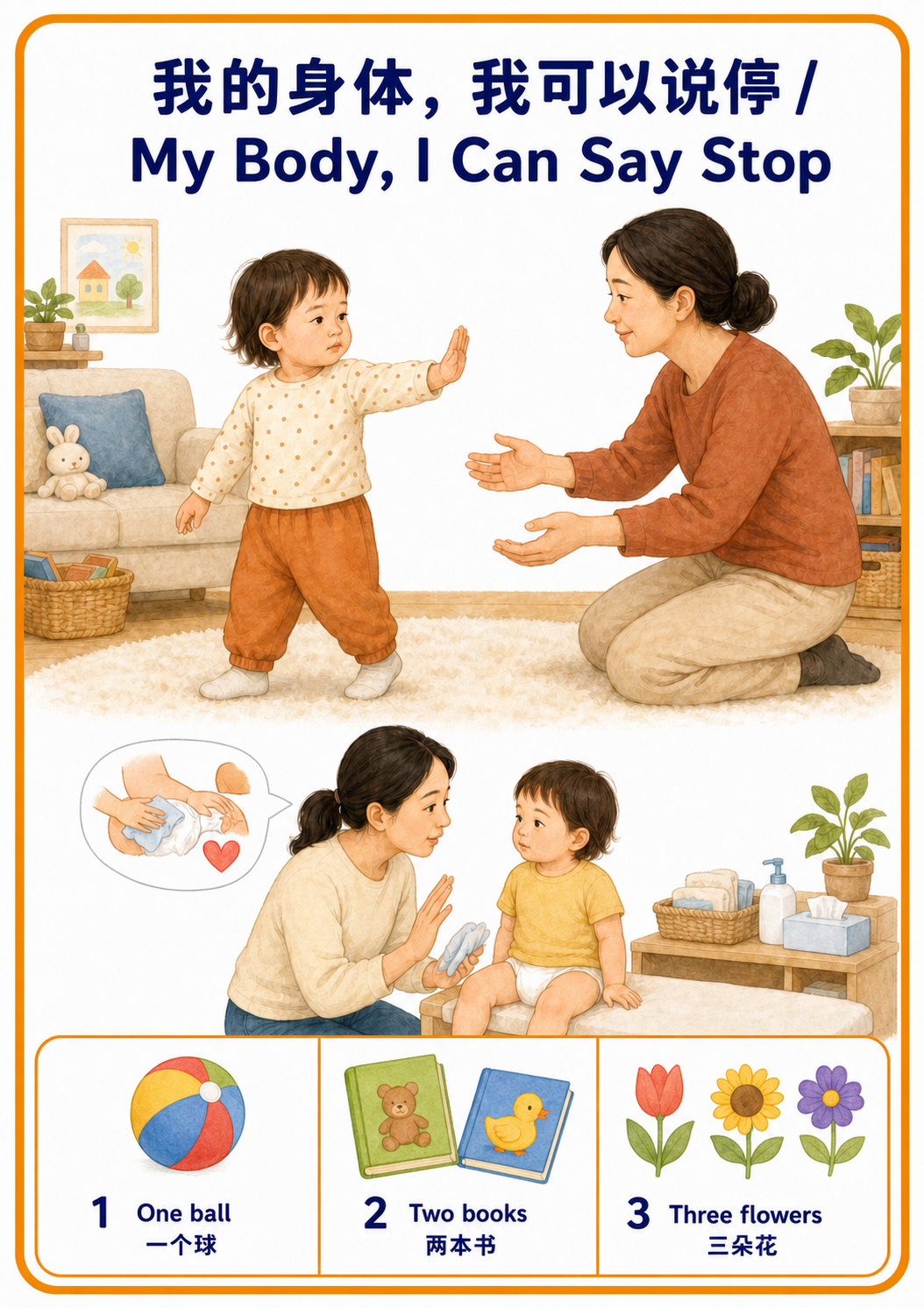
Open the high-resolution picture to download or print
This guide is adapted from our original family record, My Body, I Can Say Stop. The diary keeps the full plan and context from that day; this page is reorganised around one parent question and keeps the parts another family can use quickly.
What This Activity Actually Supports
A routine supports connection when it makes the next moment more understandable without demanding compliance. Adult reliability, truthful language, and respect for signals matter more than completing a chart.
This is not a developmental test. A quick look, a point, one movement, a sound, a word, quiet observation, or a stop signal can all be valid participation.
Try It Today
1. Preview necessary care
Before wiping a face, fastening a seat, or helping with clothing, say what will happen and why in one short sentence.
2. Ask before optional touch
Offer hugs, tickling, hair touching, and playful contact as genuine choices. Wait for a clear response.
3. Respond to stop
Stop optional touch immediately. During necessary safety or health care, acknowledge the signal and explain the minimum action the adult must finish.
Ready-to-Use Parent Phrases
- I will wipe your face once, then stop.
- Would you like a hug?
- You said stop; my hands stopped.
- I must fasten the car seat to keep you safe, and I will finish quickly.
Adapt It to the Child in Front of You
Accept words, gestures, pushing away, freezing, turning, or moving back as possible signals. Use visual or communication supports the child already knows.
Record One Real Observation
Record whether adults previewed touch, noticed early signals, and reduced unnecessary contact. The audit belongs to adult behaviour, not child compliance.
Avoid writing “can/cannot” or drawing a developmental conclusion from one activity. A more useful note records what the child noticed first, how the adult responded, and what helped the exchange continue or finish.
Safety and development boundary
Adults must intervene for immediate safety and necessary care, but should use the least force and clearest explanation possible. Concerns about abuse require local professional safeguarding help.
How This Guide Was Made
This page uses the linked original family diary and picture as its experience base, with factual checks against the public sources below. AI assisted with structure and bilingual editing. It is not medical, psychological, or therapeutic advice. Read the editorial and fact-checking policy.
Sources
- CDC: Positive parenting tips for toddlers ages 2–3
- Harvard Center on the Developing Child: Serve and return